Official websites use .gov

Official websites use .gov
.gov website belongs to an official government organization in the United States.

Secure .gov websites use HTTPS

Secure .gov websites use HTTPS
lock (Lock Icon) or https:// means you’ve safely connected to the .gov website. Share sensitive information only on official, secure websites.

Home » 

Gold Star Mothers Curators Collection

During the Great Depression (1929 – 1939), the U.S. government sent many mothers and widows of American service members buried overseas on a federally-funded visit to their graves. Over 6,000 Gold Star mothers and widows participated in these pilgrimages from 1930 to 1933. Administered by the Quartermaster Corps, this program honored the pilgrims’ sacrifices as well as those who died.

The term “Gold Star Mothers” originated in WWI when families displayed a banner with a blue star in front of their home, signifying they had a family member at war. If the family member died, the blue star was covered with a gold star.

The U.S. government sent thousands of Gold Star Mothers after WWI and WWII overseas to visit the final resting places of their fallen loved ones.

The service flag or service banner (also called the Blue Star Flag) was designed and patented in November 1917 by Captain Robert L. Queisser of the 5th Ohio Infantry, as a tribute to his two sons serving in France.
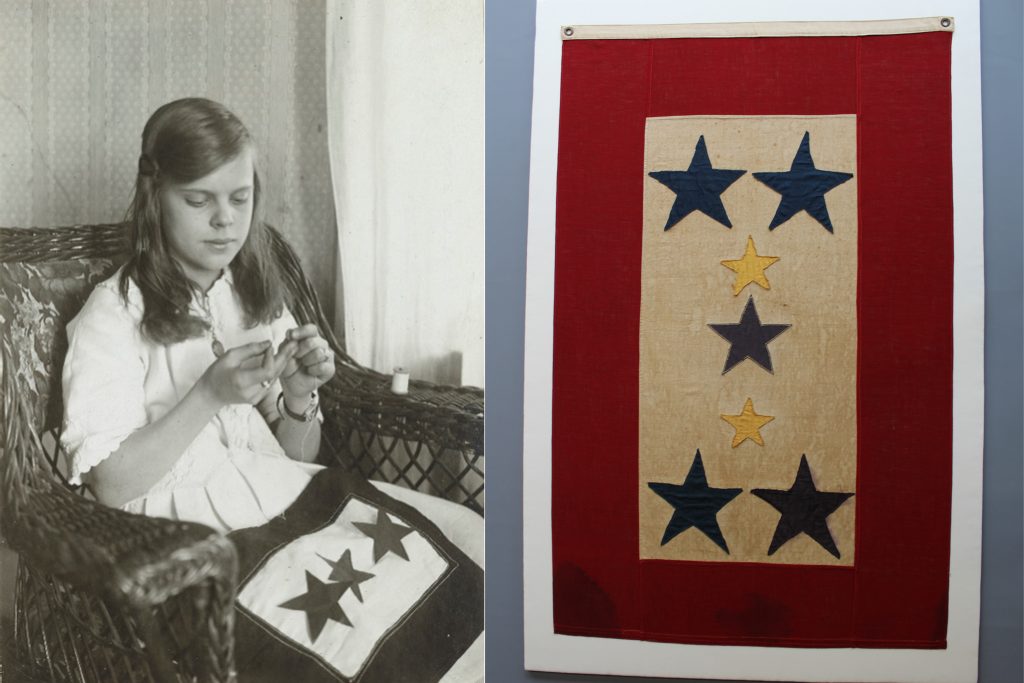
Service banner from a factory in Massachusetts

This service banner was crafted and displayed during World War I in a factory in Massachusetts, which explains its impressive dimensions: 182 x 82 cm. Usually, service banners were displayed in houses windows and were quite smaller. Though originally a symbol for parents, service banners were also displayed by organizations to honor personnel engaged at war. This explains the large number of stars. The banner was installed to honor the workers engaged at war. At that time, service banners were handmade with the supplies people had by hand. This banner is no exception, as you can observe in the pictures the unregular shape of the stars and the low quality of the fabric.

When acquired by the American Battle Monuments Commission, the banner had been stored for quite some time in a box where it was folded. The first step before displaying the piece was to implement conservation treatment on it. The main goal of the conservation treatment was to stabilize the piece and making sure it will not be more damaged by time. The intervention consisted of dusting, cleaning some stains due to poor storage conditions and flattening of some wrinkling because it stayed folded for quite some time.

This banner is currently on display in ABMC Paris offices, protected in a dedicated case with anti-UV glass, that will prevent light from fading the colors. To protect it, the banner is regularly taken to storage in a dark space, to prevent damage from too much exposure.

Gold star badge and medal

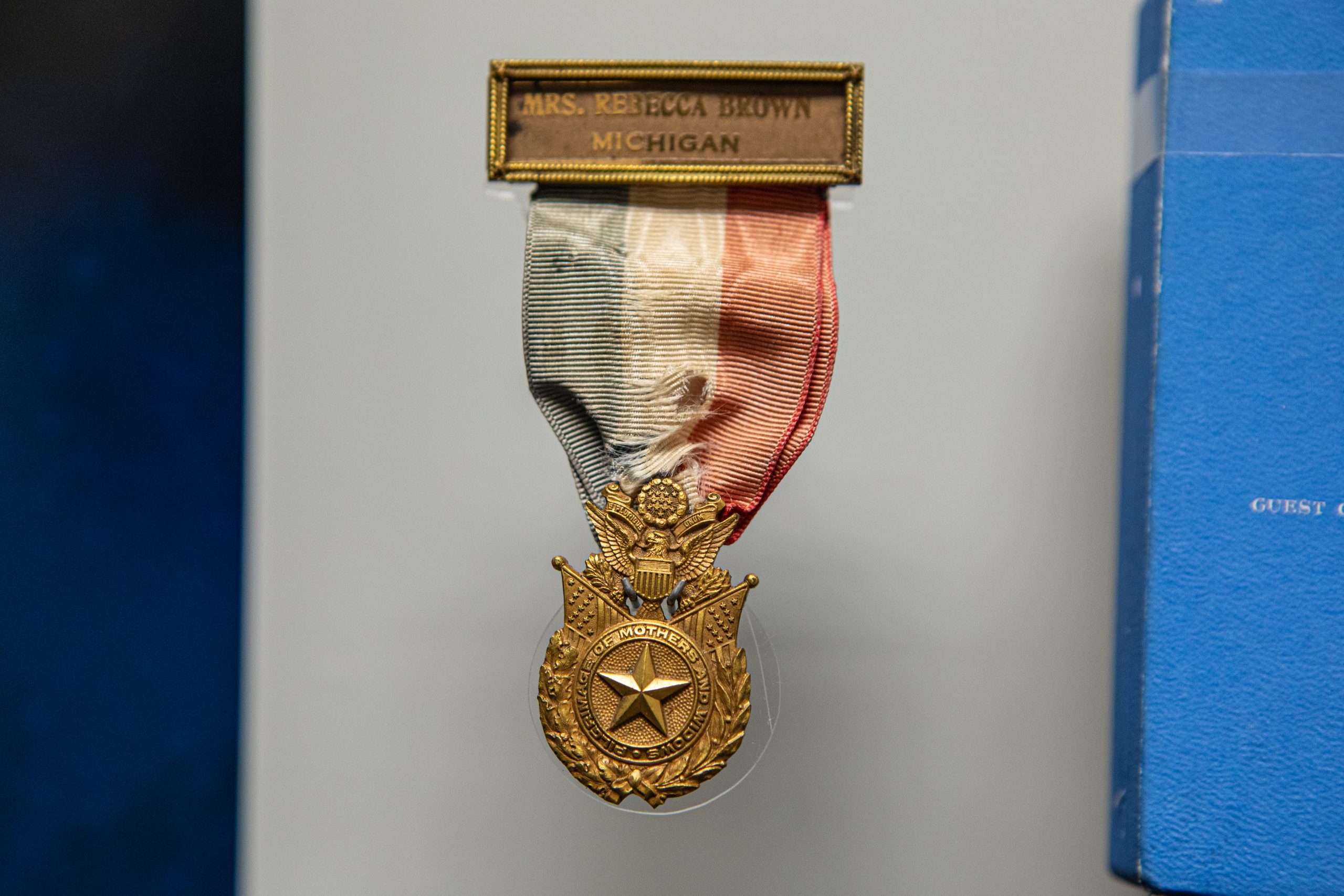
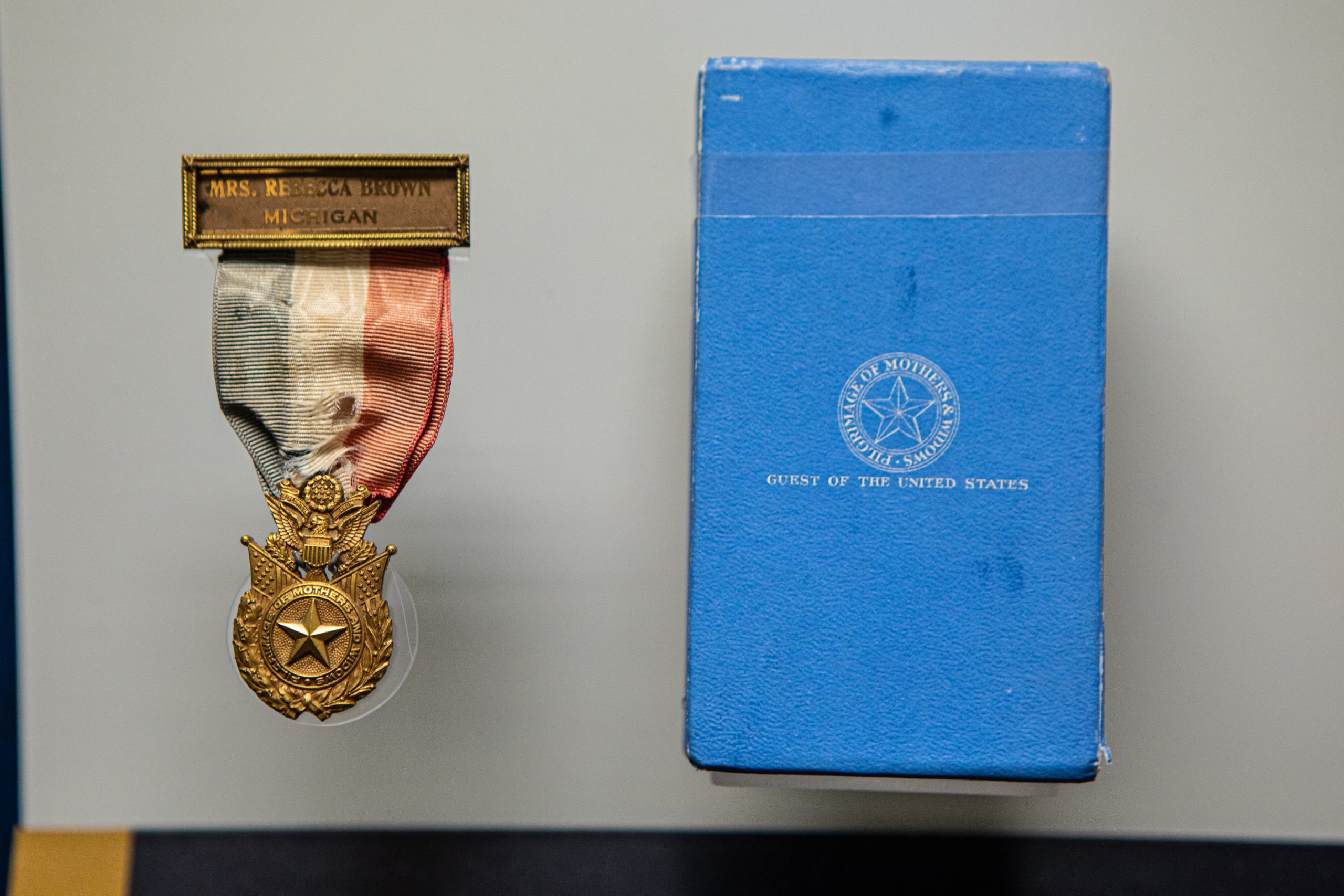
The Gold Star pilgrimage name badge of Mrs. Rebecca Brown of Pontiac, Michigan. Mrs. Brown visited the grave of her son, 2nd Lt. Percy C. Brown, who is buried at Suresnes American Cemetery in France.

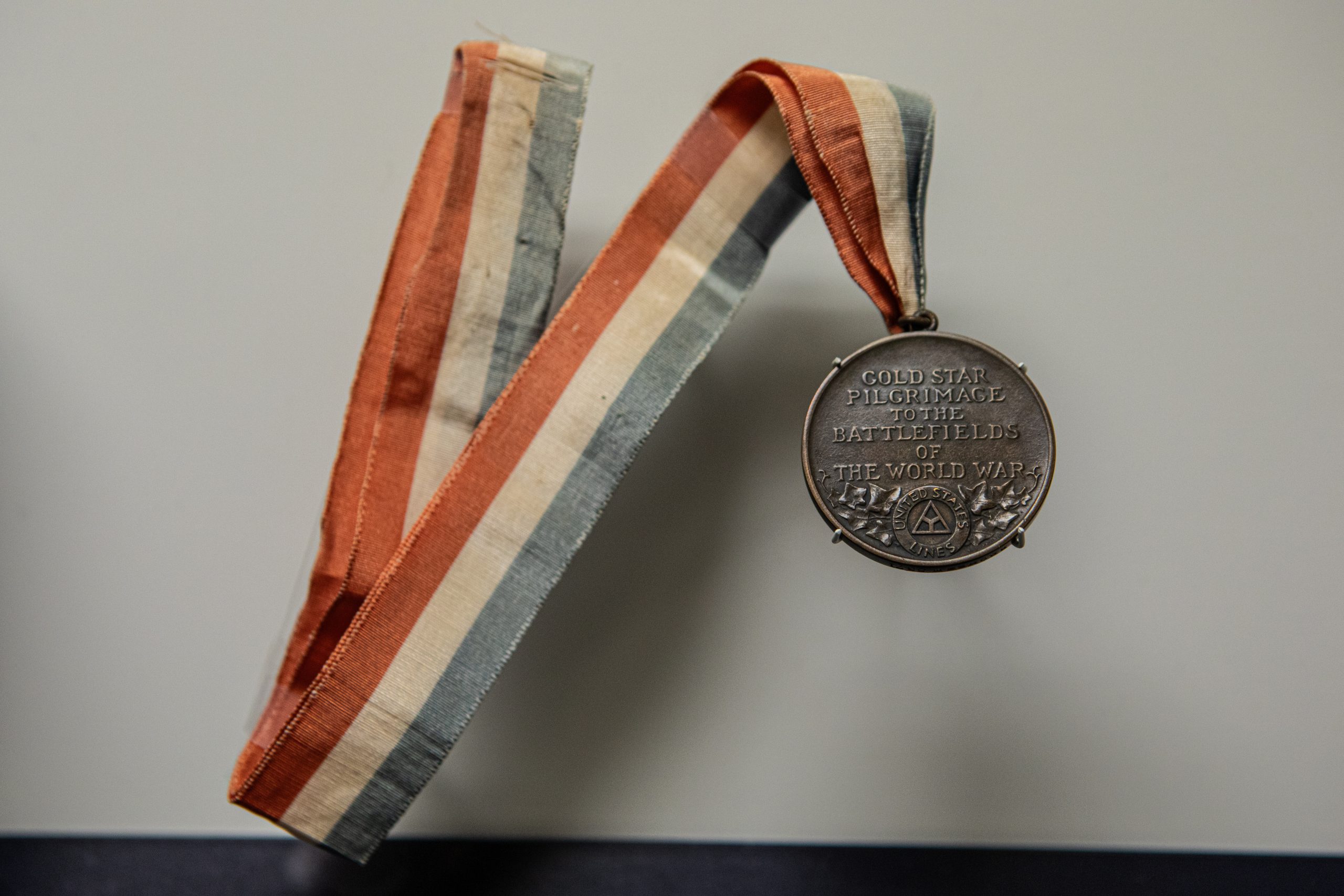
A United States Lines Gold Star pilgrimage medal from 1930. During the trans-Atlantic ship
journey, the United States Lines shipping company presented each pilgrim on their ocean-liners with one of these medals to wear during their voyage so they could be distinguished as Gold Star pilgrims.

Guest book

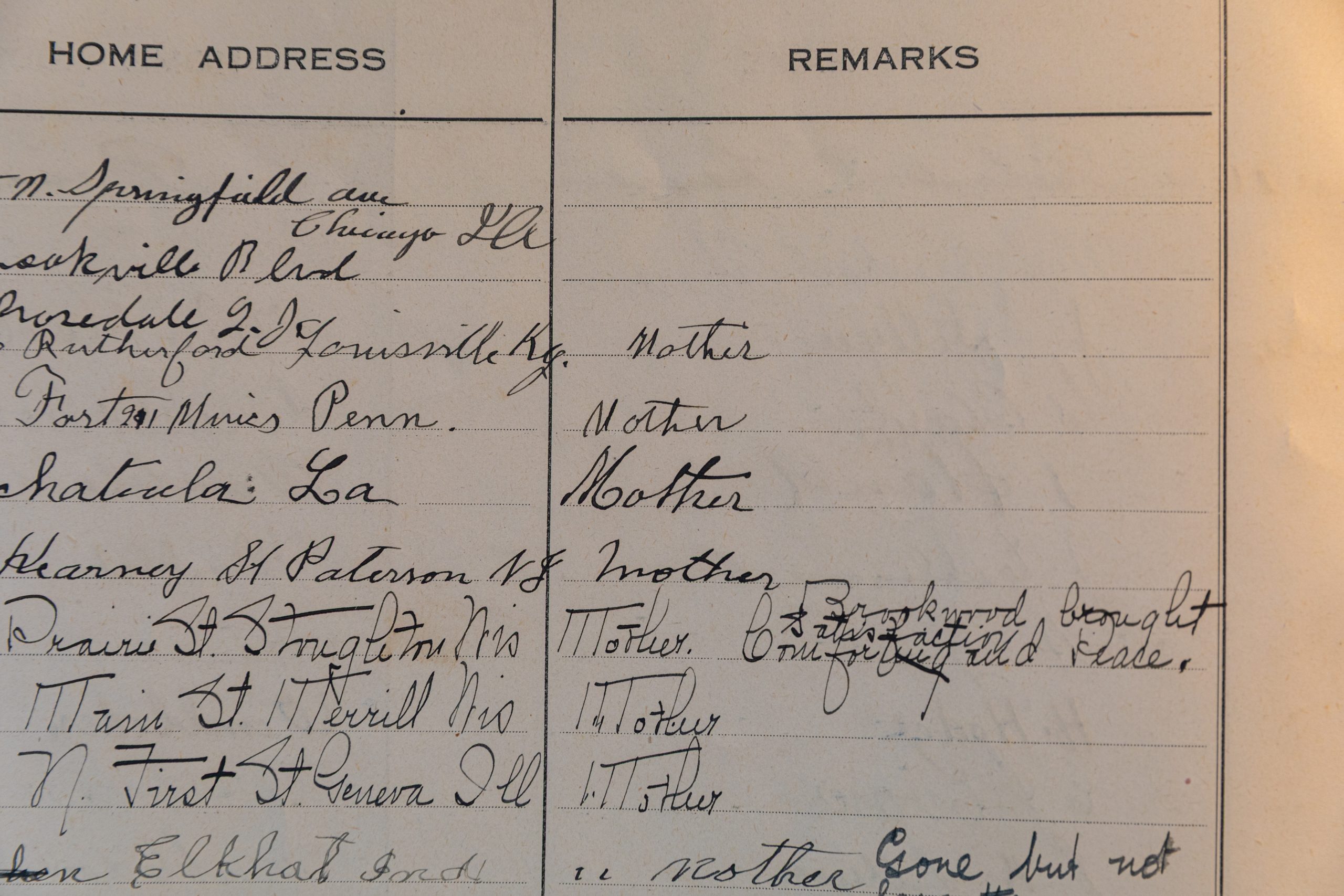
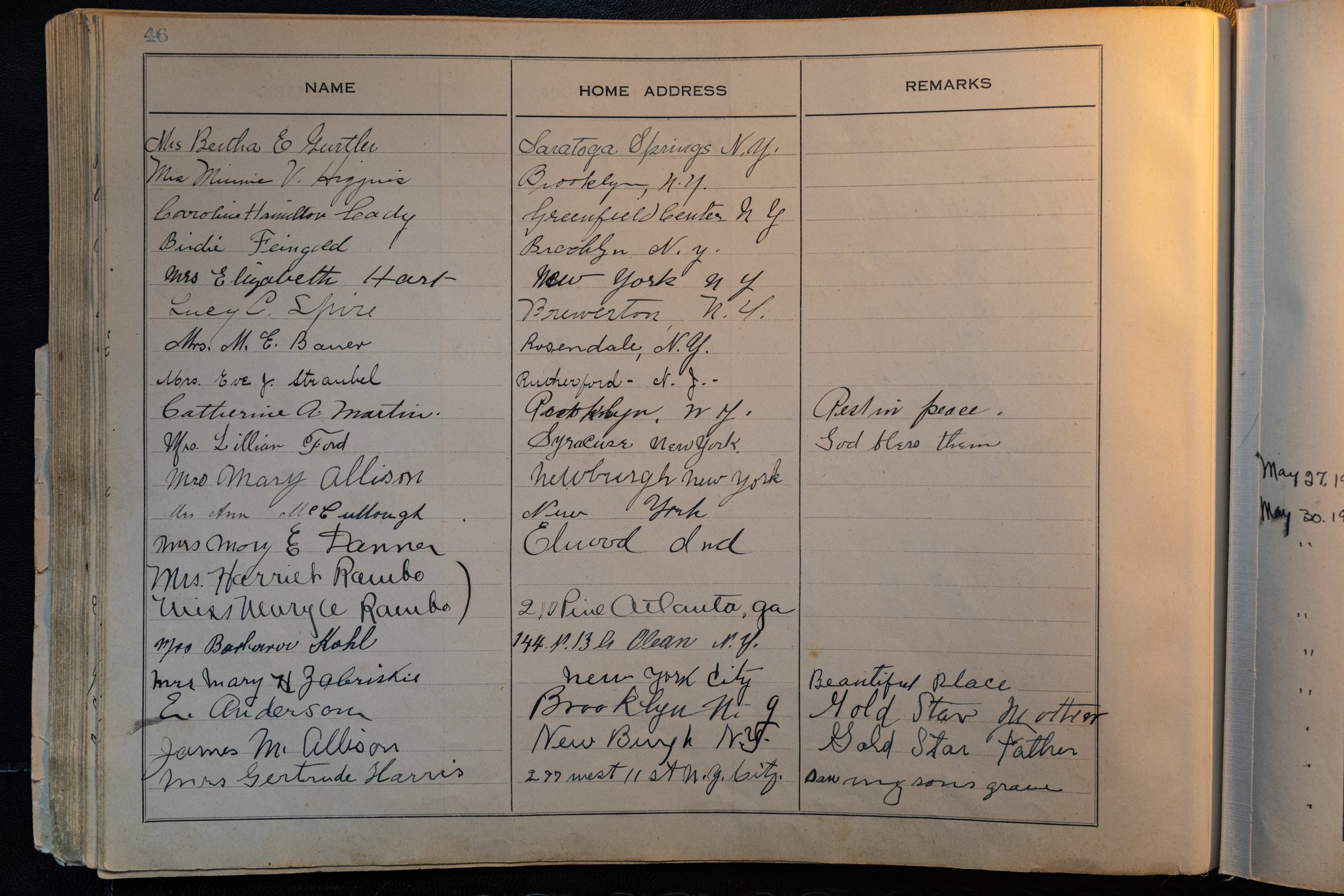
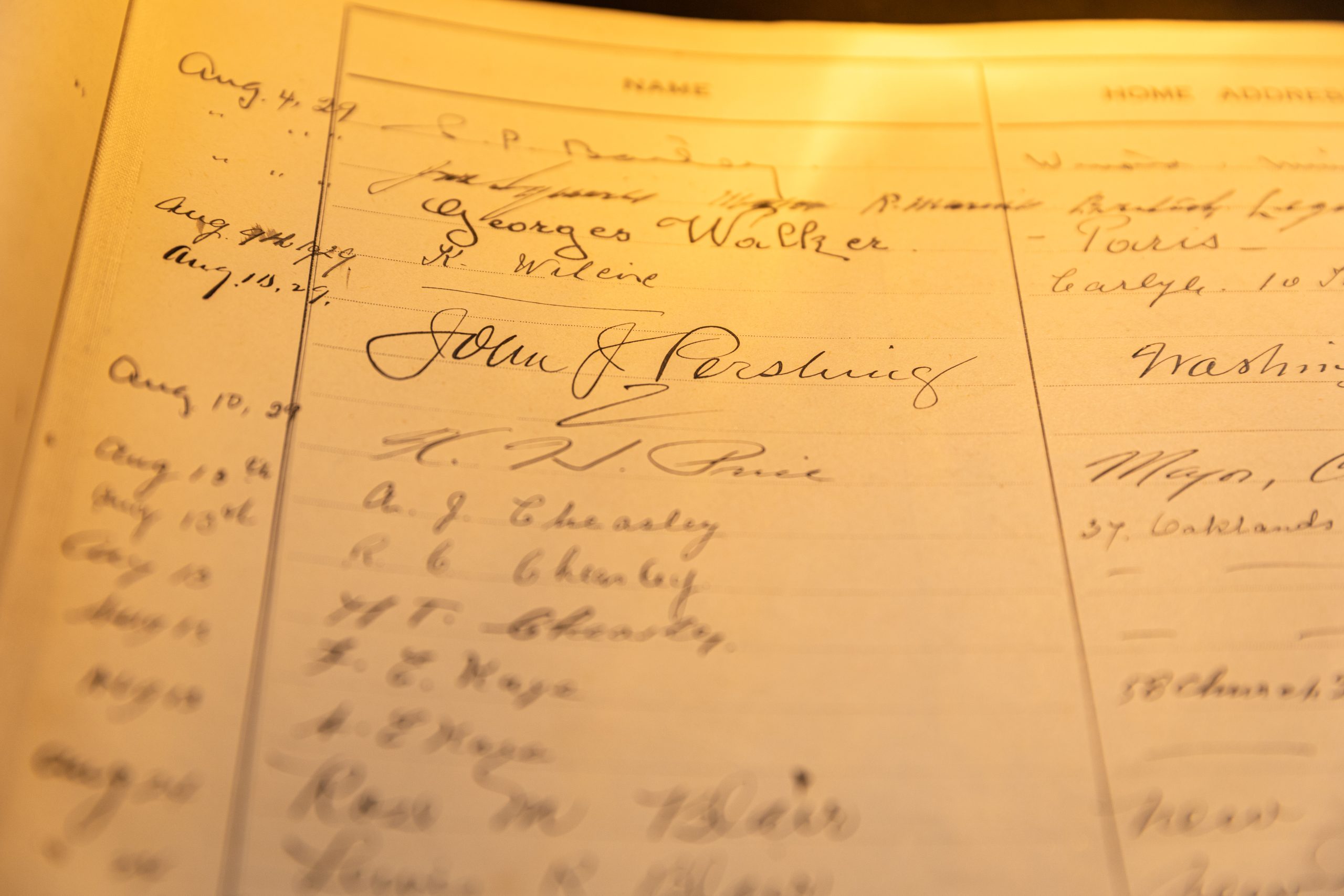
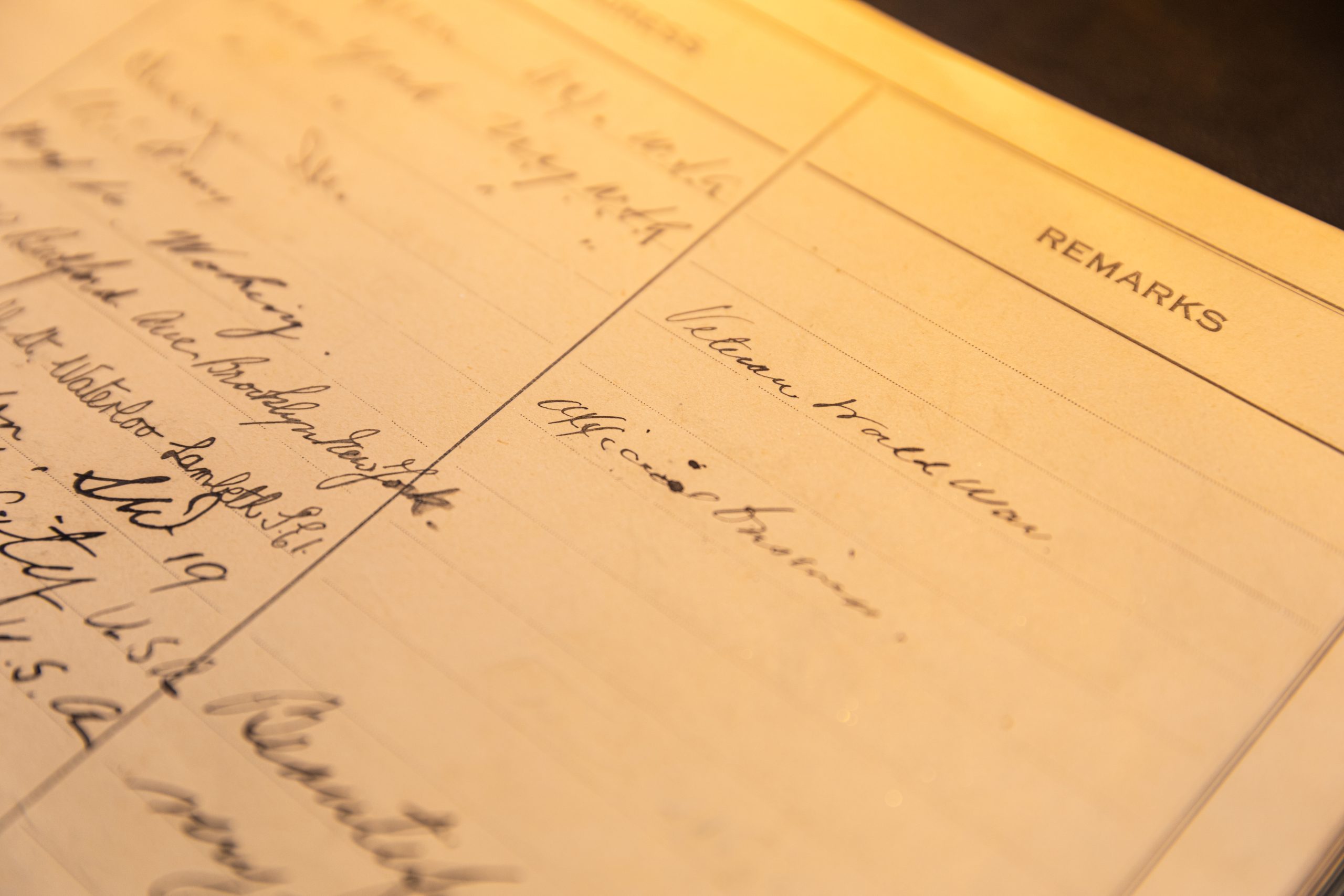
The guest book from Brookwood American Cemetery in the U.K. with entries from 1929 and 1930. Gold Star Mothers and Fathers along with Gen. John J. Pershing’s signature.

Gold star mothers pilgrimage

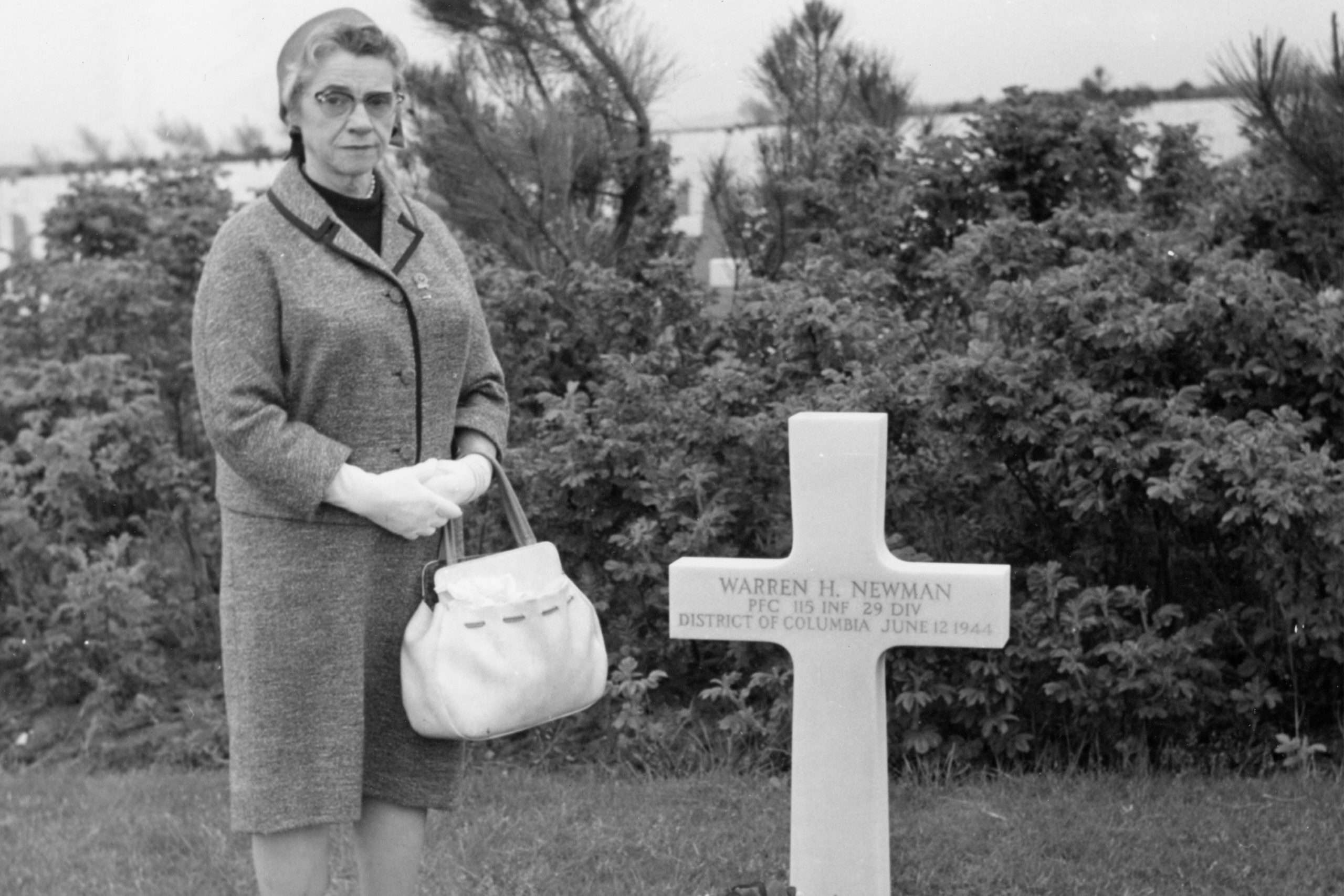
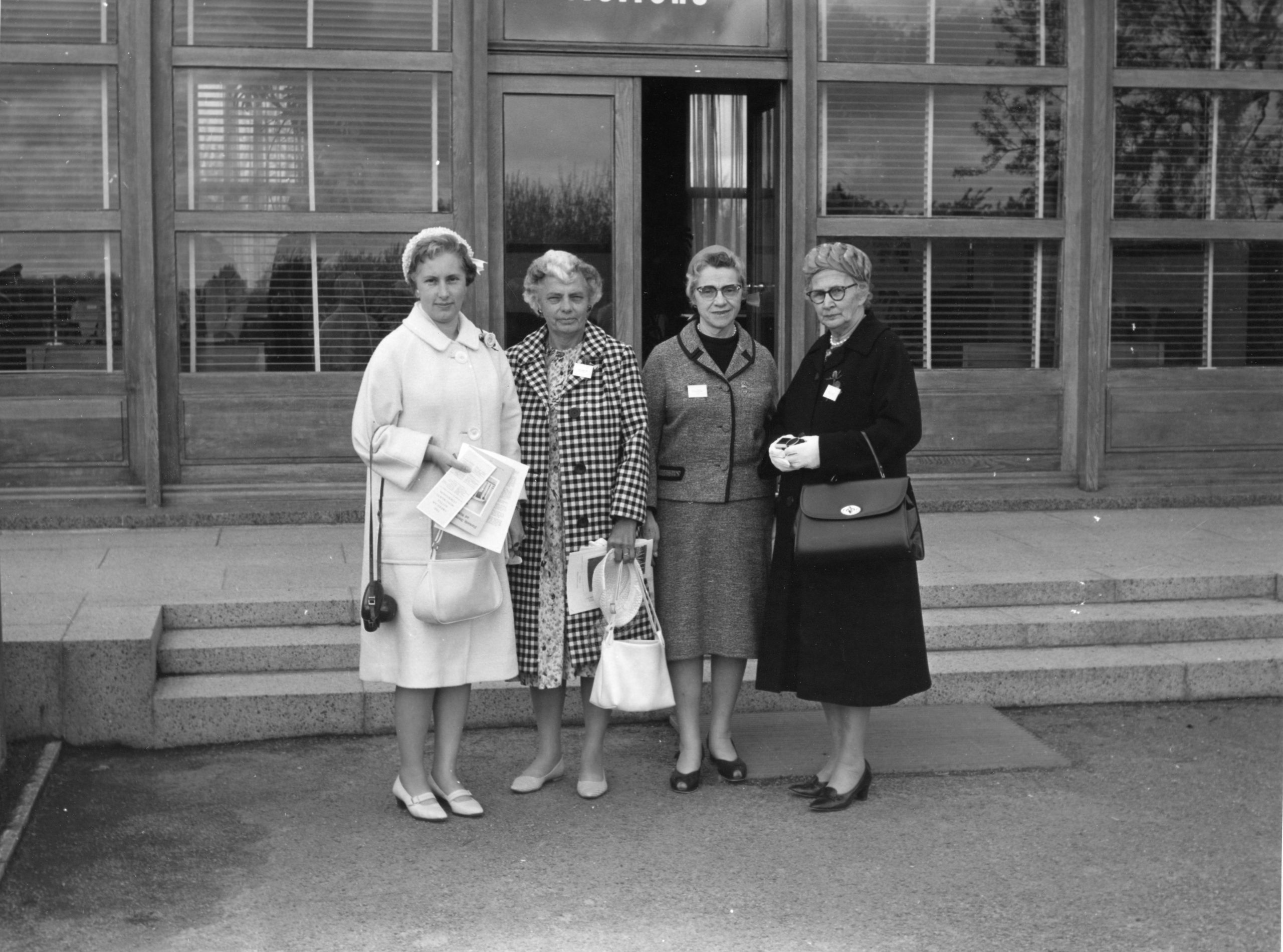
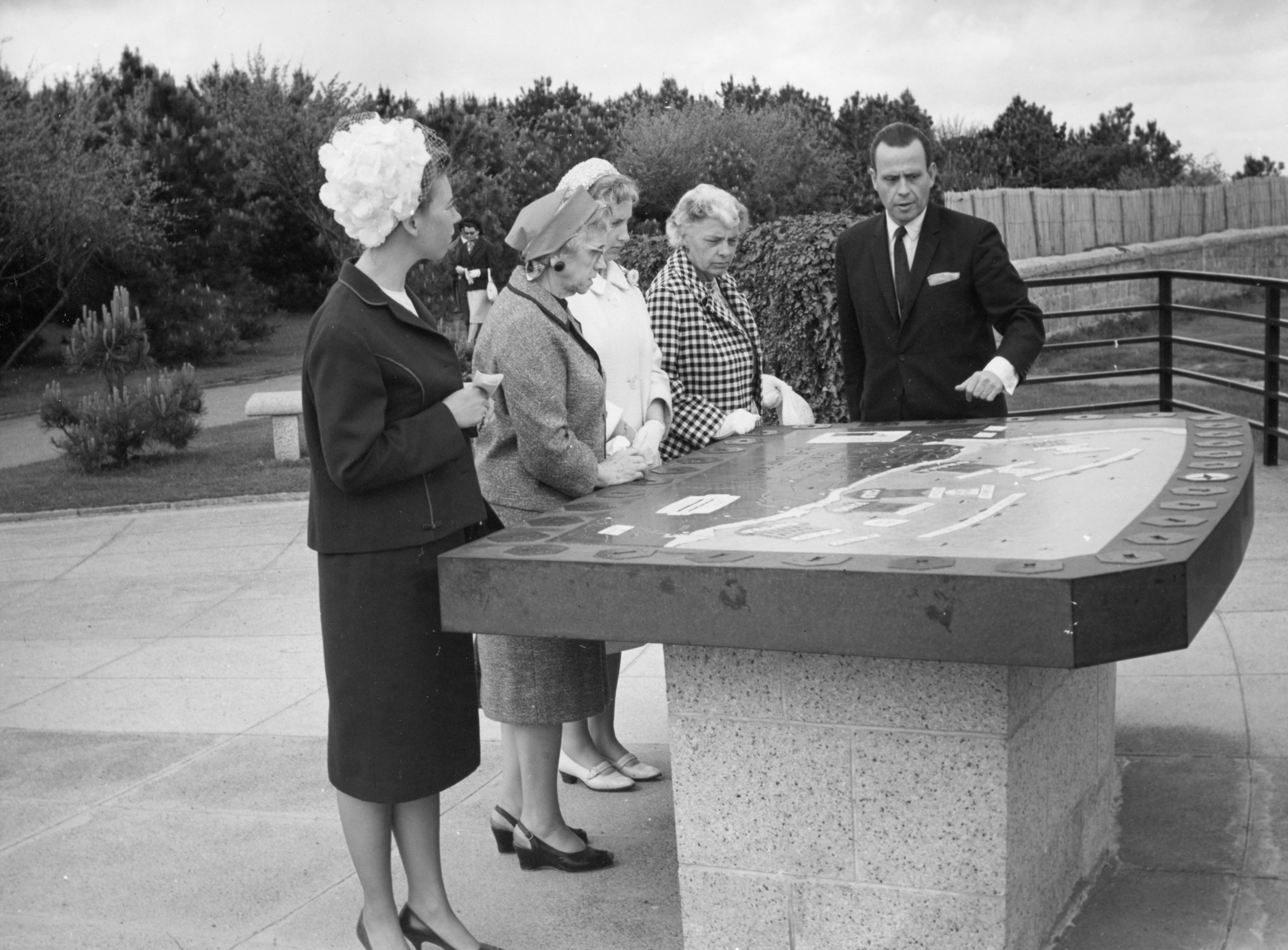
Four Gold Star Mothers visited the Normandy American Cemetery in France in the 1960s.