


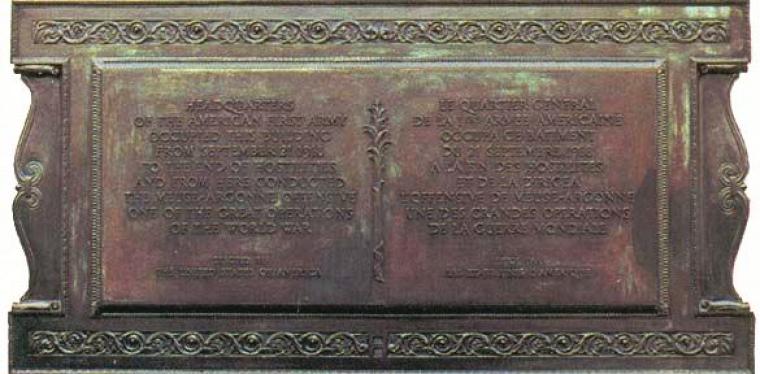
Souilly Marker-1st Army Headquarters

Souilly, France
Official websites use .gov
A .gov website belongs to an official government organization in the United States.
Secure .gov websites use HTTPS
A lock
or https:// means you've safely connected to the .gov website. Share sensitive information only on official, secure websites.

Within the Meuse-Argonne American Cemetery and Memorial in France, which covers 130.5 acres, rests the largest number of our military dead in Europe, a total of 14,246. Most of those buried here lost their lives during the Meuse-Argonne Offensive of World War I.
The immense array of headstones rises in long regular rows upward beyond a wide central pool to the chapel that crowns the ridge. A beautiful bronze screen separates the chapel foyer from the interior, which is decorated with stained-glass windows portraying American unit insignia; behind the altar are flags of the principal Allied nations.
On either side of the chapel are memorial loggias. One panel of the west loggia contains a map of the Meuse-Argonne Offensive. Inscribed on the remaining panels of both loggias are Tablets of the Missing with almost 1,000 names, including those from the U.S. expedition to northern Russia in 1918-1919. Rosettes mark the names of those since recovered and identified.
A renovated, 1,600-square-foot visitor center reopened in November 2016. Through interpretive exhibits that incorporate personal stories, photographs, films, and interactive displays, visitors will gain a better understanding of the critical importance of the Meuse-Argonne Offensive as it fits into the Great War.
Meuse-Argonne American Cemetery is located next to the village of Romagne-sous-Montfaucon in the Meuse region of Northeast France. The cemetery is 26 miles northwest of the city of Verdun. An alternative to GPS coordinates, users can input Rue de General Pershing in the city of Romagne-sous-Montfaucon.
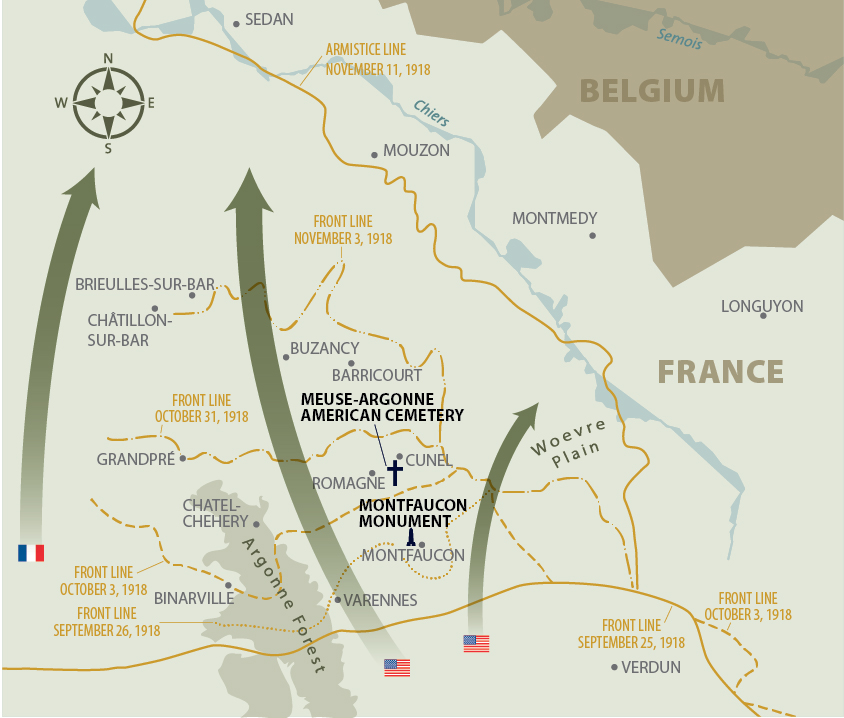
The Meuse-Argonne Campaign
“The success stands out as one of the very great achievements in the history of American Arms.”
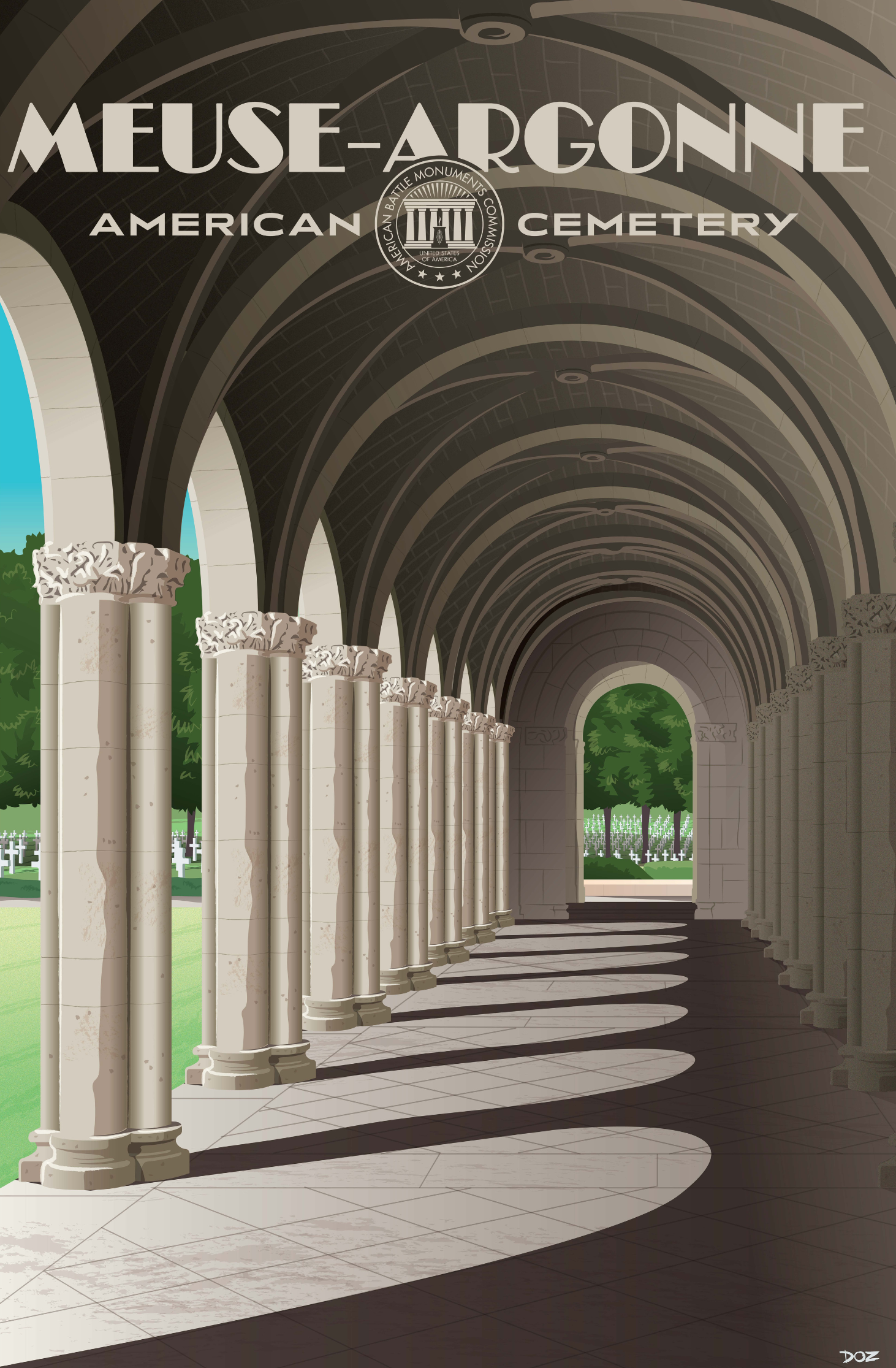
Vintage posters convey the beauty, tranquility, and solemnity of the place as a sign of respect for those who fought so that we can live free today.
Souilly, France

Waregem, Belgium

Audenarde, Belgium

ABMC.gov
official website of the American Battle Monuments Commission and a proud partner of The American Battle Monuments Foundation
Looking for U.S. government information and services? Visit USA.gov
