


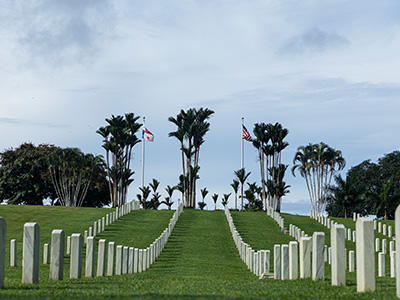
Corozal American Cemetery

Corozal, Panama
Official websites use .gov
A .gov website belongs to an official government organization in the United States.
Secure .gov websites use HTTPS
A lock
or https:// means you've safely connected to the .gov website. Share sensitive information only on official, secure websites.
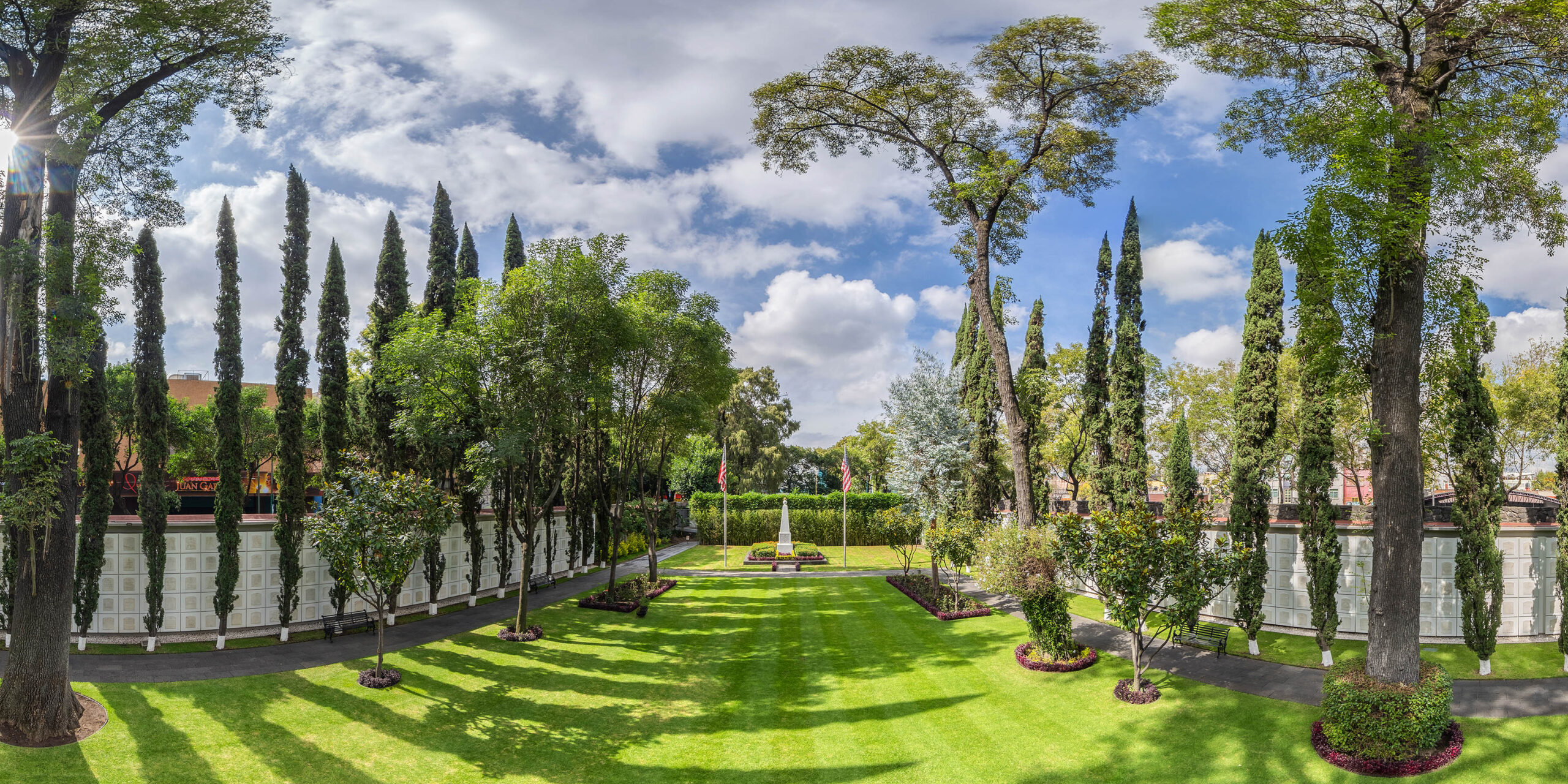
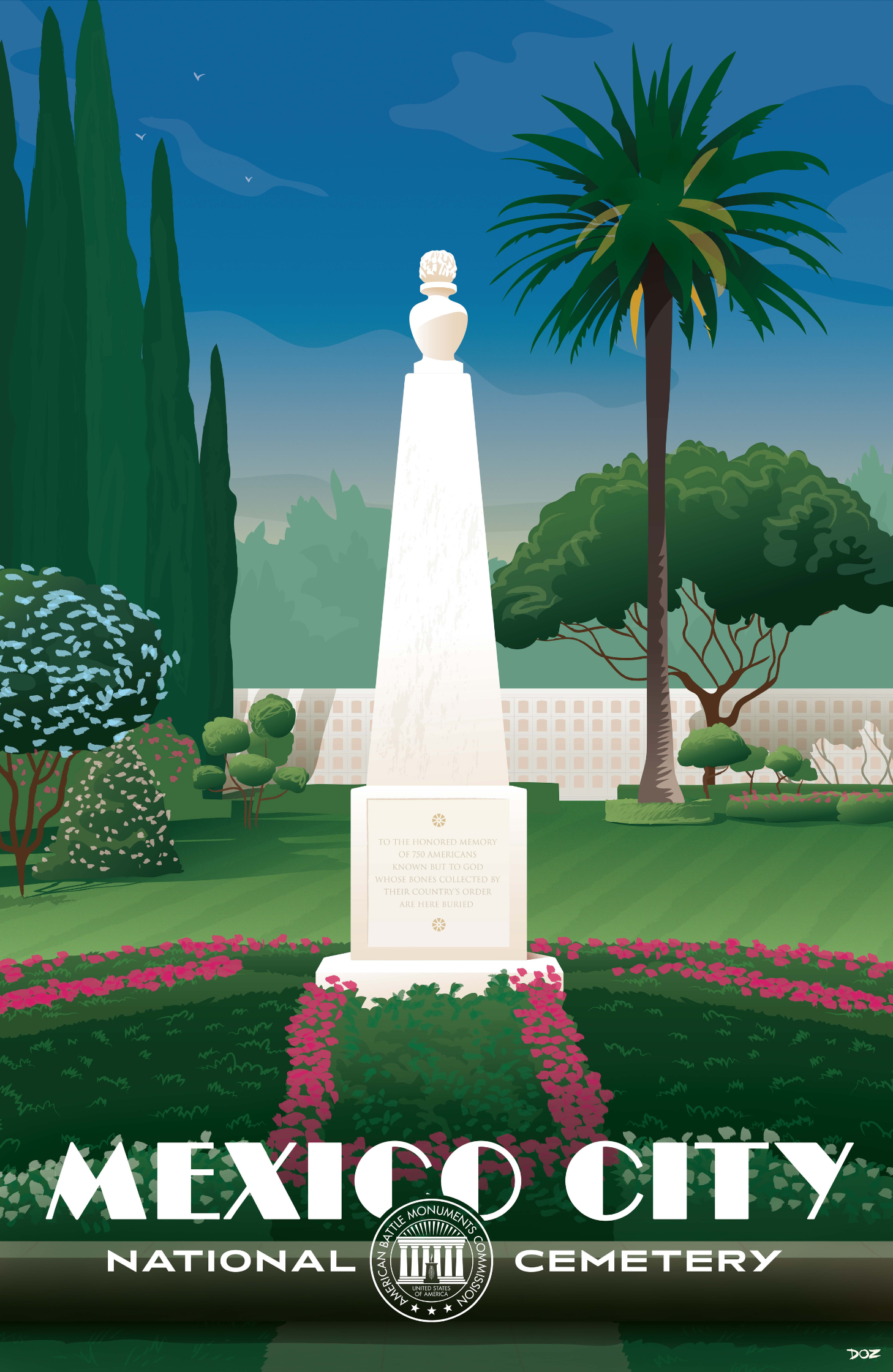
The Mexico City National Cemetery was established in 1851 by Congress to gather the American dead of the Mexican-American War (1846-1848) that lay in the nearby fields and to provide burial space for Americans that died in the vicinity.
The remains were gathered in 1851 and buried in a common grave at this cemetery. They were not identified so they are classified as unknown soldiers. A small monument marks the common grave of 750 unidentified American dead of the War of 1847. Inscribed on the monument are the words:
To the honored memory of 750 Americans known but to God whose bones collected by their country’s order are here buried.
In this one-acre area are also placed the remains of 813 Americans and others in wall crypts on either side of the cemetery. The cemetery was closed to further burials in 1923.
Buried at the Mexico City National Cemetery are American servicemen who served during the Mexican-American War (1846-1848), Civil War and Spanish American War. Learn more about those Americans buried and memorialized who served during these conflicts.
Mexico City National Cemetery is at 31 Virginia Fabregas, Colonia San Rafael about two miles west of the Metropolitan Cathedral and about one mile north of the U.S. Embassy.Travel via Car The cemetery is one mile north of the U.S. Embassy.
When Texas was admitted as a state in December 1845, Mexico severed diplomatic ties, and President James K. Polk ordered General Zachary Taylor’s forces toward the Rio Grande.
This set the stage for a series of military engagements that would ultimately reshape the border and result in the Treaty of Guadalupe Hidalgo in 1848, which ended the Mexican–American War.
Nearly 70 years later, on March 9, 1916, a raid led by Mexican bandit Francisco (“Pancho”) Villa on Columbus, New Mexico, prompted President Woodrow Wilson to order a punitive expedition under Brig. Gen. John J. Pershing. Although the expedition failed to capture Villa, it provided valuable experience that would later prepare U.S. forces for mobilization in Europe during World War I.
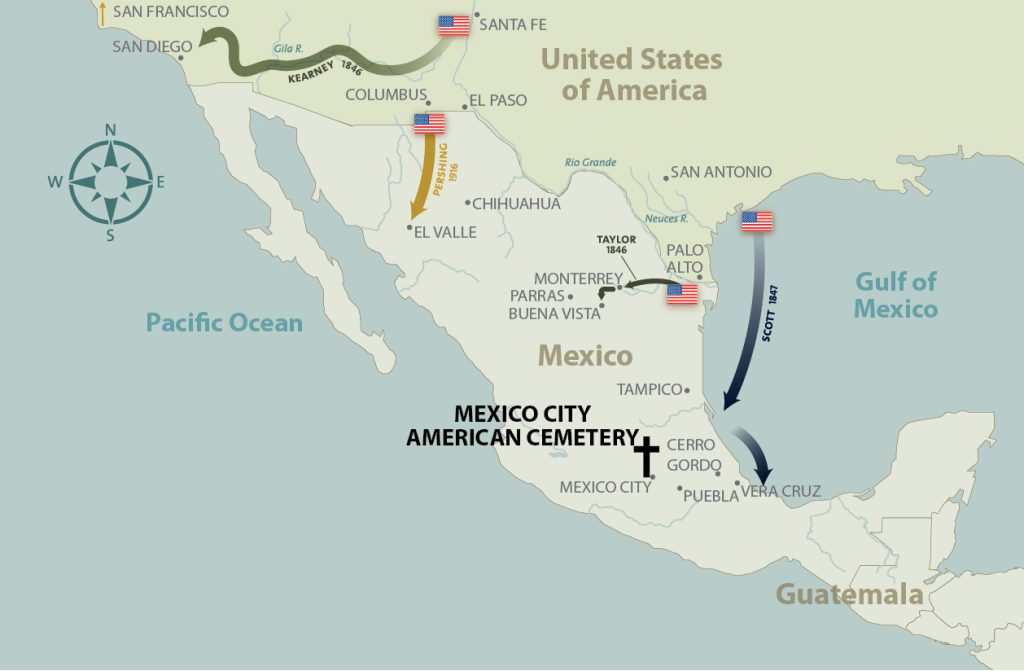
“Neighbors in Contention”
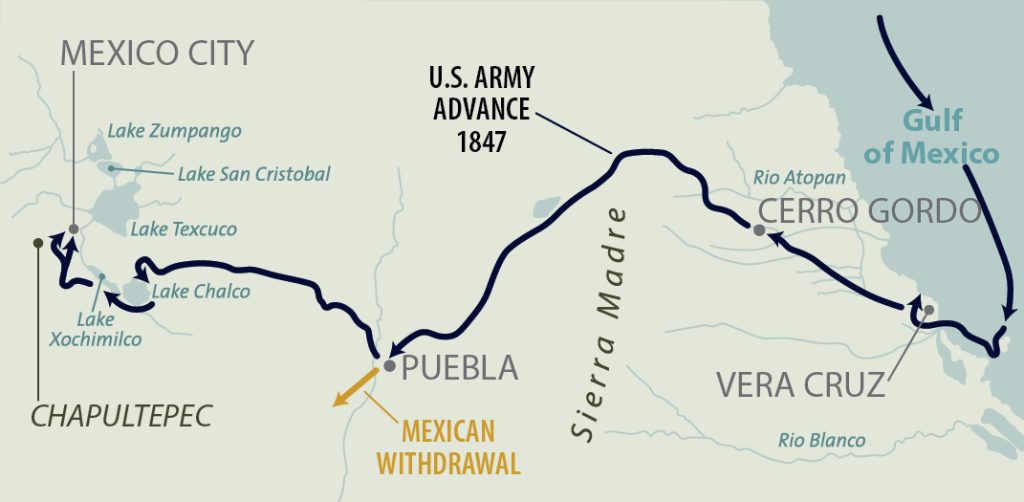
Mexican–American War (1846–1848):
Pancho Villa Expedition (1916–1917):
Vintage posters convey the beauty, tranquility, and solemnity of the place as a sign of respect for those who fought so that we can live free today.
Corozal, Panama
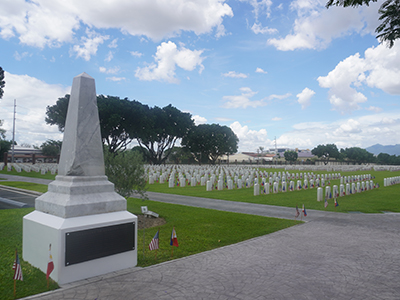
Pampanga, Philippines
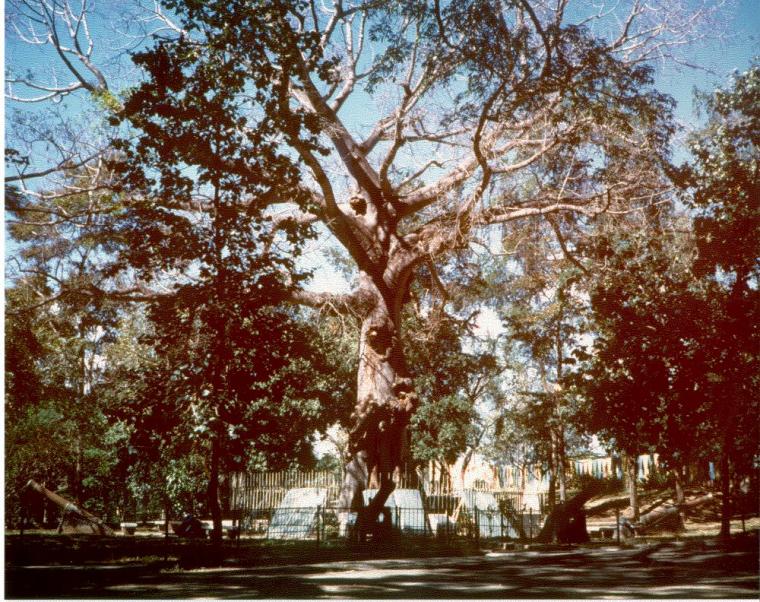
Santiago, Cuba

ABMC.gov
official website of the American Battle Monuments Commission and a proud partner of The American Battle Monuments Foundation
Looking for U.S. government information and services? Visit USA.gov
