


Suresnes American Cemetery

Suresnes, France
Official websites use .gov
A .gov website belongs to an official government organization in the United States.
Secure .gov websites use HTTPS
A lock
or https:// means you've safely connected to the .gov website. Share sensitive information only on official, secure websites.
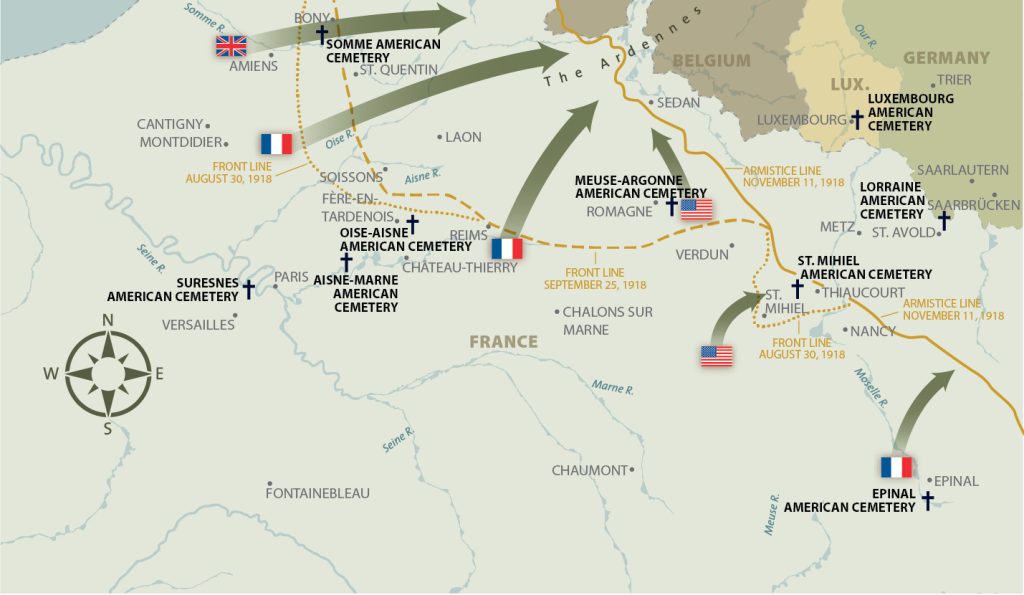
Originally a World War I cemetery, the Suresnes American Cemetery and Memorial just outside Paris now shelters the remains of U.S. dead of both wars.
The 7.5-acre cemetery contains the remains of almost 1,600 Americans who died in World War I and 24 unknown dead of World War II. Bronze tablets on the walls of the chapel record the names of almost 1,000 World War I missing. Rosettes mark the names of those since recovered and identified.
The World War I memorial chapel was enlarged by the addition of two loggias dedicated to the dead of World War I and World War II, respectively. In the rooms at the ends of the loggias are white marble figures in memory of those who lost their lives in the two wars. Inscribed on the loggia walls is a summary of the loss of life in our armed forces in each war, together with the location of the overseas commemorative cemeteries where our war dead are buried.
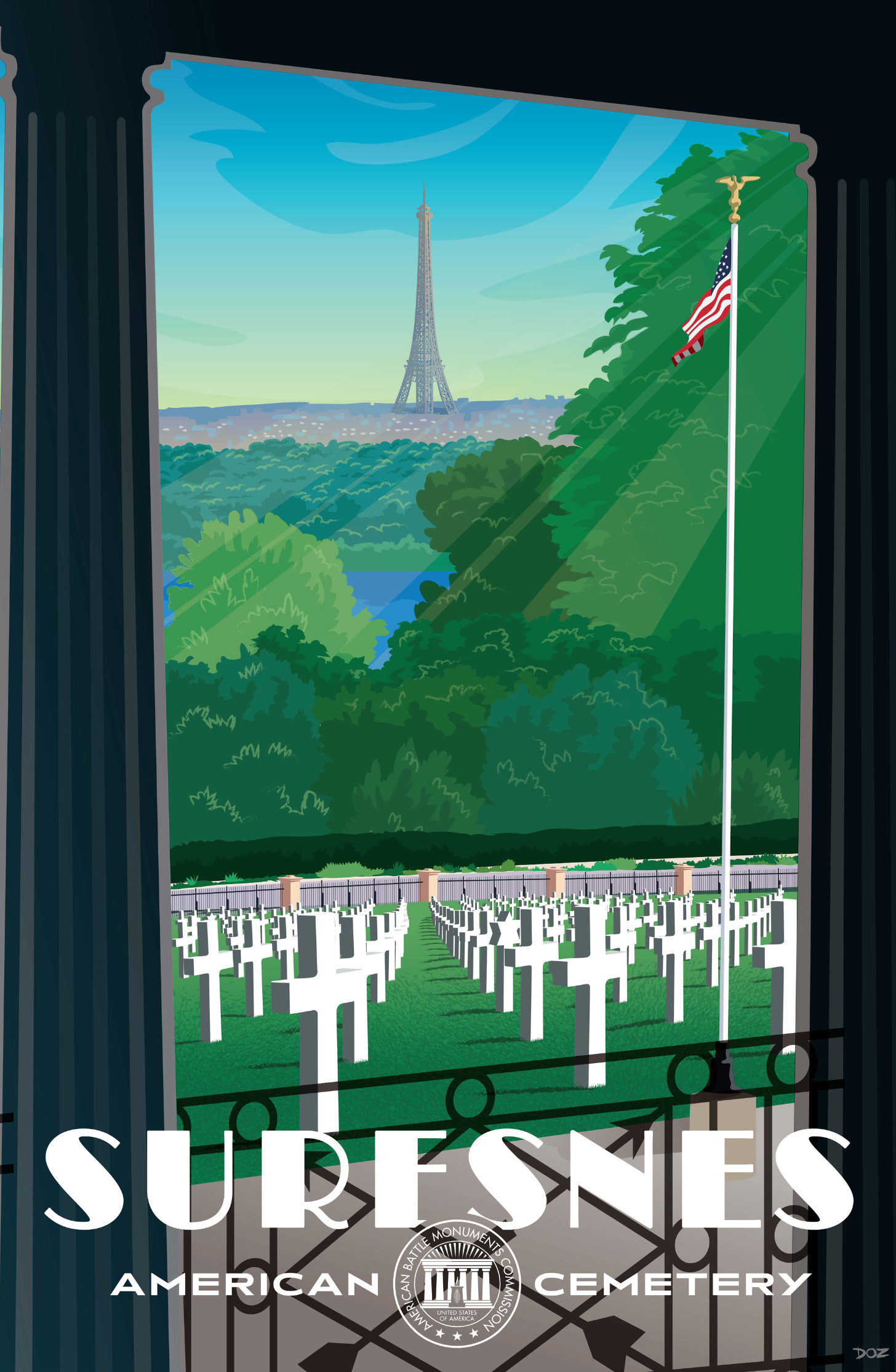
Suresnes American Cemetery is in the city of Suresnes, 5 miles west of the center of Paris. A panorama view of Paris can be seen from the site, which is located high on the slopes of Mont Valerien.
Increasing German aggression, including unrestricted submarine warfare, provoked U.S. entry into the war on April 6, 1917.
Upon arriving in France, the American Expeditionary Forces, led by Gen. John J. Pershing, began a large-scale military buildup before engaging in combat. The first U.S. division-sized offensive at Cantigny on May 28, 1918, marked the beginning of direct American combat operations.
By July 1918, the AEF had grown significantly, with 313,410 American troops arriving in Europe that month alone, the highest of any period. However, the influenza pandemic of 1918 swept through both military and civilian populations worldwide, affecting U.S. units in Europe and at home.
By the war’s end, 1.98 million American troops were serving in the AEF, and over 81,000 U.S. service members had died in Europe. In response, eight permanent American cemeteries were established in Europe, including Suresnes, to serve as final resting places for those who sacrificed their lives.
Vintage posters convey the beauty, tranquility, and solemnity of the place as a sign of respect for those who fought so that we can live free today.
Suresnes, France

Tours, France

Seringes-et- Nesles, France

ABMC.gov
official website of the American Battle Monuments Commission and a proud partner of The American Battle Monuments Foundation
Looking for U.S. government information and services? Visit USA.gov
