


American Battle Monuments Commission continues ash tree replacement project at Normandy American Cemetery
The American Battle Monuments Commission will begin the second phase of an ash tree removal and replanting project along the access road to Normandy American Cemetery on Nov. 30, 2026. The work continues efforts begun in January 2026, to address ash trees affected by ash dieback disease while preserving the landscape and ensuring the safety of visitors and staff.
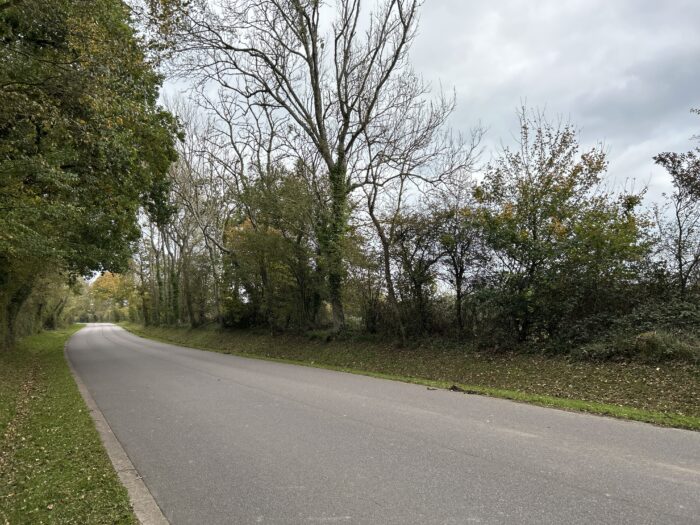
A project carried out in two phases
During the first phase, completed in January 2026, approximately 150 ash trees were removed along the road leading to Normandy American Cemetery. The trees were affected by ash dieback, a disease caused by the fungus Hymenoscyphus fraxineus. The disease progressively weakens affected trees, causing branches to die and creating a potential risk to pedestrians, cyclists and vehicles using the access road.
The second phase will take place from Nov. 30 to Dec. 4, 2026, and will involve the removal of more than 50 European ash trees also known as Fraxinus excelsior. This will bring the total number removed during the two phases to more than 200 ash trees.
The more than 50 trees included in this phase are located within the first third of the access road to the cemetery, on the left side when approaching the site. They are dispersed among other trees in the existing hedgerow, including oak trees, which are not part of the removal work.
Removing affected trees and renewing the landscape
The removal of the ash trees is only one part of the project. Following the second phase of removal, ABMC will plant more than 230 young trees, a number greater than the trees being removed, as part of an ecological compensation measure.
The new plantings will include seven species:
- 30 field maples also known as Acer campestre
- 30 Italian alders also known as Alnus cordata
- 37 European hornbeams also known as Carpinus betulus
- 30 common hawthorns also known as Crataegus monogyna
- 40 common pear trees also known as Pyrus communiso
- 40 small-leaved limes also known as Tilia cordata
- 30 whitebeams also known as Sorbus aria
The project also includes three years of maintenance for the newly planted trees.
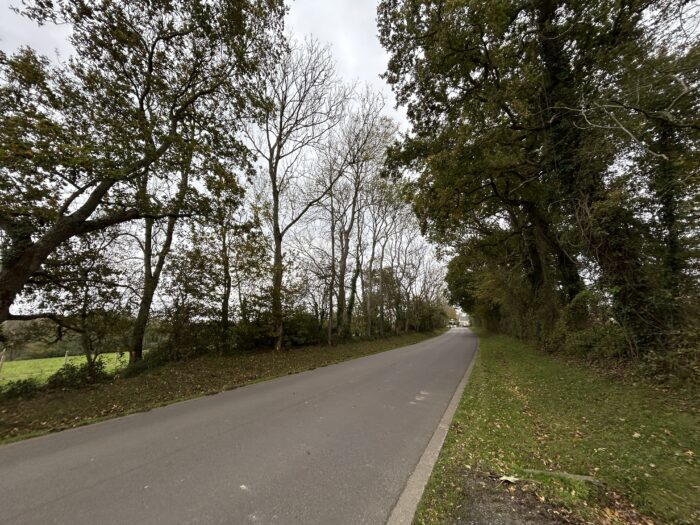
Impacts from work scheduled Nov. 30 to Dec. 4
The second phase is expected to take five days. The ash trees are scheduled to be removed Nov. 30. Two days will then be dedicated to stump removal, followed by two days of planting.
A team of eight workers will carry out the project using specialized equipment. Traffic will be maintained through an alternating traffic system while work is underway. Visitors traveling to Normandy American Cemetery during this period may experience temporary traffic disruptions along the access road.
The American Battle Monuments Commission’s mission is to honor the service of the U.S. armed forces by creating and maintaining memorial sites, offering commemorative services, and facilitating the education of their legacy to future generations. It was founded in 1923 following World War I, and its 26 cemeteries and 31 monuments honor the service men and women who fought and perished during World War I, World War II, the Korean War and the Vietnam War, as well as some who fought during the Mexican American War.
About American Battle Monuments Commission:
The American Battle Monuments Commission operates and maintains 26 cemeteries and 31 federal memorials, monuments and commemorative plaques in 17 countries throughout the world, including the United States. The three memorials in the United States are: the Honolulu Memorial located within the National Memorial Cemetery of the Pacific in Honolulu; the West Coast Memorial located within the Presidio National Park in San Francisco; and the East Coast Memorial located within the Battery in New York City. Since March 4, 1923, the ABMC’s sacred mission remains to honor the service, achievements, and sacrifice of more than 200,000 U.S. service members buried and memorialized at our sites. For more information about the ABMC, visit abmc.gov.
