An official website of the United States government. Here's how you know.


 Countdown to




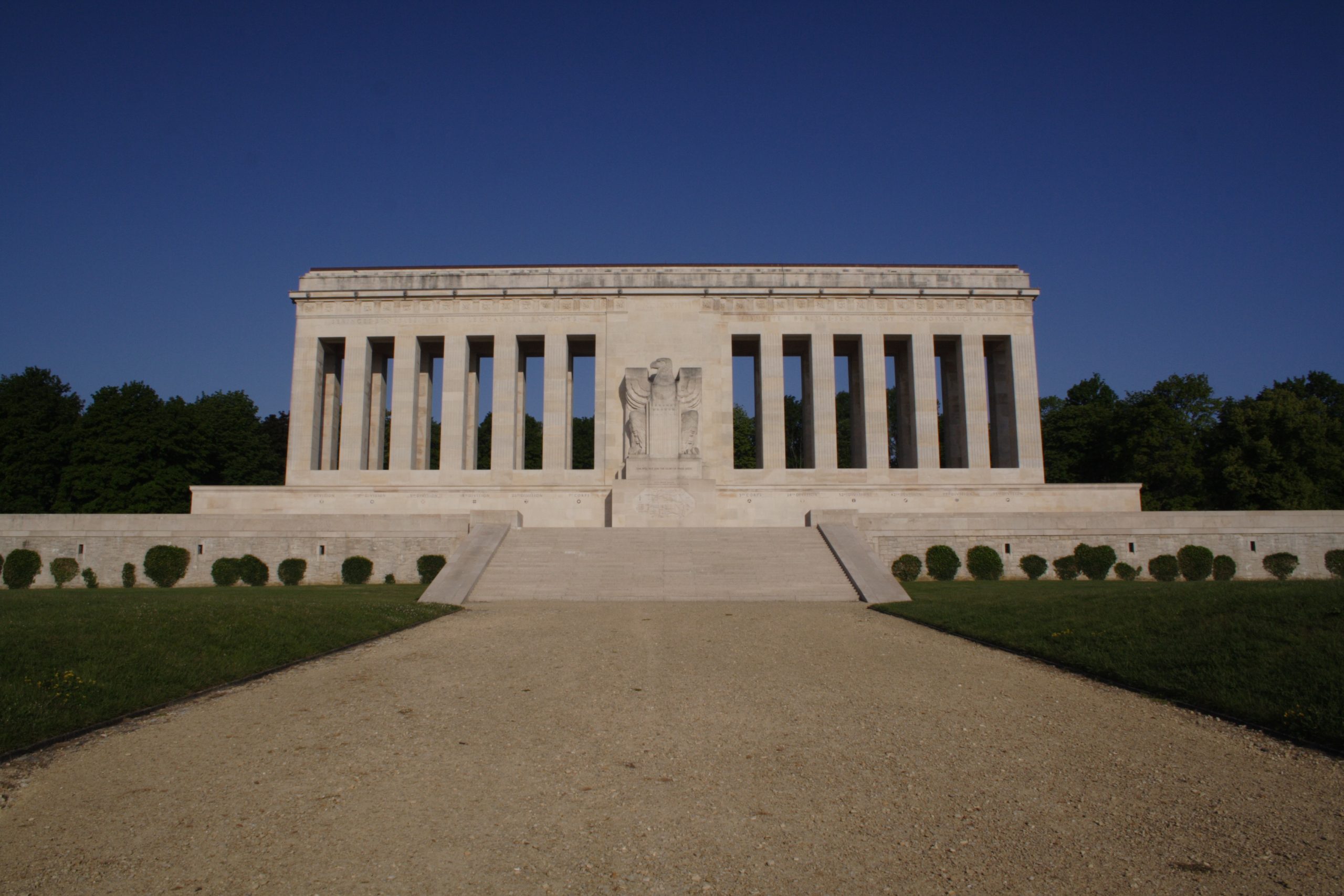
Perched atop Hill 204 overlooking the Marne Valley, American Battle Monuments Commission’s Chateau‑Thierry Monument is best known for its commanding architecture and its role in commemorating the joint efforts of American and French forces during World War I. But beyond its imposing silhouette, the monument carries layers of history that often go unnoticed. Three of the most compelling stories lie in the vision of its architect, Paul Philippe Cret, in the two statues representing Marianne and Columbia, and in the remarkable collection of historic plaster molds preserved beneath the monument itself. These elements reveal not just how the site was built, but how it continues to be cared for, interpreted, and preserved today.
A monument designed by Paul Philippe Cret
Paul Philippe Cret, a French‑born, Beaux‑Arts–trained architect who became ABMC’s first consulting architect in 1925 for ABMC’s World War I design program, a role in which he brought both his French heritage and his distinguished U.S. architectural career to bear on commemorative projects. created Chateau-Thierry Monument. For two decades, until his death in 1945, Cret advised ABMC on all aspects of its commemorative program.
For the Chateau‑Thierry Monument, Cret developed an austere, modern interpretation of classical architecture that aligned with the ABMC’s desire for a dignified yet contemporary expression of American sacrifice abroad. His design—a minimalist double colonnade overlooking the Marne Valley—reflects his mastery of stripped classicism and his ability to translate historical architectural languages into powerful symbols of remembrance and Franco‑American friendship.
Columbia and Marianne: A sculpted symbol of Franco-American friendship
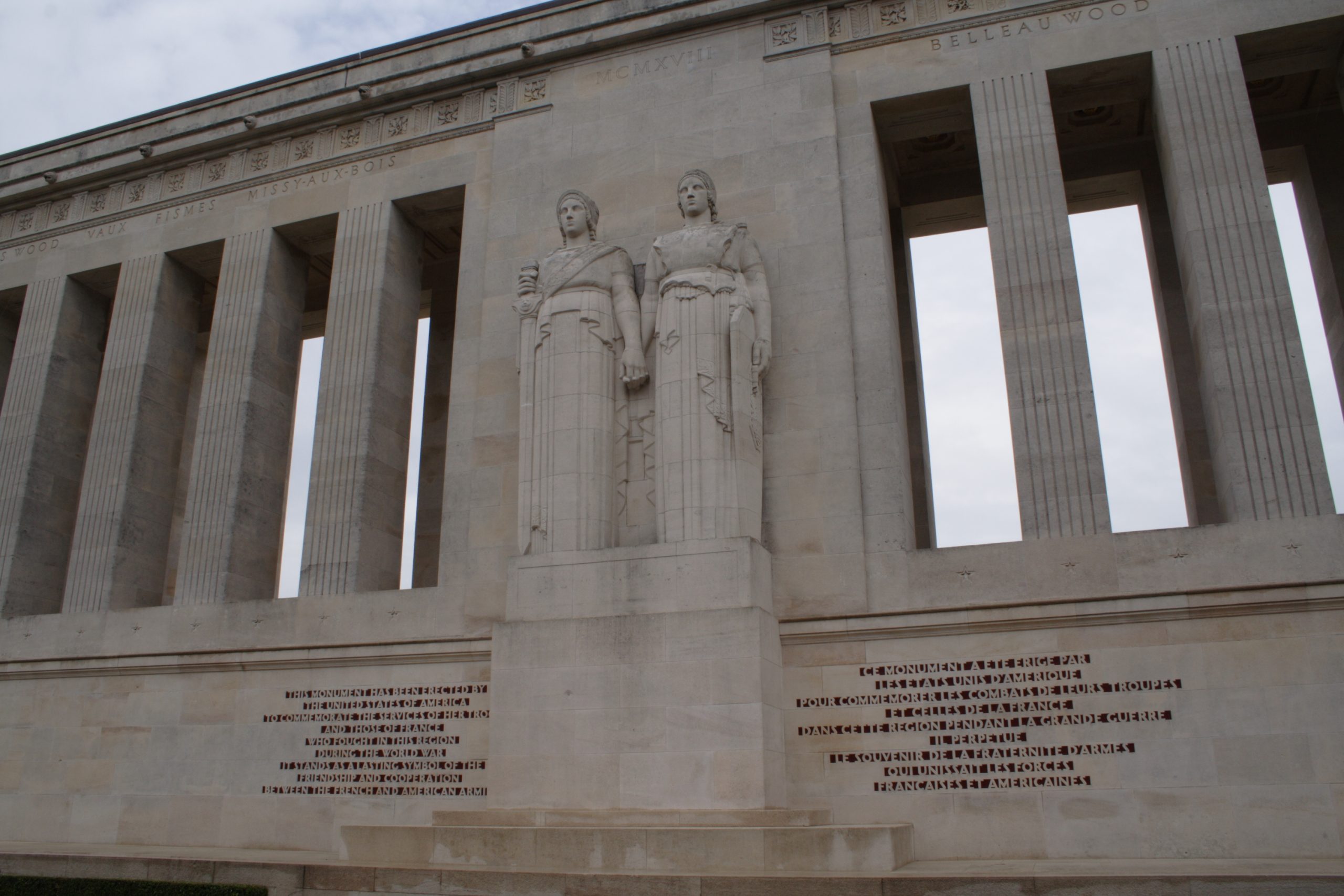
On the west façade of the monument, visitors encounter two monumental allegorical figures: Columbia, representing the United States, and Marianne, representing France. Sculpted by French artist Alfred Bottiau, the pair stands side‑by‑side, their hands joined in a gesture of unity and shared purpose. Their presence is more than decorative — it visually expresses the enduring partnership between France and the U.S. reinforced during World War I.
The sculptures are flanked by inscriptions in French and English, reinforcing the monument’s dual national identity and Cret’s intention to embed Franco‑American meaning directly into the architecture. These figures serve as one of the monument’s most recognizable features, grounding its commemorative message in a powerful, humanized symbol of alliance.
A hidden world beneath the monument: The Collection Repository
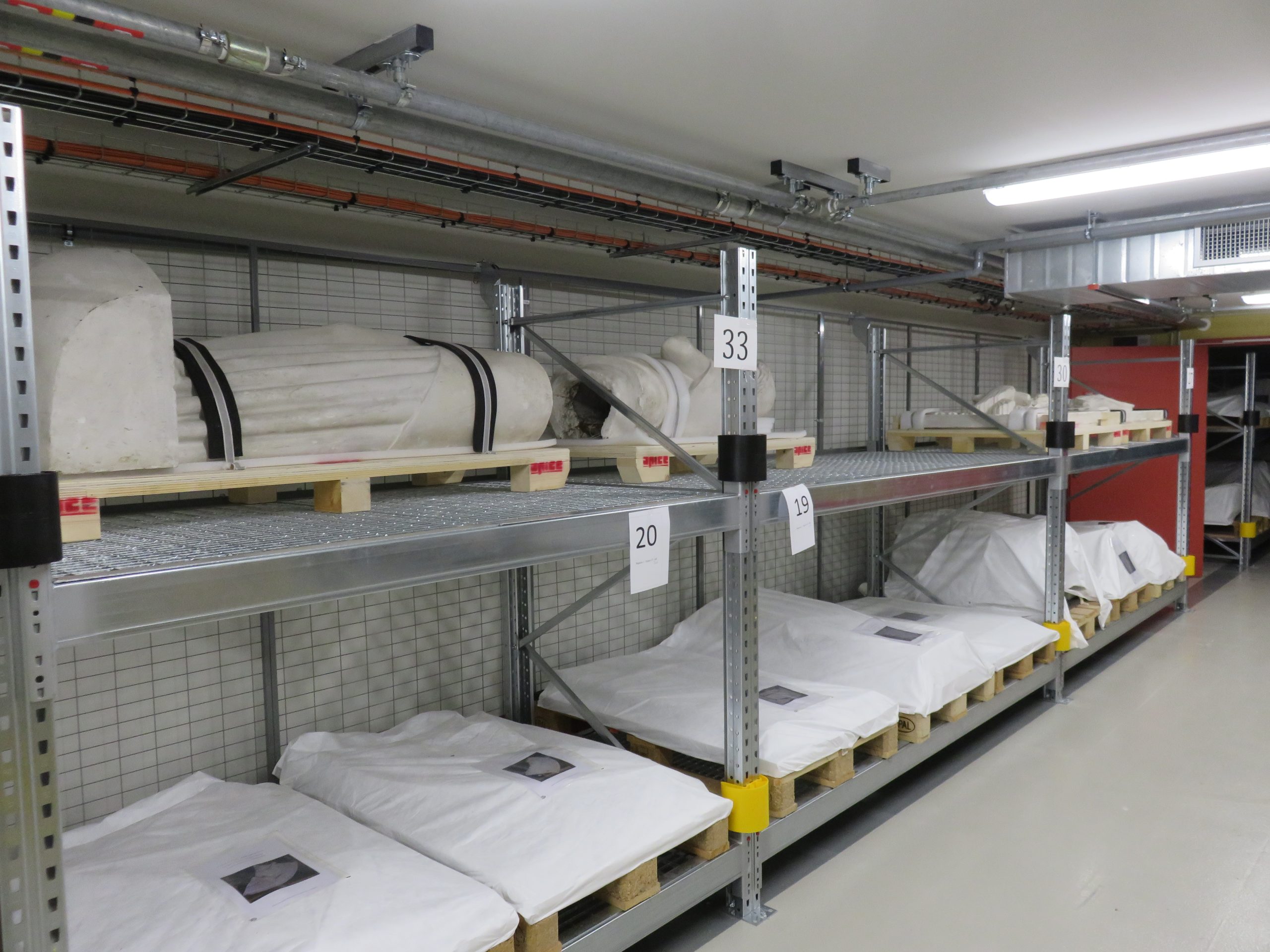
Directly beneath the monument lies the Château‑Thierry Collection Repository, a secured, climate‑controlled storage and conservation space. It houses almost 300 historic plaster molds, representing architectural and sculptural elements from ABMC cemeteries and memorials.
For decades, these molds were stored without inventory or formal preservation measures. They were brought to light when ABMC began preparing the monument’s basement for the future Visitor Center. Between 2015 and 2020, the Collections and Preservation and Facilities Management Directorates undertook a major initiative to identify, document, stabilize, rehouse, and relocate each mold into the newly built repository beneath the monument. This project not only protected fragile original pieces of art from environmental risks but also established long‑term standards for ABMC’s historic collections.
The American Battle Monuments Commission sites are a constant reminder of Gen. John J. Pershing’s promise that, “time will not dim the glory of their deeds.”