An official website of the United States government. Here's how you know.


 Countdown to




Metro Manila, the capital region of the Philippines, was a central theater of World War II in the Pacific and remains a place where remembrance and contemporary urban life exist side by side.
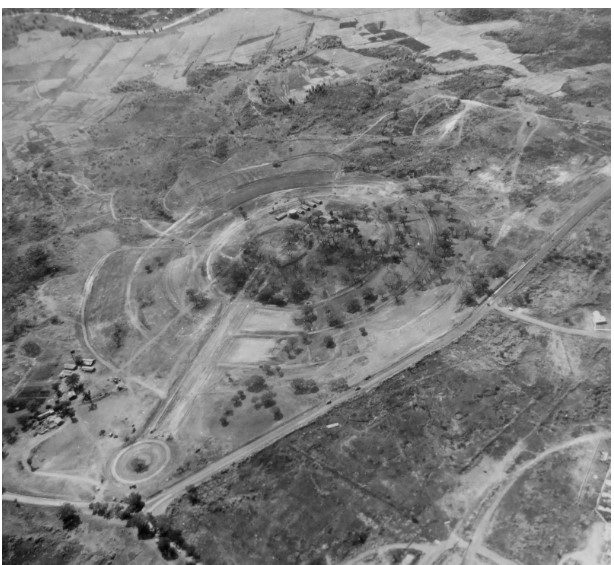
Located in Taguig within the former U.S. military reservation of Fort Bonifacio, Manila American Cemetery honors American and Filipino service members who lost their lives during the Second World War. Today, the cemetery stands within easy reach of other World War II-related sites as well as free, touristic public spaces in the surrounding area, allowing visitors to combine reflection at an American Battle Monuments Commission site with history and exploration of the modern city that has grown around it.
First stop, Manila American Cemetery
You will need at least a few hours to discover the site. Manila American Cemetery is the largest American military cemetery outside the United States. Maintained by the American Battle Monuments Commission, the site commemorates American and Filipino service members who lost their lives during World War II in the Pacific.
Although Manila American Cemetery was dedicated in 1960, the first burials began in 1949, as the U.S. consolidated graves from temporary battlefield cemeteries across the Pacific. This process took more than a decade and continues today as remains are still occasionally recovered from former battle sites.
Today, the cemetery contains approximately 17,000 burials, while the Walls of the Missing record the names of approximately 36,000 individuals whose remains were never recovered. Bronze rosettes mark those who have since been identified.
Manila American Cemetery is one of the few ABMC sites where the host nation’s flag flies daily alongside the American flag. This distinction honors the Philippine Scouts, a U.S. Army unit organized in 1901 and composed primarily of Filipino and Filipino‑American soldiers who served on the front lines in the Pacific.
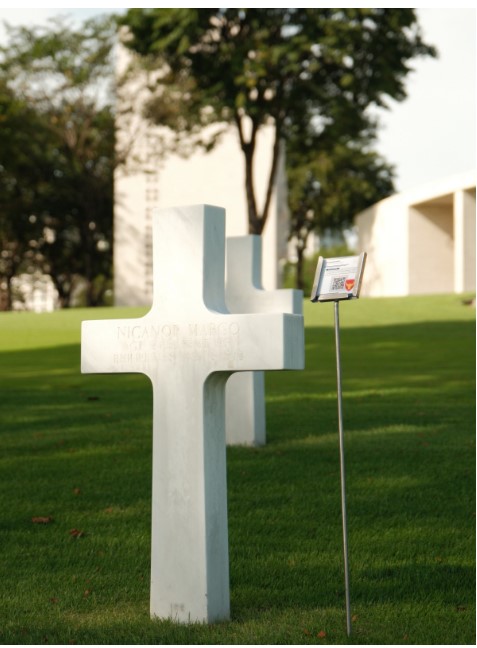
Nearly 5,000 Philippine Scouts are memorialized at the cemetery, including more than 550 who are buried on site. The Scouts endured extreme hardship, including the Bataan Death March, and suffered heavy casualties. Among them is Sgt. Nicanor Marco, who died May 8, 1942, and was buried at the cemetery at the request of his widow.
Four Olympic athletes who were killed in action during World War II in the Pacific are honored at Manila American Cemetery—three Americans and one Filipino—underscoring the global dimension of the conflict commemorated at the site.
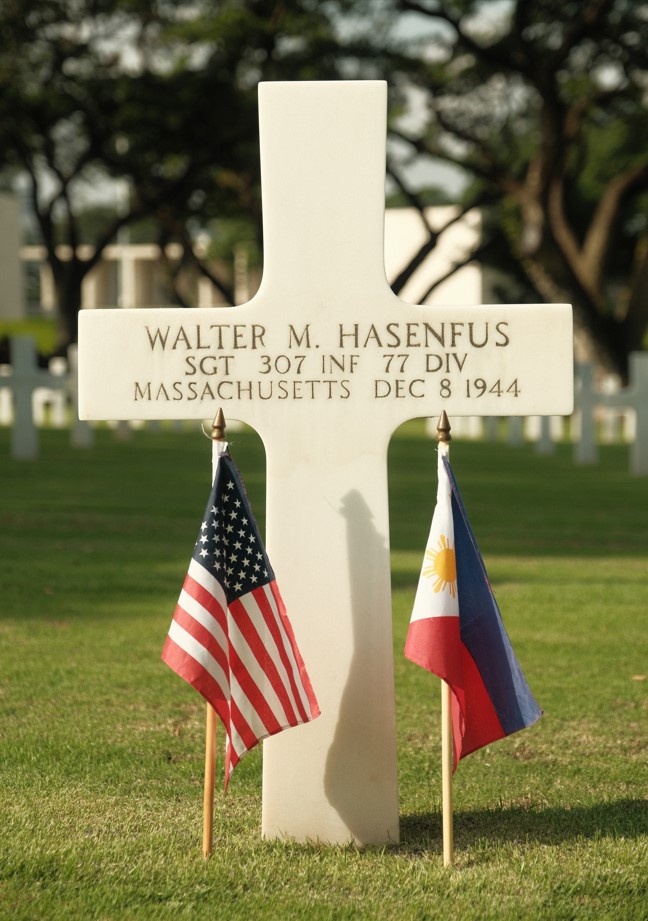
U.S. Army Sgt. Walter Hasenfus competed with his brother Joseph in the 1936 Summer Olympics in Berlin, rowing the C-2 10,000-meter, finishing fifth. The infantryman was killed in action in the South Pacific Dec. 8, 1944, and is buried in Plot C, Row 13, Grave 17.
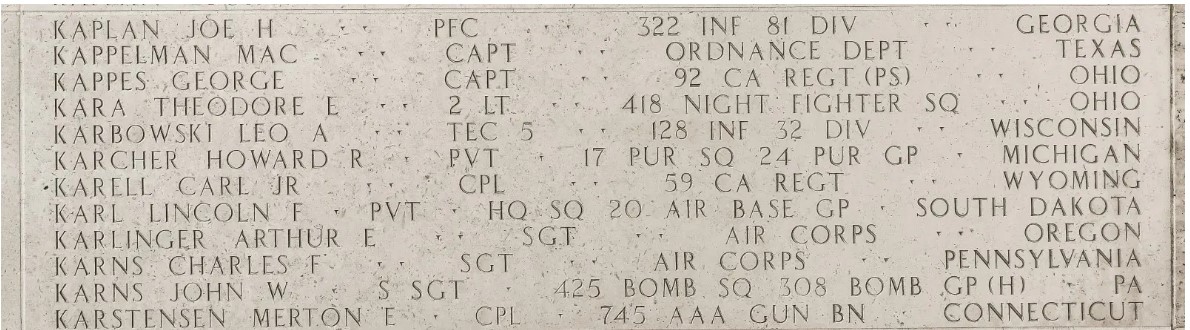
U.S. Army Air Forces 2nd Lt. Theodore Kara competed as a featherweight boxer for the United States during the 1936 Olympics and won three previous NCAA boxing titles for the University of Idaho. He was declared missing after his plane went missing over the Pacific in 1944. He is commemorated on the Walls of the Missing.
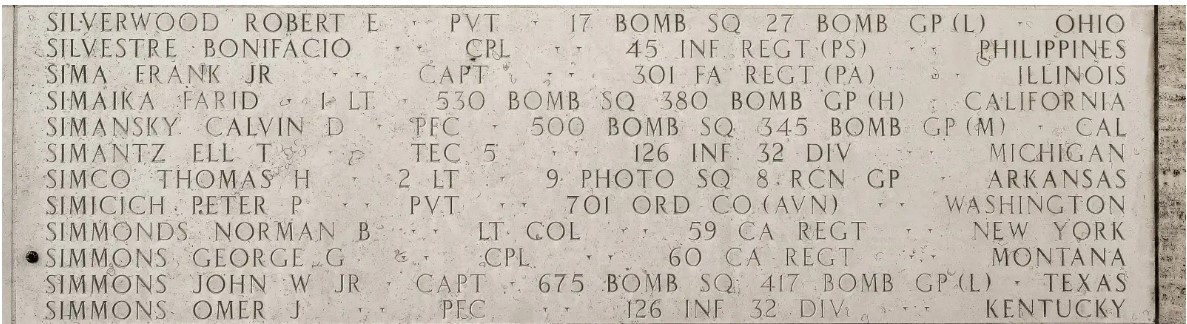
U.S. Army Air Forces 1st Lt. Farid Simaika was born to a prominent family in Egypt and won both silver and bronze medals in diving for the nation during the 1928 Olympics in Amsterdam. He went on to receive American citizenship in 1942 and enlisted in the Army. His plane was believed to have been shot down over Indonesia in 1943. Having been declared missing in action in December 1945, he was listed on the Walls of the Missing.
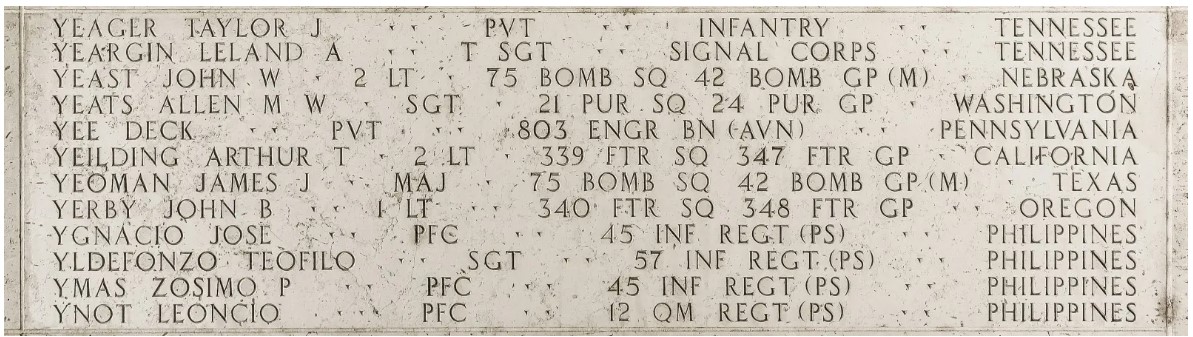
U.S. Army, Philippine Scouts, Sgt. Teofilo Yldefonzo competed at the Olympic games for the Philippines in 1928, 1932 and 1936. He was the first Filipino athlete to win an Olympic medal, and for a long time, the only Filipino with multiple Olympic medals to his name. He won back-to-back bronze medals in the 200-meter breaststroke in the 1928 and 1932 games. Yldefonzo became one of tens of thousands who were led on the brutal 65-mile Bataan Death March. It is unclear how or when Yledefonzo died, but his remains were never recovered. He is memorialized on the Walls of the Missing. It was not until 2020 that another Filipino would earn multiple Olympic medals—fellow service member Hidilyn Diaz, a sergeant in the Philippine Air Force who won both silver and the nation’s first gold in weightlifting.
Manila American Cemetery is open daily to the public, except Dec. 25 and Jan. 1. A visitor center provides assistance, guided tours, and historical interpretation. An interpretive visitor center opened in 2019, marking both the 75th anniversary of Gen. Douglas MacArthur’s return to the Philippines and honoring American and Filipino sacrifices during the war.
World War II–related sites to see nearby
In addition to Manila American Cemetery, several World War II–related sites are located in and around Metro Manila providing further context to the Pacific War. Within Fort Bonifacio, the nearby Libingan ng mga Bayani (Heroes’ Cemetery) commemorates Filipino service members and reflects the country’s wartime experience.
In the city of Manila, Memorare–Manila 1945 honors civilian victims of the Battle of Manila during the city’s liberation.
The Philippine Veterans Museum in Taguig presents exhibits focused on Filipino soldiers and resistance during World War II.
Fort Santiago, located within the walled city of Intramuros, played a significant role during the Japanese occupation and today serves as a Shrine of Freedom, open to the public. Nearby, Plaza Moriones, also in Intramuros, is where Sigaw ng Tondo is located, a monument sculpted in 1978 by Eduardo Castrillo in memory of local victims fleeing Japanese forces during the Battle of Manila in 1945.
If you have more time and the will to travel farther afield, Corregidor Island preserves the remains of coastal defenses, tunnels, and ruins associated with the defense and liberation of the Philippines, while both the Dambana ng Kagitingan (Shrine of Valor) at Mt. Samat, the Bataan Death March memorial sites, and the Capas National Shrine in Luzon commemorate the surrender of Allied forces in 1942 and the subsequent imprisonment of American and Filipino troops.
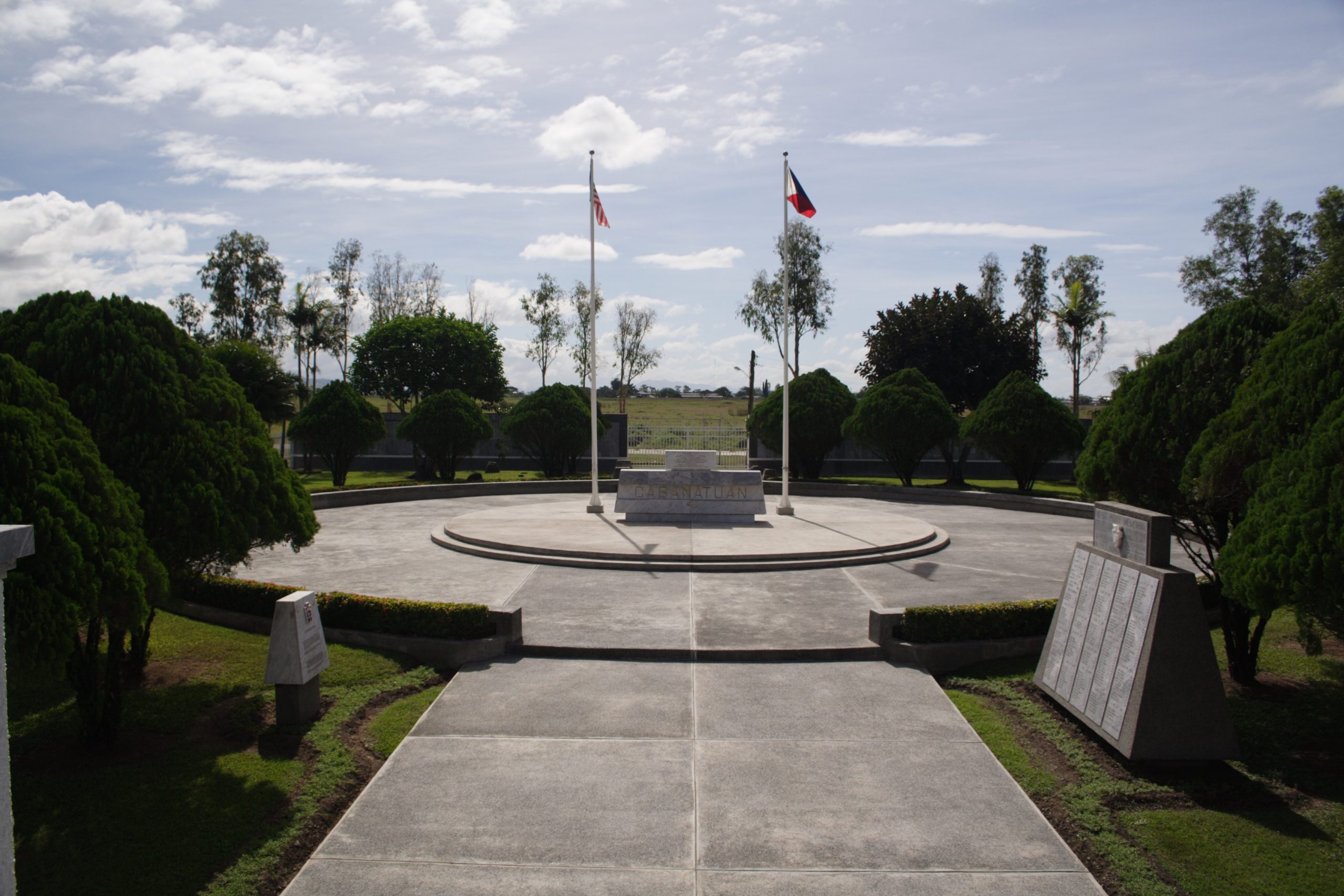
Approximately halfway to Luzon is ABMC’s Cabanatuan American Memorial, erected by the survivors of the Bataan Death March and the prisoner of war camp at Cabanatuan in the Philippines during World War II.
Free activities to do near Manila American Cemetery
Beyond the cemetery grounds, visitors will find several free and easily accessible places nearby to enjoy a walk, relax outdoors, or experience the contemporary atmosphere of the surrounding area. Located within and around Fort Bonifacio, these nonhistorical sites offer simple, cost-free options that can complement a visit to Manila American Cemetery.
Located in Bonifacio Global City, Bonifacio High Street is a pedestrian‑friendly, open‑air promenade with landscaped walkways, seating areas, and public art. It is freely accessible and commonly described as the central public space of this area, suitable for walking and casual exploration.
Bonifacio Global City features outdoor murals and public art installations displayed along streets, parking structures, and open spaces. These artworks are in freely accessible public areas and can be viewed while walking through the district.
Track 30th Park and nearby green spaces in Bonifacio Global City are open to the public at no cost. These landscaped parks offer walking paths and open areas and are frequently mentioned in visitor guides as part of the city’s network of accessible public spaces.