


Chief Aviation Pilot James W. Bolton
Early Life
James William Bolton was born on July 3, 1920, and grew up in Newberry County, South Carolina. His parents, Mary Bolton and Russell Marion Bolton, lived in Goldville, South Carolina, a railroad community later known as Joanna, South Carolina. Russell was employed as a slasher in a textile mill in the area. Slashers worked on an assembly line and applied starch to protect sheets of fabric in the warping process in preparation for weaving.
It is unclear what happened to James’ mother. His father was remarried to Sallie Katherine Attaway Bolton before 1930, and his half-sister, Elsie Marion, was born in 1932.
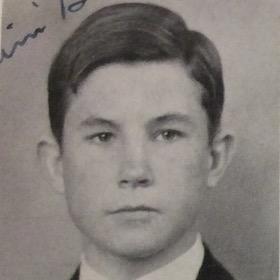
In 1938, James graduated from Newberry High School. He was active in sports, international relations club, and the debate team. His yearbook noted that James had a “quick smile and an ever-present desire to help others.” Family stories indicated he played baseball on one of the mill teams after graduation, so he may have been employed by one of the textile mills.
Family members relayed a story about James’ relationship with his younger sister. She was 12 years younger than James, and he was devoted to her. Knowing he would not be back in time for her birthday in January 1944, he purchased a garnet ring (her birthstone) and arranged for it to be delivered to her. The gift arrived in Newberry the day after his death.
Military Experience
Bolton enlisted in the U.S. Navy in November 1939 and trained as a seaman at Pensacola Naval Air Station in Florida. He was selected for the naval enlisted aviator program and earned his wings as a naval aviator in April 1942. In May 1942, he was assigned to Patrol Squadron 42, flying PBY Catalina amphibious patrol planes, at Fort Glenn, Alaska, in the Aleutians. Bolton spent his entire flying career in the Aleutians, including some time ferrying Catalinas from the west coast to Alaska.
He earned an Air Medal from the U.S. Navy during the Aleutian Islands Campaign in June 1942. Imperial Japanese forces had attacked Dutch Harbor on Unalaska Island and seized Attu and Kiska Islands in Alaska. His citation, signed by the Secretary of the Navy, reads:
For meritorious achievement while participating in aerial flight as an aviation pilot in action against enemy Japanese forces during the Aleutian Islands Campaign, June 1 to June 15, 1942. Under the most severe weather conditions of high winds, snow, rain and fog, and in the face of persistent attack, Bolton, with conscientious devotion to duty, made repeated flights on tactical missions and displayed zeal and determination in combat against the enemy. His fine courage throughout was in keeping with the highest traditions of the United States Naval Service.
During spring and summer 1943, the U.S. military retook Attu and Kiska Islands. U.S. forces patrolled these waters and made occasional bombing missions against the Japanese in the Kurile Islands off the coast of the Soviet Union.
Bolton’s logbook recorded his participation on one of these bombing missions on December 30-31, 1943, to the northern island of the Kuriles, Paramushir. The flight lasted almost 12 hours. Paramushir is located just off the southern tip of the Kamchatka Peninsula of the former Soviet Union. There were numerous Imperial Japanese Army and Navy positions over the entire island of Paramushir. Pilots flew straight over the target over a mile high in the air at about 100 miles per hour. They dropped flares so they could see the target area and then dropped 1,000 pounds of bombs on the target.
The War Diary from Bolton’s squadron listed the weather conditions on Monday, January 17, 1944, as low clouds with very windy blowing snow, sometimes making it impossible to see anything at all. Bolton’s plane, tail number 33969, “crashed and burned” in Massacre Bay in Attu immediately after takeoff. They suspected a failure of the port (left) engine. None of the crew survived. All flights were cancelled the next day due to weather; the War Diary recorded the same observations as the day before.
A death gratuity of six months pay, $1,417.50, was sent to his father in February 1944. His beneficiary slip indicated he was not married. His personal effects, including his logbook, gold aviator wings, and a Bulova watch, were forwarded to his father in June 1944.
Family stories told of James’ fiancée, a woman named Lucy. She went on to marry one of his best friends after the war and had a son. Both Lucy’s husband and son were killed in a plane crash. She later contacted Bolton’s stepmother and wrote that “every man I have ever loved was killed by a plane.”
Eulogy
James “Jim” William Bolton died on January 17, 1944, when one of his Navy PBY-5 Catalina amphibious patrol plane engines exploded, and the plane crashed into the Pacific near Attu Island, Alaska. His body was never recovered. He was 23 years old. He is commemorated at the Honolulu Memorial on the Courts of the Missing in the National Memorial Cemetery of the Pacific in Honolulu, Hawaii, and on a marker in the Rosemont Cemetery in Newberry, South Carolina.
In 1992, 48 years after his death, Bolton’s stepmother, Sally Katherine, was presented with a gold star flag at a Veterans Day ceremony in Charleston, South Carolina. This commemoration had “borne on” her “mind for years.” She felt she “had to do it.”
At the top of the staircase to the Court of Honor at the National Memorial Cemetery of the Pacific stands a statue of Lady Liberty with a quote from Abraham Lincoln, “The solemn pride that must be yours to have laid so costly a sacrifice upon the altar of freedom.”
James Bolton lived a life that mattered; he made a difference. With a “quick smile and an ever-present desire to help others,” he laid a costly sacrifice on the altar of freedom. Our nation is grateful, and we will never forget.
“Aleutian Islands: WWII’s Unknown Campaign.” Veterans History Project, Library of Congress. Last modified April 7, 2014. Accessed August 7, 2017. www.loc.gov/vets/stories/ex-war-aleutians.html.
Bartoletti, Lee F. “Battle of the Aleutian Islands: Recapturing Attu.” World War II. November 2003. www.historynet.com/battle-of-the-aleutian-islands-recapturing-attu.htm.
“Battle for the Aleutians.” Aleutian World War II National Historic Area, National Park Service. Last modified July 7, 2017. Accessed August 7, 2017. www.nps.gov/aleu/index.htm.
Bolton Family Photographs. 1940-1944. Courtesy of Blair Pugh.
Cosgrove, Ben. “LIFE in the Aleutians: Rare Photos From World War II’s Forgotten Front.” Time. Last modified May 24, 2012. Accessed August 7, 2017. time.com/22030/aleutian-islands-campaign-rare-and-classic-photos-from-wwii/.
Florida. Escambia County. 1940 U.S. Census. Digital Images. ancestry.com.
“James W. Bolton.” American Battle Monuments Commission. Accessed April 11, 2017. www.abmc.gov/node/477903#.WO0it4grLIU.
James W. Bolton, Official Military Personnel File, Department of the Navy, Records of the Bureau of Naval Personnel, RG 24, National Archives and Records Administration – St. Louis.
James W. Bolton, Naval Aviation Training Jacket, Department of the Navy, Records of the Bureau of Naval Personnel, RG 24, National Archives and Records Administration – St. Louis.
James W. Bolton, Individual Deceased Personnel File, Department of the Army.
MacGarrigle, George L. “Aleutian Islands War June 3, 1942 – August 24, 1943.” United States Army Center of Military History. Last modified October 3, 2003. Accessed August 7, 2017. www.history.army.mil/brochures/aleut/aleut.htm.
Newberry High School Yearbook, 1938.
Pugh, Blair. Personal Interview with author. March 28, 2017.
Ships, Stations, Units, and Incidents Casualty Information; Records of the Bureau of Naval Personnel, Casualty Assistance Branch; Record Group 24 (Box 194); National Archives at College Park, College Park, MD.
South Carolina. Laurens County. 1920 U.S. Census. Digital Images. ancestry.com.
South Carolina. Newberry County. 1930 U.S. Census. Digital Images. ancestry.com.
South Carolina. Newberry County. 1940 U.S. Census. Digital Images. ancestry.com.
World War II War Diaries; Records of the Office of the Chief of Naval Operations, Records Relating to Naval Activity During World War II, Record Group 38 (Box 119); National Archives at College Park, College Park, MD.
This profile was researched and created with the Understanding Sacrifice program, sponsored by the American Battle Monuments Commission.
Contributor
Contributed by Mr. Walter Davis
Edisto High School
2016-2017
