


Sergeant Alphonso Church
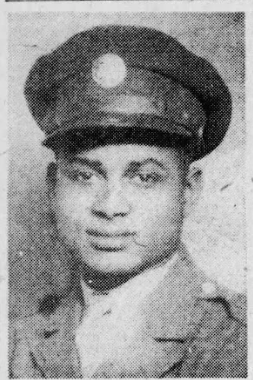
Early Life
Lonnie Church married Mollie Idlett on February 6, 1905, in Camilla, Georgia. The couple initially had four daughters, Elnora, Jannie, Patience, Carrie, and one son, Aelous. By 1915, the Church family moved to Gifford, Florida. Lillian, their fifth daughter, was born a year later in 1916. On August 25, 1919, Alphonso was born, the last of Mollie and Lonnie’s seven children. Lonnie worked as a laborer, and Mollie stayed at home to take care of the children.
The Church Home
Moving to Florida marked a new chapter for the Church family, but it was soon overshadowed by loss and separation. In 1922, Mollie attempted to give birth to another male child. However, the child was stillborn. A year later, Mollie passed away from uterine cancer. Alphonso was only four years old.
Tragedy struck the Church family for a third time in 1924, when Alphonso’s sister Carrie died of pulmonary tuberculosis at the age of 15. Aelous also contracted the disease and was sent to the Tuberculosis Sanitarium in Carroll County, Maryland.
The eldest children began to move away from Gifford. Elnora married Dan Postell and had one son, Olivet Postell, who served in World War II.
Lonnie, a widower, remarried in 1926 before passing away in 1932. By the age of 11, Alphonso and his elder sister Lillian left Gifford and took up residence, as boarders, in Palm Beach, Florida.
The eldest children would pursue love and begin families outside of Gifford. Jannie married John Bryant in South Bay, Florida, and had seven children: Geneva, Doris, Elizabeth, Yara Mae, Frank, J.B., and Gloria Jean. In 1934, Lillian married Edward Howard in Jacksonville, Florida, and they had three children: Eddie Lee, Jimmy, and Benny. Aelous moved to New York and married Irene Manson.
At 17 years old with an eighth-grade education, Alphonso remained in Florida.
Photo carousel gallery
Home Front
During World War II, the small community of Gifford, Florida, saw little direct involvement in war-related manufacturing. While shipyards and factories in cities like Tampa, Miami, and Orlando bustled with the production of wartime supplies, Gifford remained an agricultural industry contributor to the state of Florida. The state’s fertile soil produced essential wartime crops like cotton, sugar, tobacco, and vegetables, with citrus fruits such as oranges, grapefruits, and tangerines in high demand.
Florida newspapers often featured recruitment advertisements to join the U.S. Navy, U.S. Coast Guard, and the U.S. Cadet Nurse Corps. Other advertisements appeared for stamps and war bonds to help pay for ammunition and the soliciting of goods needed for servicemen in the U.S. Army.
The need for servicemen created more employment opportunities for African American men and women. As more servicemen were called to the frontlines, women were left to maintain the Gifford community. Alphonso Church worked for Phillip Perkins at the Rio Mar Club in Vero Beach, Florida, before enlisting in the U.S. Army in 1942.
Photo carousel gallery
Military Experience
We Want You!
On September 16, 1940, President Franklin D. Roosevelt mandated that all men aged 18 to 65 register for the armed forces. The Selective Training and Service Act was signed into law. The War Department Organization and Training Division revised its plan for incoming African American soldiers. At the start of the war, African American soldiers were met with strict quotas and were limited to segregated units, limited roles, or positions in the Quartermaster Corps. White enlistees were encouraged to choose where they would like to serve.
Principals of local schools were called together to help manage the draft registration. Each time a new resident was called, their name would be posted in the newspaper and announced at the local board meeting. In addition to Alphonso, several men in his family registered for the draft, including his nephew, Olivet, and brother, Aelous.
Alphonso, whose draft number was 756, was called up for service and traveled to Camp Blanding in Clay County, Florida, on August 20, 1941. Local newspapers encouraged families to write to their young soldiers. Some shared updates about their service lives, including promotions, visits home, orders, and Missing in Action (MIA) notices.
World War II
During World War II, the military was segregated. Local newspapers published stories about the praises received by African American soldiers within the ranks. While they experienced poor training, inadequate facilities, and mistreatment by peers and supervisors, African American troops and community activists fought for improvement. Combatting stereotypes would be no easy feat, and promotion in the armed forces was difficult to achieve.
After his induction into the U.S. Army, Alphonso was assigned to the 904th Quartermaster as a private at Camp Blanding. Camp Blanding had taken on a life of its own, specializing in tactical war training and serving as a temporary facility for soldiers traveling to other posts. It is unclear how long Church was stationed at Camp Blanding or what he experienced before being transferred to Mitchel Field (now Mitchel Air Force Base), New York.
During World War II, the U.S. Quartermaster Corps trained men to handle and transport supplies to the front lines. Quartermaster companies learned to navigate terrain in challenging conditions to deliver equipment to combat units. They transported food, clothing, ammunition, and fuel. Even though these soldiers were not on the front lines, their work was still very dangerous. Many individuals in quartermaster companies died or suffered critical injuries transporting items to the front lines. The 904th Quartermaster Company was broken into smaller detachments to support larger units across the globe
In July 1944, Church was hospitalized for an arm injury after a non-combat vehicle accident. He remained in service after the injury until he was honorably discharged on January 31, 1946. His rank at the time of discharge was a Technician Fifth Class.
Returning Home
Many African Americans viewed World War II as a war on two fronts. While they helped protect the nation against foreign enemies, they also fought for equality in the United States. At the end of World War II, African Americans returned to the same discrimination they had faced before the war. The Army quickly demobilized African American units after the war ended. Newspapers featured cartoons announcing the lack of need for African Americans in certain regions.
After World War II, Church moved to Baltimore, Maryland, where his sister Patience lived.
In the military, change had begun. At the onset of the Korean War, the armed forces had officially been desegregated. Despite this, promotion within the ranks of the armed forces would still prove difficult to obtain.
The Korean War
On July 26, 1950, Church re-enlisted to take up arms in the Korean War. He was assigned to the Eighth Army, 25th Infantry Division, 24th Infantry Regiment, 3rd Battalion, Company K at the rank of corporal. He began his journey in Fort Dix, New Jersey. After being transferred to Camp Stoneman in California in August 1950, he was sent overseas.
The 24th Infantry Regiment received orders for Operation Dauntless on April 6, 1951. The unit learned from a Prisoner of War that the Chinese Communist Spring Offensive was planned for April 22, 1951. Leading up to the attack, the weather had been poor, the rocky terrain was challenging to navigate, and the use of napalm and white phosphorus decreased the soldiers’ ability to see clearly.
At approximately midnight, the offensive began with heavy mortar and artillery fire. While moving to Hill 877, Company K was attacked from the rear and on the flank. The enemy continued to launch their offensive from the night of April 22 through April 23, 1951.
The 24th Infantry Regiment was ordered to withdraw after its positions had been compromised. Rear units had been infiltrated, and the lines of communication were cut. While advancing toward Hill 877, Company K was attacked from the rear and flank. The enemy sustained their offense from the night of April 22 through April 23, 1951.
The 24th Infantry Regiment was unable to secure its position due to the enemy’s forceful resistance from the top of the hill. At some point during this battle, Church went missing. He was last seen in the vicinity of Sosong-Ni, North Korea.
Photo carousel gallery
Commemoration
The Search Begins
The U.S. military attempted to search for Church near his last known location. Church’s older sisters, Elnora and Patience, received letters from the Department of Defense dated July 23, 1951. Notices of Church’s disappearance also appeared in the local newspapers of his hometown of Indian River, Florida, and in White Plains, New York.
The Department of Defense also notified his sisters of the need for Alphonso’s previous dental or medical records. The dental record on file by the military was insufficient and proved to be useless in the pursuit to find him. It is unclear how Patience or Elnora reacted to this news and what aid, if any, they could provide the U.S. Army in finding their brother.
Restricted Areas: Unfound
In Korea, the military made several attempts to find Alphonso and eight of his comrades. The last reported search attempt was made on November 5, 1954. The search and rescue teams experienced many challenges in their pursuit.
Alphonso’s last known location was reported as a field artillery range near Sosong Ni, North Korea. This meant that the team could only search at certain times. They found and searched innumerable foxholes and bunkers as best they could. Some were filled with undergrowth and bushes, making search and rescue a near-impossible task.
Search teams did find remains; however, they belonged to a Turkish soldier, not Alphonso nor any of the other missing members of Company K. Hospital records in Japan and Korea were also reviewed to no avail. Search and rescue teams would later discover that many servicemen listed as Missing in Action in South Korea were actually captured and transported to North Korea, where they died as Prisoners of War.
A 1956 report created by the Memorial Division of the U.S. Army outlined several other challenges faced in the search for Alphonso. Searches of the Demilitarized Zone could not be conducted by U.S. forces, and the military believed that not all of the U.S. servicemen who were interred in North Korea had been returned to the U.S.
For Alphonso’s courage and service, he was awarded the Purple Heart, the Combat Infantryman Badge, the Korean Service Medal, the United Nations Service Medal, the National Defense Service Medal, the Korean Presidential Unit Citation, and the Republic of Korea War Service Medal. On May 1, 1953, he was promoted to sergeant.
Today, Sergeant Alphonso Church is commemorated on the Honolulu Memorial at the National Memorial Cemetery of the Pacific in Honolulu, Hawaiʻi.
Photo carousel gallery
Primary Sources
“Aelous B. Church ” The Reporter Dispatch [White Plains, NY], June 21, 1973. Newspapers.com (170554228).
Aelous Buddy Church. World War II Draft Cards Young Men, 1940-1947. Digital Images. https://ancestry.com.
Alphonso Church, Official Military Personnel File (partial), Department of the Army. National Archives and Records Administration – St. Louis.
Alphonso Church. World War II Draft Cards Young Men, 1940-1947. Digital Images. https://ancestry.com.
Alphonso Church. World War II Hospital Admission Card Files, 1942-1954.https://ancestry.com.
“Armistice Day Proclamation ” Indian River Press Journal [Vero Beach, FL], November 6, 1942. Newspapers.com (170373021).
Carrie Church. Certificate of Death, Bureau of Vital Statistics, Florida Department of Health. https://www.familysearch.org
“City Soldier Missing in Korean War: Church Unreported Since April 23 Action, Sister Is Notified ” The Reporter Dispatch [White Plains, NY], August 1, 1951. Newspapers.com (170552082).
Command Report 25th Infantry. April 1951. Accessed January 23, 2025. https://www.koreanwar2.org/kwp2/jpac/25id_cmdreport_april1951.pdf
Dan Postell and Elnore Church. Marriage license. https://www.familysearch.org.
“Doors Shut for them in China, Caribbean” The Afro-American [Baltimore, MD], March 2, 1946. Newspapers.com (170507484).
Edward Howard and Lillian Church. Marriage license. https://www.familysearch.org.
“Field Artillery Tells Afro, No.” The Afro American [Baltimore, MD], September 28, 1949. Newspapers.com (1133890863).
Final Payment Worksheet. National Personnel Records Center.
Florida. Duval County. 1940 U.S. Census. Digital images. https://ancestry.com.
Florida. Jupiter. 1930 U.S. Census. Digital images. https://ancestry.com.
Florida. Palm Beach County. 1930 U.S. Census. Digital images. https://ancestry.com.
Florida. Palm Beach County. 1940 U.S. Census. Digital images. https://ancestry.com.
Florida. St. Lucie County. 1920 U.S. Census. Digital images. https://ancestry.com.
Florida.Vero Beach. 1935 U.S. Census. Digital images. https://ancestry.com.
Georgia. Camilla. 1910 U.S. Census. Digital images. https://ancestry.com.
“Hints to Housewives.” Indian River Press Journal [Vero Beach, FL], July 26, 1940. Newspapers.com (169259719).
“Join the United States Cadet Nurse Corps” Indian River Press Journal [Vero Beach, FL], April 27, 1945 Newspapers.com (170373021).
Lonnie Church. Certificate of Death, Bureau of Vital Statistics, Florida Department of Health. https://www.familysearch.org.
Lonnie Church and Mollie Idley. Marriage license. https://www.familysearch.org.
“Many Vacancies at Army Posts Must be Filled Very Soon.” Indian River Press Journal [Vero Beach, FL], July 26, 1940. Newspapers.com (887056949).
Maryland. Carroll County. 1940 U.S. Census. Digital images. https://ancestry.com.
Mollie Church. Certificate of Death, Bureau of Vital Statistics, Florida Department of Health. https://www.familysearch.org.
“Needles for Overseas Soldiers.” Indian River Press Journal [Vero Beach, FL], July 21, 1944. Newspapers.com (169210873).
“New School Building for Colored Children.” Indian River Press Journal [Vero Beach, FL], February 17, 1928. Newspapers.com (887056949).
Olivet Postell. World War II Draft Cards Young Men, 1940-1947. Digital Images. https://ancestry.com.
“Postell, Olivet,” Tampa Bay Times. February 16, 2001. Newspapers.com (169220728).
“Principals Asked to Meeting.” Indian River Press Journal [Vero Beach, FL], October 4, 1940. Newspapers.com (887056949).
“Railroads and an Empire” The Miami Herald [Miami, FL], October 23, 1916. Newspapers.com (169159994).
“Simmons, Elnore.” Tampa Bay Times. November 16, 2004. Newspapers.com (169223679).
Stillborn. Certificate of Death, Bureau of Vital Statistics, Florida Department of Health. https://www.familysearch.org.
“The School Census Shows Substantial Gains This Year.” Vero Beach Journal [Vero Beach, FL], August 17, 1926. Newspapers.com (169258032).
“38 Colored Men to Leave on Nov. 20th for Camp Blanding” Indian River Press Journal [Vero Beach, FL], November 13, 1942. Newspapers.com (887188078).
“Two Colored Volunteers go to Camp Blanding.” Indian River Press Journal [Vero Beach, FL], August 22, 1941. Newspapers.com (887185457).
“What You Buy with War Bonds.” Indian River Press Journal [Vero Beach, FL], October 29, 1943. Newspapers.com (170372920).
Secondary Sources
“Abandoned Spaces” Henryton State Hospital – first institution to offer care for the African Americans that suffered from tuberculosis. Accessed April 20, 2025. https://www.abandonedspaces.com/hospital/african-americans.html.
“Alphonso Church.” American Battle Monuments Commission. Accessed February 3, 2025. https://api.abmc.gov/decedent-search/church%3Dalphonso.
“Alphonso Church” Defense POW/MIA Accounting Agency. Accessed January 4, 2025. https://dpaa-mil.sites.crmforce.mil/dpaaProfile?id=a0Jt000000Qsy6OEAR
Begley, Janet. “Centennial: Gifford community started as settlement in the mid-1880’s” TC Palm, August 8, 2019.
“Florida on the Home Front: Wartime Rationing and Shortages.” Museum of Florida History. Accessed January 26. 2025. https://museumoffloridahistory.com/explore/exhibits/permanent-exhibits/world-war-ii/florida-remembers-world-war-ii/florida-on-the-home-front-wartime-rationing-and-shortages/
Gourd. Janie. “Century of Progress.” Indian River Magazine. Accessed January 15, 2025. https://indianrivermagazine.com/century-of-progress/
Lee. Ulysses. “The Employment of Negro Troops.” Center of Military History. Accessed March 26, 2025. https://www.goldenarrowresearch.comhttps://www.abmc.gov/wordpress-uploads/2020/05/Employment-of-Africa-American-Troops-in-WWII.pdf.
“Number of Inhabitants: Florida.” Accessed January 25, 2025. https://www2.census.gov/library/publications/decennial/1950/population-volume-2/41601748v2p10ch1.pdf.
“Sgt. Alphonso Church” Find a Grave. Updated March 19, 2016. Accessed January 17, 2025. https://www.findagrave.com/memorial/159751833/alphonso-church
“ SGT Alphonso Church.” Military Hall of Honor. Accessed March 1, 2025. https://militaryhallofhonor.com/honoree-record.php?id=230145
“War Appendix.” United States Code: Selective Training and Service Act of 1940, 50a U.S.C. §§ 302-315 (Suppl. 1 1940). Accessed February 10, 2025. https://tile.loc.gov/storage-services/service/ll/uscode/uscode1940-00505/uscode1940-005050a003/uscode1940-005050a003.pdf.
“Wars Impact on Florida: Shipbuilding, Defense Industry, and War Products.” Museum of Florida History. Accessed January 26. 2025. https://museumoffloridahistory.com/explore/exhibits/permanent-exhibits/world-war-ii/florida-remembers-world-war-ii/wars-impact-on-florida-shipbuilding-defense-industry-and-war-products/.
Wegman, Catie. “The nucleus of our community’: Old Gifford School, Hosie Shumann Park earn state historic marker” TC Palm, June 14, 2021.
Winikoff, Mike. “Black History Month: Celebrating Gifford, Florida.” Hometown News, February 2, 2023. https://www.hometownnewstc.com/news/black-history-month-celebrating-gifford-florida/article_c16e292a-a31c-11ed-b259-1f086b18d3cd.html.
Contributor
Contributed by Miss Taila McKenzie
William Wirt Middle School
2024-2025
