


Sergeant First Class Frederick Eugene Fleming
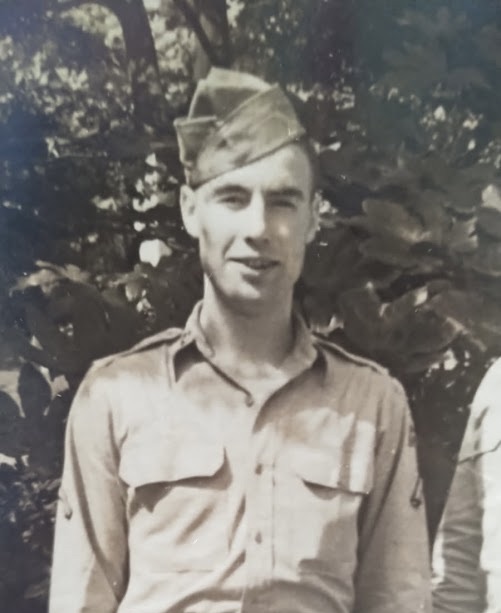
Early Life
Frederick Eugene Fleming was born on February 6, 1929, in Glengliff, New Hampshire, into a family rooted in the rural traditions of New England. He was the son of Doris Rollins Fleming and Robert Fleming. He grew up with three siblings: Hazel, Roberta, and Bernard. Together, they shared a family legacy anchored in their hometown, where familial bonds and rural values played a central role in shaping their upbringing.
Fleming and his mother worked at the Good Year Tire and Rubber Plant in Vermont, located approximately 12 miles from Plainfield. The plant, connected to several government contracts during the Korean War, was a vital part of the local economy. According to census records, Fleming’s father owned a farm in the area, highlighting the town’s continuing agricultural roots.
Photo carousel gallery
Home Front
Frederick Fleming lived in Plainfield, New Hampshire, a small farming town with a rich history. During the 1860s, Plainfield thrived as a prosperous sheep-farming region. By 1900, the market for sheep was not as strong as before. Land prices fell, and many farms were left empty.
Young people started to move away, and the town’s population dropped. It was not until the late 1970s that Plainfield’s population returned to its 1860 level of 1,620 residents.
Plainfield is known for its old buildings and connection to the Cornish Art Colony, which lasted from 1885 to 1930. The town has more than 30 buildings from the 1700s and over 100 others built between 1800 and 1850. It was also the home of Maxfield Parrish, a famous American painter and illustrator. His artwork from 1950, The Old Glen Mill, shows the beauty of New England’s landscapes.
Despite being a small town, Plainfield has had its own public library for more than a century. In 1920, Edmund S. Read built the Philip Read Memorial Library in honor of his father and generously gifted it to the town. Plainfield’s population, which was 970 in 1940, grew modestly to 1,011 in 1950 and 1,071 by 1960, largely due to an increase in births rather than an influx of new residents.
The Good Year Tire and Rubber Plant, where Fleming’s mother worked before the Korean War, had several government contracts during World War II. As World War II concluded, there was an increased demand for consumer tires. Government contracts picked up again during the Korean War as rubber consumption in the United States doubled.
Photo carousel gallery
Military Experience
Frederick Eugene Fleming served his country with distinction throughout his military career, demonstrating courage and dedication in every role he undertook. His military journey began in June 1947 when he became a member of General Douglas MacArthur’s Honor Guard in Tokyo, Japan.
Fleming served in the Honor Guard Company from 1947 to 1950. Members of this prestigious unit were carefully chosen based on their exemplary military bearing, perfect service records, intelligence, and physical stature, which had to fall between 5’10” and 6’1″. Fleming’s selection underscored his outstanding qualities, and his service in the Honor Guard placed him alongside decorated combat veterans from U.S. Army divisions in the Pacific.
This elite group represented the highest standards of professionalism and often engaged with dignitaries and participated in significant historical events. Fleming’s responsibilities in this prestigious unit included protecting General MacArthur, his family, and his staff. He guarded key locations, such as the general’s office at the Dai-ichi Life Insurance building in Hirakawacho, Chiyoda-ku, Tokyo, and his personal residence.
Korean War
In June 1950, Fleming was reassigned to the 1st Cavalry Division, 5th Cavalry Regiment, 2nd Battalion, Company E, and was deployed to Korea amidst the escalating conflict there. As a private first class, he participated in the Korean War’s first amphibious landing at P’ohang-Dong on July 18, 1950. His regiment’s mission was critical: securing transportation routes and defending the Pusan Perimeter, which was vital for receiving essential supplies and reinforcements from Japan and the United States.
Despite the intense and relentless nature of the fighting, Fleming earned a field promotion to the rank of sergeant during combat.
On August 15, 1950, during intense battles around Hill 303 near Waegwan, Korea, Fleming was captured by the Korean People’s Army (KPA). At the time, the 1st Cavalry Division was tasked with defending the Pusan Perimeter—a critical stronghold in the south of Korea, essential for receiving supplies and reinforcements. Positioned along the Naktong River, the division formed a 24-kilometer defensive line, aimed at preventing KPA forces from breaking through to the port of Pusan.
The KPA launched a fierce assault on Hill 303, aiming to breach the defensive line and exploit the vital transportation and supply routes leading southward. Company E, including Fleming, faced overwhelming enemy forces in a grueling series of battles. Hill 303 became the center of intense combat. Company G, positioned in the area, was encircled by enemy troops, and Company F was forced to retreat. During those encounters, Company H’s Mortar Platoon was captured, while Company E suffered severe losses, including three soldiers killed in action and four others—Fleming among them—taken prisoner or listed as missing in action.
As the KPA advanced, Fleming and other captured U.S. soldiers were subjected to brutal conditions and treated with disregard for international conventions. On August 17, U.S. forces from the 1st and 2nd Battalions of the 5th Cavalry Regiment, supported by A Company of the 70th Tank Battalion, launched a counteroffensive to retake Hill 303 and rescue captured soldiers. Tragically, the KPA executed approximately 41 POWs, most of them from Fleming’s regiment, before U.S. forces could reach them. Known as the Hill 303 Massacre, this war crime saw prisoners bound with their hands tied behind their backs and placed in a gully before being summarily shot. Fleming, however, was not among those killed during the massacre.
Instead, Fleming was forced to march 180 miles north to Pyongyang, Korea, alongside other captives including Sergeant Victor Stevens and Private First Class Martin Larioz, also from the 5th Cavalry Regiment. Eyewitness accounts indicate that during this brutal trek, Fleming was wounded in a U.S. strafing run by F-84 ThunderJets targeting enemy positions.
Despite his injuries, he received no medical treatment from his captors and suffered from malnutrition and mistreatment. On October 15, 1950, Fleming succumbed to his wounds and the effects of inhumane treatment. He was buried in a cemetery with 16 other U.S. service members, approximately three miles northwest of Pyongyang. His remains have not been identified among those returned by the North Korean government.
Photo carousel gallery
Commemoration
Fleming was initially listed as Missing in Action on August 15, 1950, and was not officially reported as deceased until May 11, 1953. During the interim, his family kept hope that he would one day be returned to them, as evidenced by his mother’s handwritten letter when she took possession of her son’s personal effects.
Fleming’s valor and service were recognized through numerous military awards. His field promotion to sergeant was recognized with a posthumous promotion to sergeant first class.
Although Fleming’s remains were not recovered, his family placed a memorial marker for him in Plainfield Cemetery, located in Sullivan County, New Hampshire. They mistakenly recorded his rank as master sergeant instead of sergeant first class. This cemetery is also the final resting place of his parents, Doris and Robert Fleming. Additionally, Fleming’s name is inscribed at the Korean War Veterans Memorial in Washington, D.C., and engraved on the Honolulu Memorial at the National Memorial Cemetery of the Pacific in Honolulu, Hawaiʻi.
Fleming’s brother, Bernard, named both his sons after their uncle in a touching tribute to his fallen brother.
Frederick Fleming’s contributions and sacrifices exemplify the courage and resilience of American soldiers who fought in the Korean War, and his legacy continues to honor his memory as a dedicated and brave U.S. Army service member.
Photo carousel gallery
Primary Sources
“Bernard Henry Fleming.” Knight Funeral Homes. Updated 2020. Accessed January 4, 2025. https://www.knightfuneralhomes.com/guestbook/bernard-fleming.
Fleming Family Photographs. 1947-1950. Courtesy of Heather Fleming.
Frederick E. Fleming, Individual Deceased Personnel File. National Archives and Records Administration – St. Louis.
Frederick Eugene Fleming. U.S. Korean War Casualties, 1950-1957. https://www.ancestry.com/.
Frederick Eugene Fleming. U.S. Veterans’ Gravesites, 1775-2019. https://ancestryclassroom.com.
Frederick Eugene Fleming. World War II Draft Cards Young Men, 1940-1947. Digital Images. https://ancestry.com.
“Massacre at Hill 303.” Time, August 28, 1950. https://time.com/archive/6615391/massacre-at-hill-303/.
New Hampshire, Sullivan County. 1940 U.S. Census. Digital images. https://ancestryclassroom.com.
New Hampshire, Sullivan County. 1950 U.S. Census. Digital images. https://ancestryclassroom.com.
New Hampshire, Merrimack County. 1930 U.S. Census. Digital images. https://ancestryclassroom.com.
Washington, Pierce County. 1950 U.S. Census. Digital images. https://ancestryclassroom.com.
Secondary Sources
Appleman, Roy E. South to the Naktong, North to the Yalu: United States Army in the Korean War. Washington, D.C.: Department of the Army, 1998.
Barker, Hal. “Korean War Project Home Page.” Korean War Project. Accessed March 23, 2025. https://www.koreanwar.org/.
Berman, Eliza. “See Photos from the Early Days of the Korean War.” LIFE, November 27, 2019. https://www.life.com/history/early-days-korean-war/.
Daniel T. Davis. “The 5th U.S. Cavalry.” American Battlefield Trust. Accessed March 10, 2025. https://www.battlefields.org/learn/articles/5th-us-cavalry.
“Doris V. Fleming.” Valley News [West Lebanon, New Hampshire], April 17, 1989. Newspapers.com (159577444).
Fleming, Heather. Telephone interview with the grand-niece. March 31, 2025.
“5 CAV History – Korea.” 1. Accessed March 20, 2025. https://1-5blackknights.tripod.com/korea.html.
“Frederick Eugene Fleming.” American Battle Monuments Commission. Accessed November 24, 2024. https://www.abmc.gov/decedent-search/fleming%3Dfrederick.
“General MacArthur’s Honor Guard.” MacArthur Memorial, VA – Official Website. Accessed March 15, 2025. https://www.macarthurmemorial.org/216/General-MacArthurs-Honor-Guard.
General MacArthur’s Honor Guard. Accessed March 10, 2025. http://generalmacarthurshonorguard.com/wordpress/.
“The Goodyear Rubber Company.” Company Histories. Accessed January 30, 2025.
https://www.company-histories.com/The-Goodyear-Tire-Rubber-Company-Company-History.html.
“Honor Guard Company.” United Nations Command > Organization > UNC Honor Guard. Accessed March 10, 2025. https://www.unc.mil/Organization/UNC-Honor-Guard/.
“Philip Read Memorial Library History.” Plainfield Public Libraries. Accessed January 30, 2025. https://plainfieldlibraries.org/plainfield/history.
“Plainfield.” Sugar River Region. Updated April 23, 2024. Accessed January 30, 2025. https://sugarriverregion.org/discover/communities/plainfield.
“Robert E. Fleming.” Valley News [West Lebanon, New Hampshire], January 13, 1972. Newspapers.com (160953109).
“SFC Frederick Eugene Fleming.” Find a Grave. Accessed November 24, 2024.
https://www.findagrave.com/memorial/135870502/frederick_eugene_fleming.
“Short History of Plainfield.” Plainfield Historical Society. Accessed January 30, 2025. https://www.phsnh.org/history.
“Soldiers, Korean Veterans Pay Respect to Fallen Brothers in Arms.” www.army.mil, July 7, 2016. https://www.army.mil/article/170908/soldiers_korean_veterans_pay_respect_to_fallen_brothers_in_arms.
“The Variety of McNamara Dairy.” Country Folks. Updated August 28, 2023. Accessed January 30, 2025. https://countryfolks.com/the-variety-of-mcnamara-dairy.
Zea, Philip, and Nancy Norwalk. Choice White Pines and Good Land: A History of Plainfield and Meriden, New Hampshire. Peter E. Randall Publisher, 1991.
This profile was researched and created through the Researching Silent Heroes program, sponsored by the American Battle Monuments Commission.
Contributor
Contributed by Mrs. Jennifer Knopf
W.T. Sampson Unit School
2024-2025
