


Tula Lake Harkey
Early Life
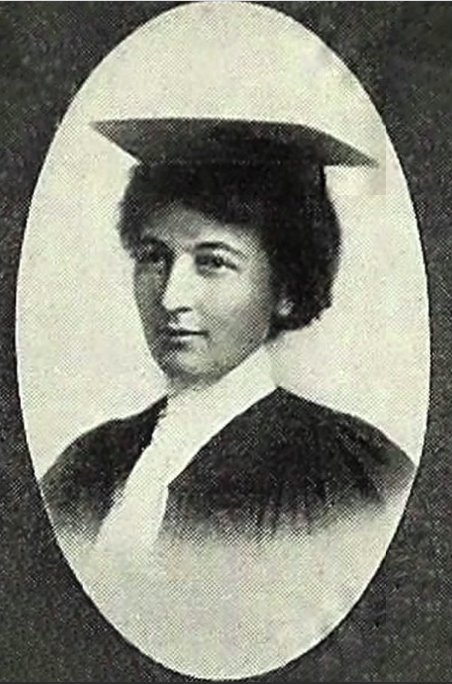
Tula Lake Harkey was born in December 1872 in Woodstock, Bibb County, Alabama. Little is known about her early life, except that she was an only child. By 1900, she passed the Board of Public School Examination to be a teacher in the public schools of Blocton, Alabama. During her time as a teacher, she was an active member and delegate of the Young People’s Society of Christian Endeavor, an interdenominational Protestant youth organization founded in Portland, Maine, by Francis E. Clark in 1881.
The Young People’s Society of Christian Endeavor operated internationally as “World’s Christian Endeavor.” Harkey would have signed a pledge to be an active participant “for Christ and the Church,” and served on a committee of her peers to organize and conduct worship activities that supported the community. She was also a member of the Ladies’ Missionary Society of the Presbyterian Church. During this time, she lived as a boarder with the Smith family in Precinct 3, Alabama.
Harkey graduated from Lebanon College with a Bachelor of Science in 1903. She then graduated from the Colorado State Normal School in 1906 with a Bachelor of Pedagogy degree, a professional degree that emphasized educational theory, teaching methods, and practice. In 1909, she graduated from Colorado College with a Bachelor of Arts in Zoology and Physiology.
Harkey then enrolled in Columbia University’s Ph.D. in Pure Science program, which focused on zoology, physiological chemistry, biological chemistry, and bacteriology. She received her Ph.D. from Columbia in June 1918 after completing her dissertation on edema, a condition characterized by excess fluid trapped in the body’s tissues.
While studying at Columbia, she taught classes there and worked as an assistant in sanitary chemistry at Teachers College. She lived with her closest friend, Miss Blanche Frazier, a nurse.
In 1916, while working as a bacteriologist and chemist for the State Department in Albany, New York, Harkey devised a better testing kit “outfit” for the Schick test, which was used to check if someone was immune to diphtheria. The test required injecting an extremely small and precise amount of diphtheria toxin, and the existing equipment was unreliable.
Harkey discovered that the pipettes delivered different-sized drops, making the test results inconsistent. She used a method known as titration to figure out exactly how much fluid each drop delivered, which allowed her to standardize the droppers. Her work made statewide, reliable testing possible, and it became the standard in the field.
Photo carousel gallery
Home Front
Though born and raised in Alabama, Harkey spent the years directly before the war in Albany, New York, and New York City. Both areas played significant roles in the war’s home front.
In April 1917, Governor Charles Whitman established the New York State Food Supply Commission, headquartered in Albany. The commission’s mission was to boost agricultural output statewide. It launched recruitment campaigns, provided assistance with seed distribution and pest control, and allocated short-term loans to farmers. Afterward, New York saw increased wheat, rye, oat, livestock, and dairy production.
Just outside of Albany, in Watervliet, is the oldest continuously active arsenal in the United States—the Watervliet Arsenal. It was instrumental in manufacturing large-caliber artillery, including cannons, howitzers, and mortar systems for the U.S. Army during World War I.
The Brooklyn Navy Yard in New York City also contributed to the military buildup. Once the U.S. entered the war, the Yard underwent significant expansion to meet wartime demands, including tripling the workforce from 6,000 to 18,000.
Several new facilities were also added, such as a locomotive roundhouse, supply storehouse, boat shed, structural shop, light machine shop, and Pier C. The Yard specialized in constructing submarine chasers, producing 49 in only 18 months. Additionally, it launched the USS Arizona, which would go on to great significance during World War II. By the end of 1918, the U.S. government had spent $40 million at the Brooklyn Navy Yard.
During the war, New York City became a focal point for the women’s suffrage movement. On October 23, 1915, 25,000 women marched on Fifth Avenue to draw attention to the upcoming referendum for statewide suffrage. The referendum failed. Another referendum was set to occur on November 6, 1917. On October 27, 1917, another parade occurred. This one focused on women’s contributions to the war effort and featured nurses, munitions workers, and mothers of servicemen. The event was a success, and on November 6, 1917, New York State became the first eastern state to grant women full suffrage.
Photo carousel gallery
Military Experience
When the United States entered World War I on April 6, 1917, Harkey was researching bacterial meningitis for the State Department in Albany. Many civilian professionals were recruited to assist in various capacities without formal military enlistment. They often worked in military hospitals, laboratories, or in collaboration with organizations such as the American Red Cross. Harkey agreed to continue her research overseas.
Base Hospital Number 33 was organized in June 1917 in Albany, New York. Harkey was mobilized at Troop B Armory in Albany on November 19, 1917. The group trained for five months.
On April 26, 1918, the group entrained for Camp Merritt, New Jersey, before departing for Liverpool, England, aboard the AMC Carmania on May 3. The Carmania was a luxurious Cunard liner that the Royal Navy requisitioned at the start of the war to outfit as an “Armed Merchant Cruiser.” Harkey and the others arrived in England on May 16, 1918.
The group settled at the rest camp, Knotty Ash, for two days and then was transferred to the American rest camp, Winnall Down in Winchester, where they waited for their permanent assignment until June 3, 1918. During this time, the majority of the personnel were assigned to local hospitals and camps in England, and on June 3, the unit was assigned its station in Portsmouth, England. They took over a section of the Fifth Southern General Hospital, known as the Fawcett Road section.
On July 8, 1918, the unit was transferred to Portsmouth Borough Asylum—an 83-acre campus capable of housing 1,000 patients. More buildings were constructed throughout the war. The first patients were received on July 24, 1918. Harkey supervised the hospital’s bacteriological laboratory as she researched treatments for bacterial meningitis.
On October 21, 1918, Harkey was admitted to the hospital with chills and a headache. Over the following weeks, she endured a prolonged fever and extreme pain while the doctors administered numerous unsuccessful treatments.
Bacterial meningitis is a highly contagious disease. Crowded barracks, poor ventilation, and stress made it easy for the disease to spread, especially for someone studying it. During the war, it had a fatality rate of 38% and often caused severe neurological damage in survivors. Ultimately, the disease she had devoted her career to studying claimed her life on November 30, 1918, 19 days after the end of the war.
Photo carousel gallery
Commemoration
News of Harkey’s death was sent to her dearest friend and roommate, Blanche Frazier. She informed the military that Harkey had no known living relatives and that Harkey’s wish was for her body to remain overseas. Harkey was laid to rest at the American Military Cemetery in Magdalen Hill, Winchester, England. In 1922, her body was disinterred and placed in her final resting spot—Brookwood American Cemetery in Brookwood, England.
Harkey’s research into meningitis, particularly her improvements to diagnostic testing, significantly advanced understanding of the disease. Colorado College honored her with a scholarship in her name—the Tula Lake Harkey War Memorial Scholarship.
Photo carousel gallery
Primary Sources
Alabama. Jefferson County. 1900 U.S. Census. Digital Images. https://ancestry.com.
“Alabama Woman Dies Of Illness in England.” The Atlanta Journal [Atlanta, GA], December 30, 1918. Newspapers.com (970690388).
“Americans Killed and Wounded on the French Front.” The Washington Post [Washington, D.C.], December 31, 1918. Newspapers.com (31584167).
“At the Churches.” Birmingham Post-Herald [Birmingham, AL], April 30, 1904. Newspapers.com (873167192).
“The Christian Endeavors: The Sixth Annual Convention in Session Here.” Daily Advertiser [Montgomery, AL], May 15, 1896. Newspapers.com (605803140).
Columbia University, Miss Tula Lake Harkey Registrar Card, June 1918.
“Convention of Workers in Christian Endeavor Cause.” Birmingham News [Birmingham, AL], March 26, 1898. Newspapers.com (605803140).
“Day’s Doings at The Capital City.” The Age-Herald [Birmingham, AL], October 2, 1900. https://chroniclingamerica.loc.gov/lccn/sn86072192/1900-10-02/ed-1/seq-2/.
Dexter, Dorothy. “Died from Disease for Cure of Which She Was Seeking Remedy.” The Barre Daily Times [Washington, VT], January 24, 1919. Newspapers.com (821475167).
Edith Sparrow. “News of the Social World and Clubdom: Social Personals.” Birmingham News [Birmingham, AL], September 8, 1913. Newspapers.com (605973301).
“First Annual Breakfast: Colorado Springs Federation of Women’s Clubs.” Colorado Springs Gazette [Colorado Springs, CO], September 3, 1905.
Harkey, Tula. Albany, New York, City Directory, 1916. U.S., City Directories, 1822-1995. https://ancestry.com.
Harkey, Tula. Greeley, Colorado, City Directory, 1906. U.S., City Directories, 1822-1995. https://ancestry.com.
Harkey, Tula L. Colorado Springs, Colorado, City Directory, 1909. U.S. City Directories, 1822-1995. https://ancestry.com.
Harkey, Tula Lake. US, Army WWI Transport Service, Passenger Lists, 1918-1919. https://fold3.com.
“How Brooklyn Navy Yard Has Grown From a $40,000 to a $40,000,000 Institution.” Brooklyn Eagle [Brooklyn, NY], December 15, 1918. Newspapers.com (60024369).
Koppel, Harwood. “Port of Wounded Men.” The Evening Post [New York, NY], December 7, 1918. https://www.nyshistoricnewspapers.org/?a=d&d=evpo19181207-01.1.21&srpos=2&e=——191-en-20–1–txt-txIN-1917+embarkation+hospital.
“Local and Personal.” Blocton Enterprise [West Blocton, AL], December 2, 1915. Newspapers.com (308543510).
“Miss Tula Harkey, Notes Scientist Dies in England.” The Evening World [New York, NY]. Dec. 30, 1918. https://chroniclingamerica.loc.gov/lccn/sn83030193/1918-12-30/ed-1/seq-7.
Mrs. Tula L. Harkey. Colorado Springs, Colorado, City Directory, 1907. U.S. City Directories, 1822-1995. https://ancestry.com.
Navy Yard, Brooklyn, New York. Photograph. 1918. Naval History and Heritage Command (NH-117794). https://www.history.navy.mil/content/history/nhhc/our-collections/photography/numerical-list-of-images/nhhc-series/nh-series/NH-117000/NH-117794.html.
New York. New York. 1910 U.S. Census. Digital Images. https://ancestry.com.
“Notes About Women: Meets Death Fighting Disease.” Des Moines Register [Des Moines, IA], January 30, 1919. Newspapers.com (130684165).
“Nurse Dies in England.” Chattanooga Daily Times [Chattanooga, TN], December 31, 1918. Newspapers.com (605530371).
“Opening Session of Alabama Synod” The Age-Herald [Birmingham, AL], October 8, 1898. https://chroniclingamerica.loc.gov/lccn/sn86072192/1898-10-08/ed-1/seq5/.
The Pike’s Peak Nugget. Colorado Springs, Colorado: Colorado College, 1910.
“Preacher’s House Stormed: and Filled with Good Things. Social Notes from Woodstock.” Birmingham News [Birmingham, AL], December 28, 1898. Newspapers.com (605810751).
“The Second Day’s Work.” Birmingham Post-Herald [Birmingham, AL], May 12, 1895. Newspapers.com (893556539).
“Small Casualty Lists: Died of Disease.” Brooklyn Standard Union [Brooklyn, NY], December 30, 1918. Newspapers.com (544215593).
“Social: Briefly Recorded.” Birmingham News [Birmingham, AL], May 31, 1902. Newspapers.com (605734407).
“Society and Home Topics for Women: Personal Notes.” Birmingham Age-Herald [Birmingham, AL], September 9, 1913. Newspapers.com (873226463).
“Society and Home Topics for Women: Personal Notes.” Birmingham Age-Herald [Birmingham, AL]. September 10, 1913. Newspapers.com (873226645).
“The Society and News of Interest to Women: Bacteria Kill Germs Student.” San Francisco Chronicle [San Francisco, CA], December 31, 1918. Newspapers.com (27491659).
“State Normal School of Colorado bulletins, series 8, number 1-6, 1908-1909.” Greeley, Colorado, 1908-1909. https://digarch.unco.edu/state-normal-school-colorado-bulletins-series-8-numbers-1-6-1908-1909.
“State of Normal School of Colorado Non-Resident Summer School Bulletin.” Greeley, Colorado, 1908-1909. https://spl.cde.state.co.us/artemis/uncserials/unc111internet/1901-1911/unc111ser8n4internet.pdf.
“Sunday School Institute Opens Thursday and the Alabama State Synod on Friday.” Birmingham News [Birmingham, AL], October 4, 1898. Newspapers.com (605805184).
“Synod of the Cumberland Presbyterian Church: Synodical Missionary.” Birmingham News [Birmingham, AL], October 8, 1898. Newspapers.com (605805184).
“Ten Thousand Children are Educated in Them, and a Fine Corps of Teachers are the Instructors.” Birmingham News [Birmingham, AL], April 8, 1901. Newspapers.com (605769857).
“The Toll of Victory for World Democracy,” Lancaster Daily Intelligencer [Lancaster, PA], December 30, 1918. Newspapers.com (557294086).
Tula L. Harkey. U.S. Army WWI Transport Service, Passenger Lists, 1918-1919. https://www.fold3.com.
Tula Lake Harkey. Bachelor of Arts Transcript. University of Colorado.
Tula Lake Harkey. Burial Case File. National Archives and Records Administration – St. Louis.
Tula Lake Harkey. Official Personnel File. National Archives and Records Administration – St. Louis.
“Twelve Thousand Women Marchers Appeal for Vote; Throngs in Fifth Avenue Cheer Suffrage Parade.” New York Herald [New York, NY], October 27, 1917. https://www.loc.gov/resource/2004540423/1917-10-27/ed-1/?sp=74&st=image&r=-0.601,0,2.202,1.336,0.
Wadsworth, Augustus. “A Convenient Outfit for the Schick Test.” The Journal of Laboratory and Clinical Medicine. Volume 10, Issue 6, (March 1925): 495-499. https://archive.org/details/sim_translational-research_1925-03_10_6/page/494/mode/2up?q=tula+lake+harkey.
Watervliet Arsenal, South Broadway, Watervliet, Albany County, NY. Photograph. Historic American Engineering Record, Library of Congress (NY0087). https://www.loc.gov/resource/hhh.ny0087.photos/?sp=5.
“Woodstock Locals.” The Age-Herald [Birmingham, AL], October 2, 1898. https://chroniclingamerica.loc.gov/lccn/sn86072192/1898-10-02/ed-1/seq-3/#date1=1756&index=1&rows=20&words=Harkey+Tula&searchType=basic&sequence=0&state=&date2=1963&proxtext=tula+harkey&y=0&x=0&dateFilterType=yearRange&page=1.
“Woodstock Woman Listed as Casualty,” Birmingham Age-Herald [Birmingham, AL], December 31, 1918. https://chroniclingamerica.loc.gov/lccn/sn85038485/1918-12-31/ed-1/seq-2/.
“Woodstock Woman is Dead in England.” The Birmingham News [Birmingham, AL], December 30, 1918. Newspapers.com (613570709).
Secondary Sources
Arevalo, Wendy. “New York (Brooklyn) Navy Yard Wendy Arevalo.” Naval History and Heritage Command, March 12, 2025. Accessed April 6, 2025. https://www.history.navy.mil/browse-by-topic/organization-and-administration/historic-bases/ny-brooklyn-navy-yard.html.
Blakemore, Erin. “The Real Women’s Suffrage Milestone That Just Turned 100.” Time. October 23, 2015. https://time.com/4081629/suffrage-parade-1915/.
“Carmania.” Scottish Built Ships. Accessed April 6, 2025. https://clydeships.co.uk/view.php?year_built=&builder=&ref=3242&vessel=CARMANIA.
Fara, Patricia. A Lab of One’s Own. Oxford University Press, 2018. https://global.oup.com/academic/product/a-lab-of-ones-own-9780198794981?cc=us&lang=en&.
Ford, Joseph H. The Medical Department of the United States Army in the World War. United States Government Printing Office, 1927. https://achh.army.mil/history/book-wwi-adminamerexp-default.
“HMS Carmania.” Naval History. Accessed April 12, 2025. https://www.naval-history.net/OWShips-WW1-08-HMS_Carmania.htm.
Marr, Molle C., et. al. “They Were There: American Women Physicians and the First World War.” The Permanente Journal 4, 2020. https://pmc.ncbi.nlm.nih.gov/articles/PMC7849279/.
O’Connell, Libby. “Kitchen and Garden Soldiers.” New York Archives, 2017. https://www.nysarchivestrust.org/application/files/4116/0580/0624/archivesmag_fall2017.pdf.
Pennington, Hugh. “The Impact of Infectious Disease in War Time: A Look Back at WWI.” Future Microbiology. Volume 14, Number 3, (2019): 165-168. https://www.tandfonline.com/doi/epub/10.2217/fmb-2018-0323?needAccess=true.
“Suffrage and World War I.” Library of Congress. Accessed May 21, 2025. https://www.loc.gov/exhibitions/women-fight-for-the-vote/about-this-exhibition/confrontations-sacrifice-and-the-struggle-for-democracy-1916-1917/suffrage-and-world-war-i/war-and-suffrage-come-together-in-new-york-parade/.
“Tula L. Harkey.” American Battle Monuments Commission. Accessed January 6, 2025. https://weremember.abmc.gov/#!/details?id=300481.
“Tula Lake Harkey.” Find a Grave. Accessed January 6, 2025. https://www.findagrave.com/memorial/56503422/tula-lake-harkey.
United States Department of the Interior. National Register of Historic Places Registration Form. Brooklyn, New York. National Park Service. https://web.archive.org/web/20210706034315/https://www.nps.gov/nr/feature/places/pdfs/14000261.pdf.
Wassberg, Sarah. “World War Wednesday: Wanted, Farmers.” Food History Blog. May 5, 2021. https://www.thefoodhistorian.com/blog/world-war-wednesday-wanted-farmers.
“Watervliet Arsenal.” Historic American Engineering Record [HAER: NY-1A]. https://tile.loc.gov/storage-services/master/pnp/habshaer/ny/ny0000/ny0087/data/ny0087data.pdf.
This profile was researched and created through the Researching Silent Heroes program, sponsored by the American Battle Monuments Commission.
Contributor
Contributed by Ms. Kristen Addessi
2024-2025
