An official website of the United States government. Here's how you know.


 Countdown to





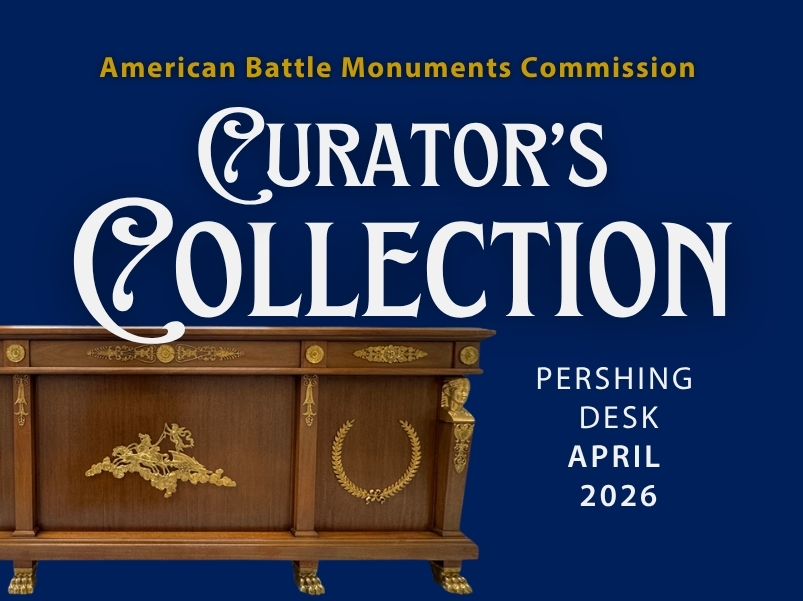
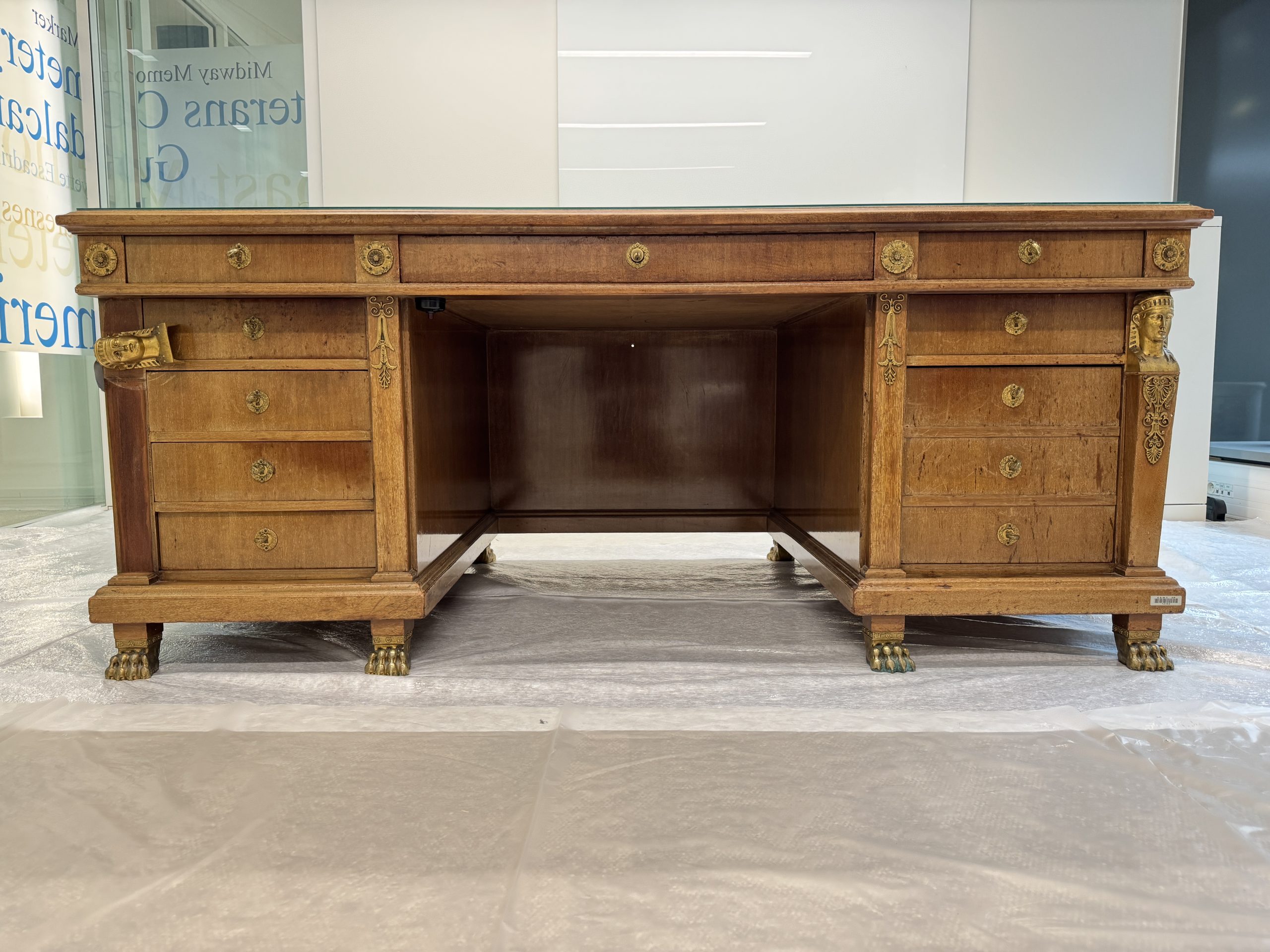
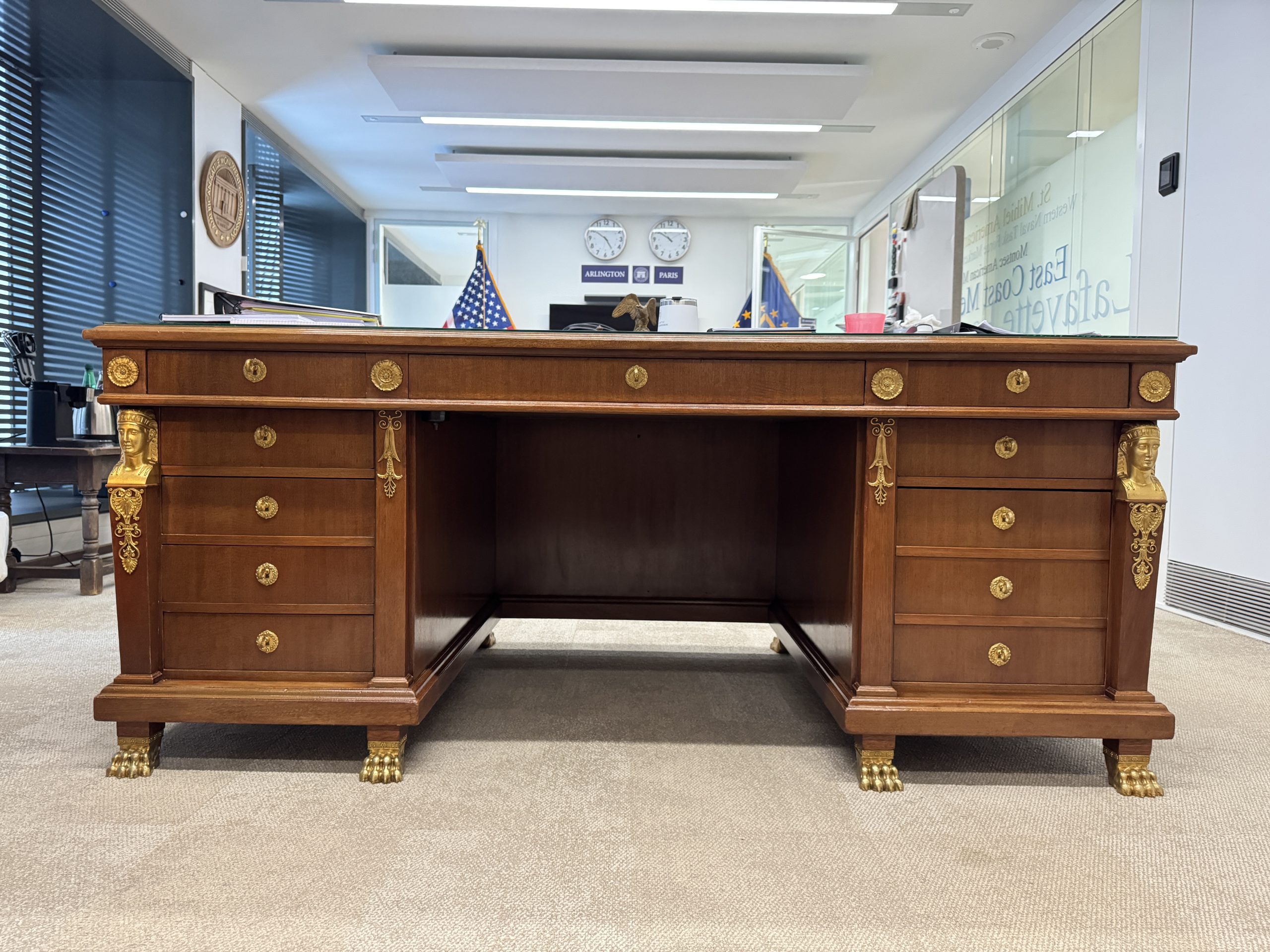
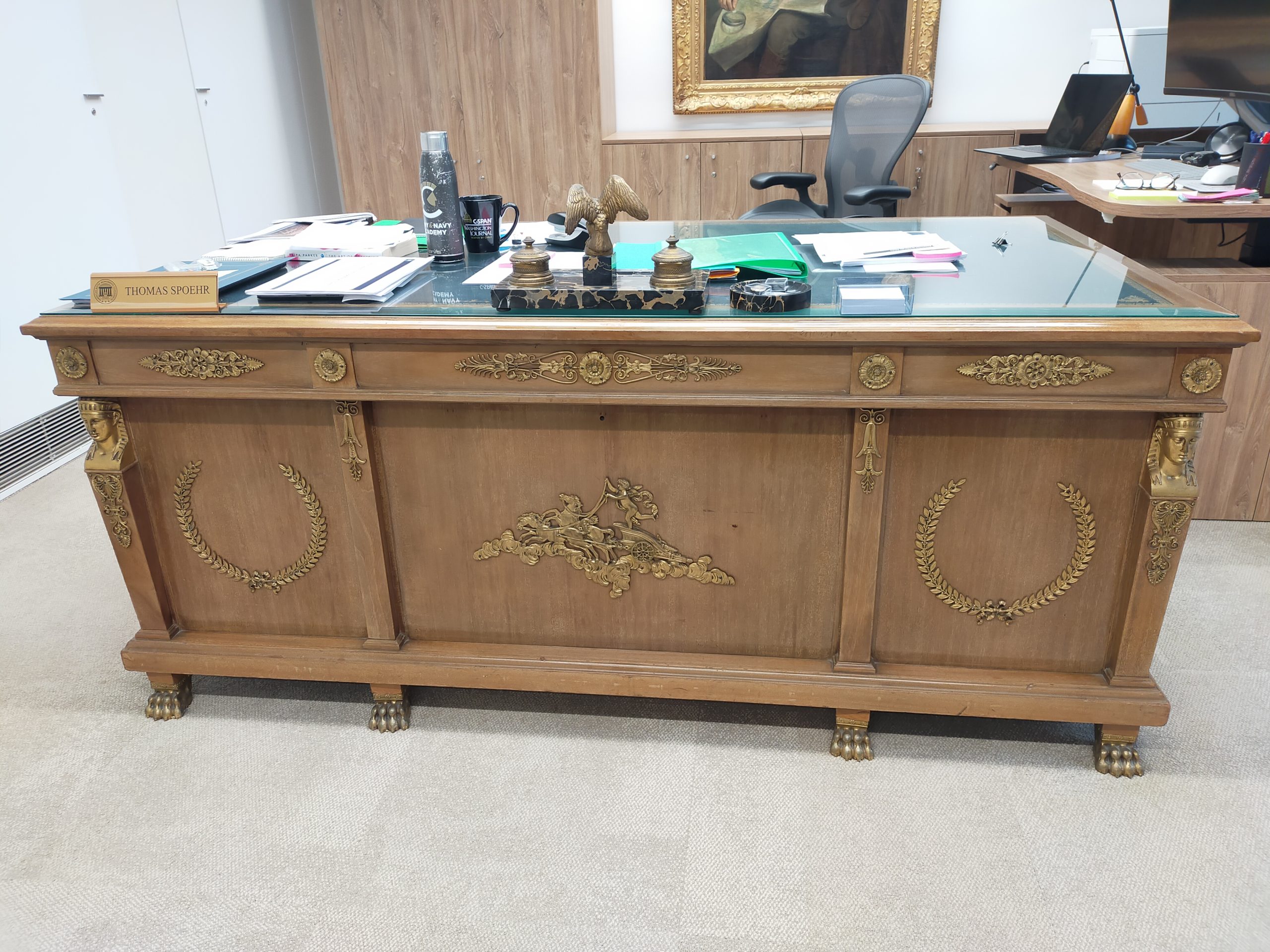
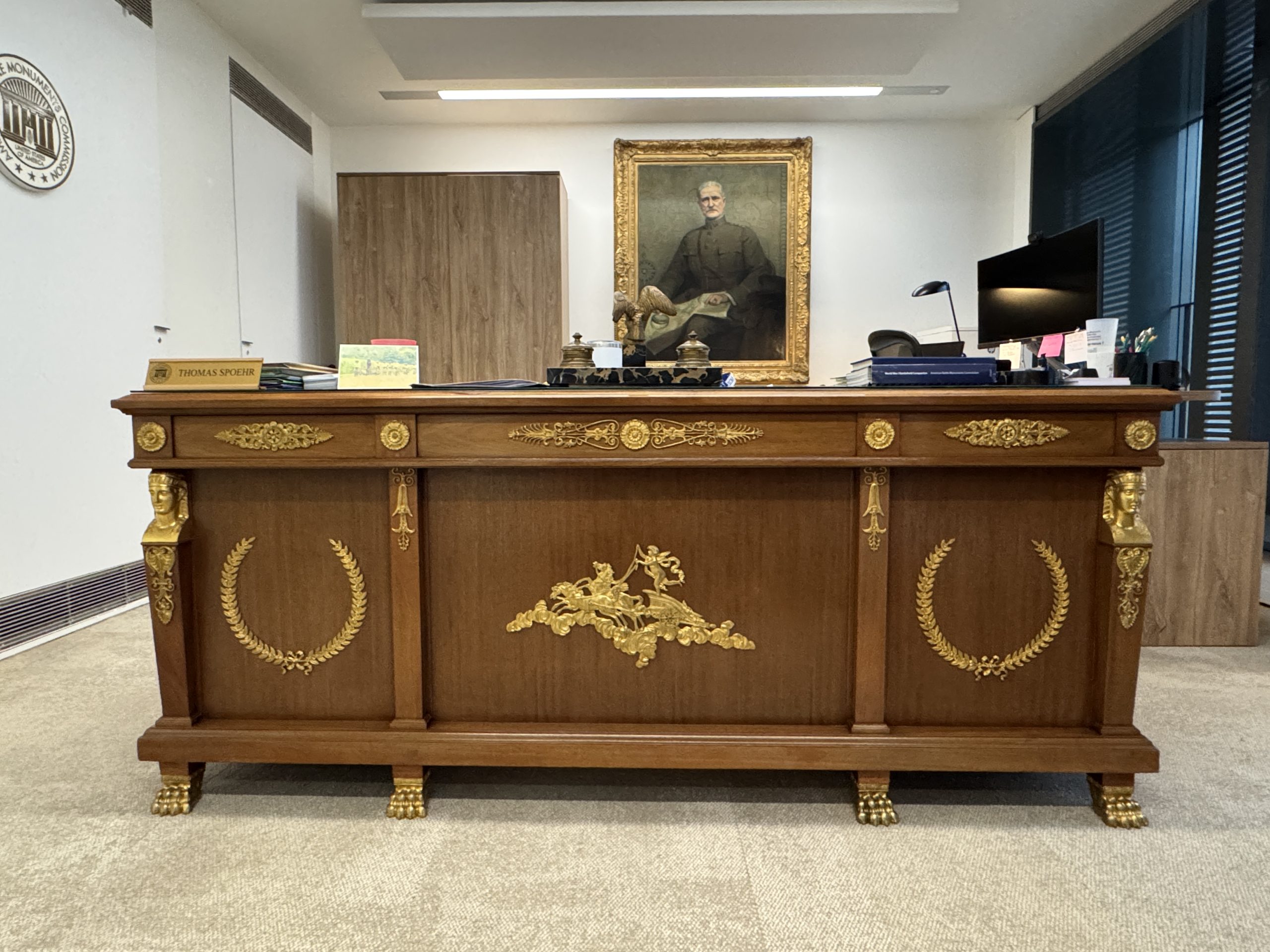
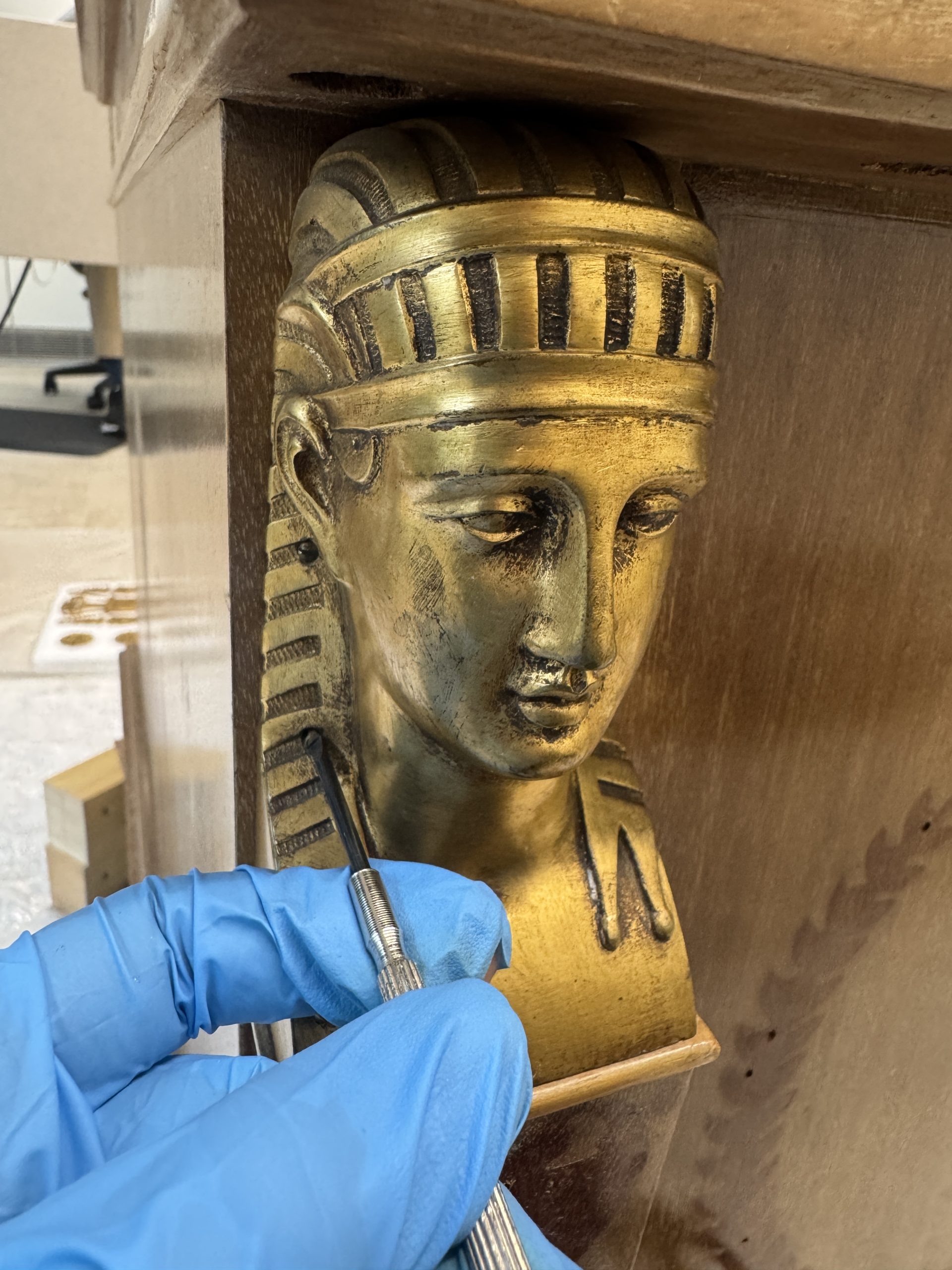
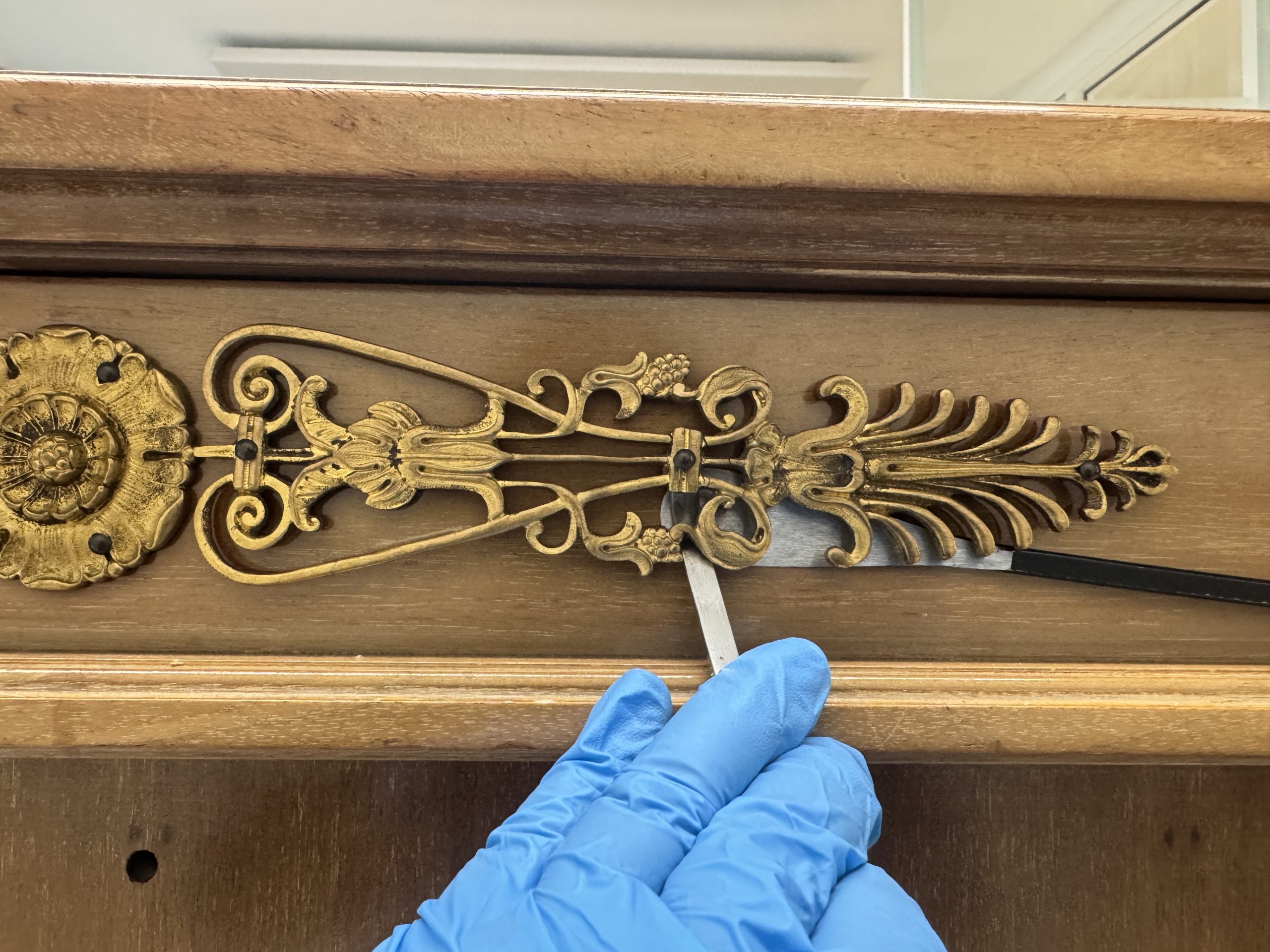
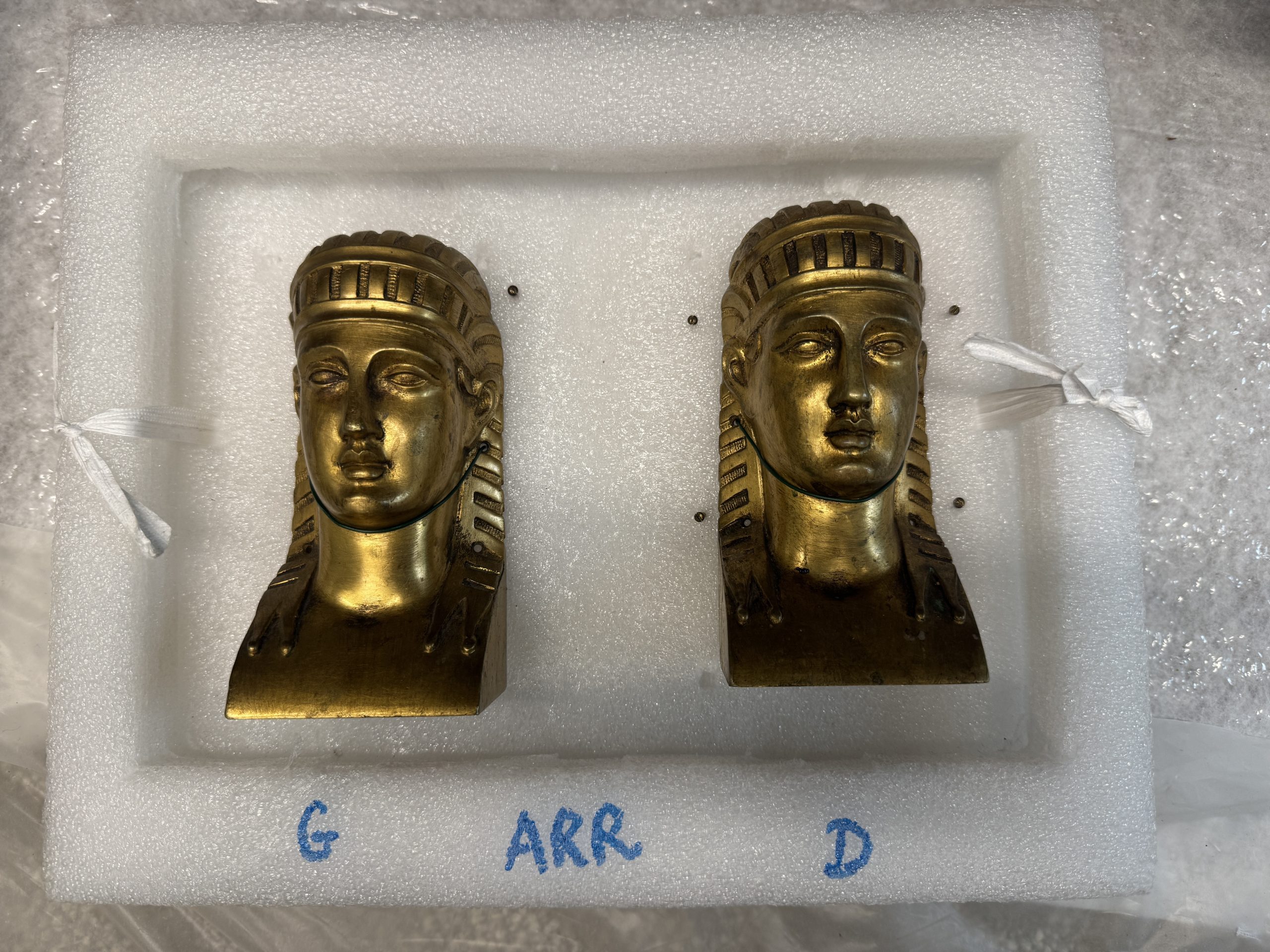
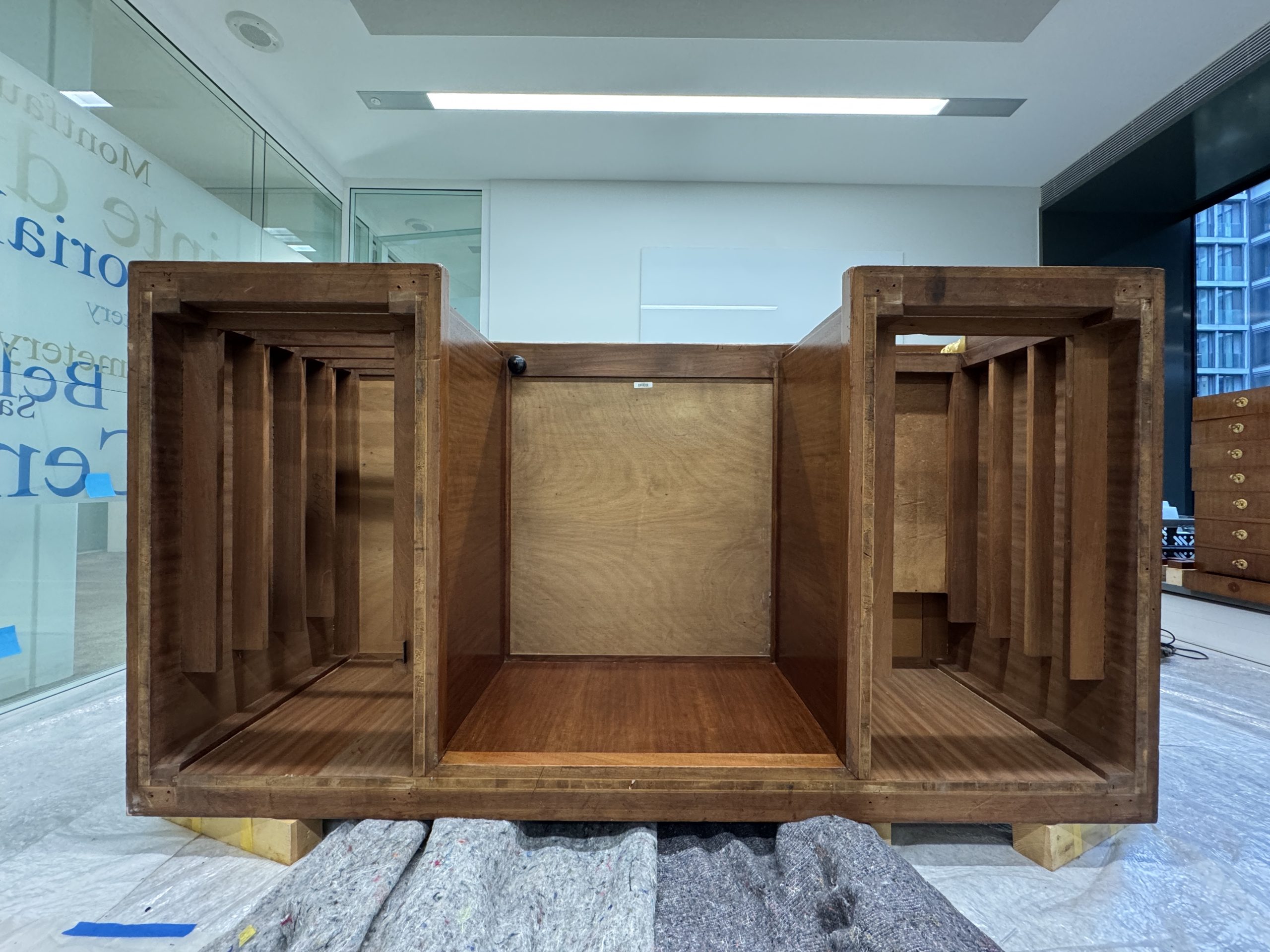
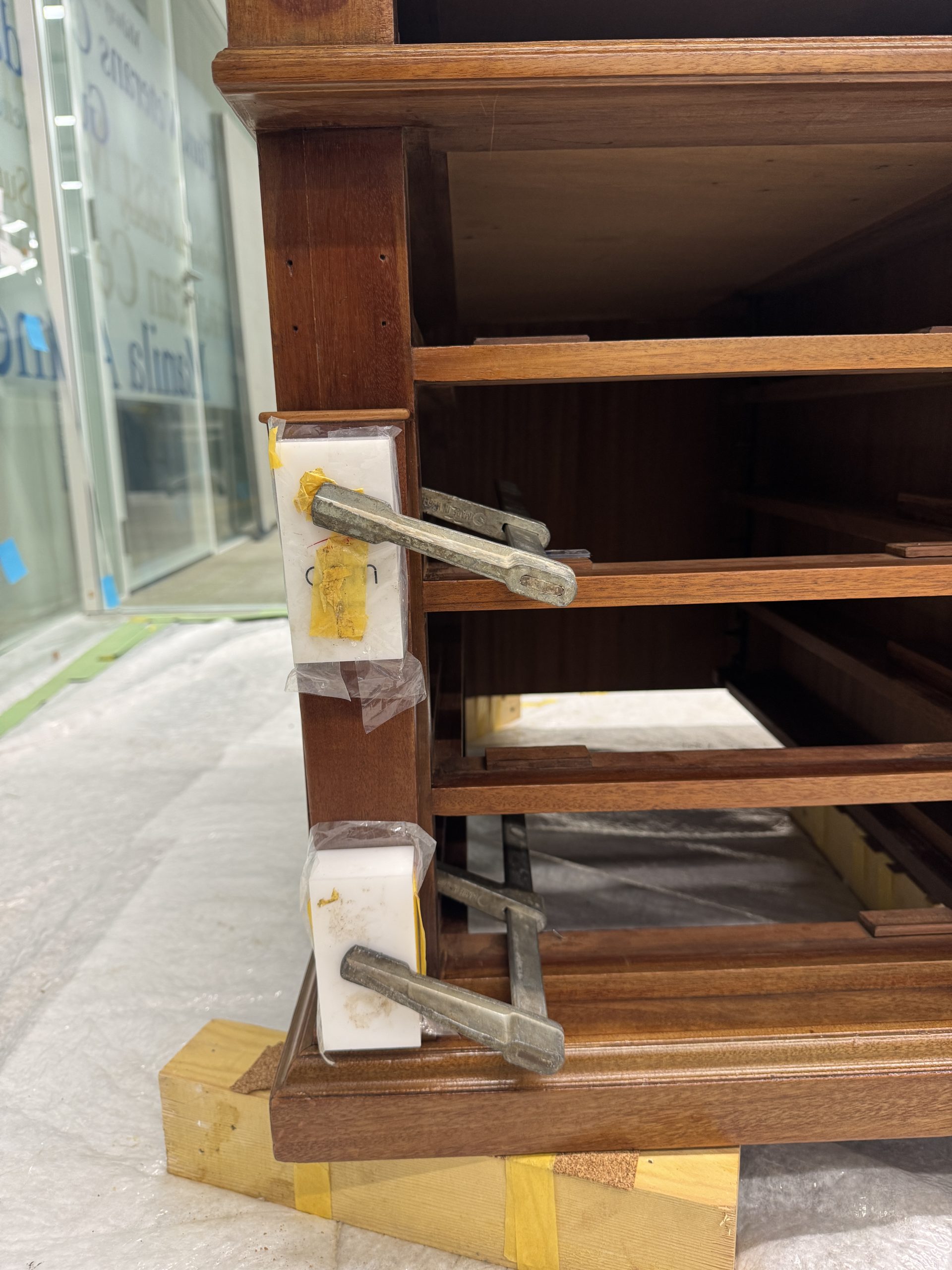
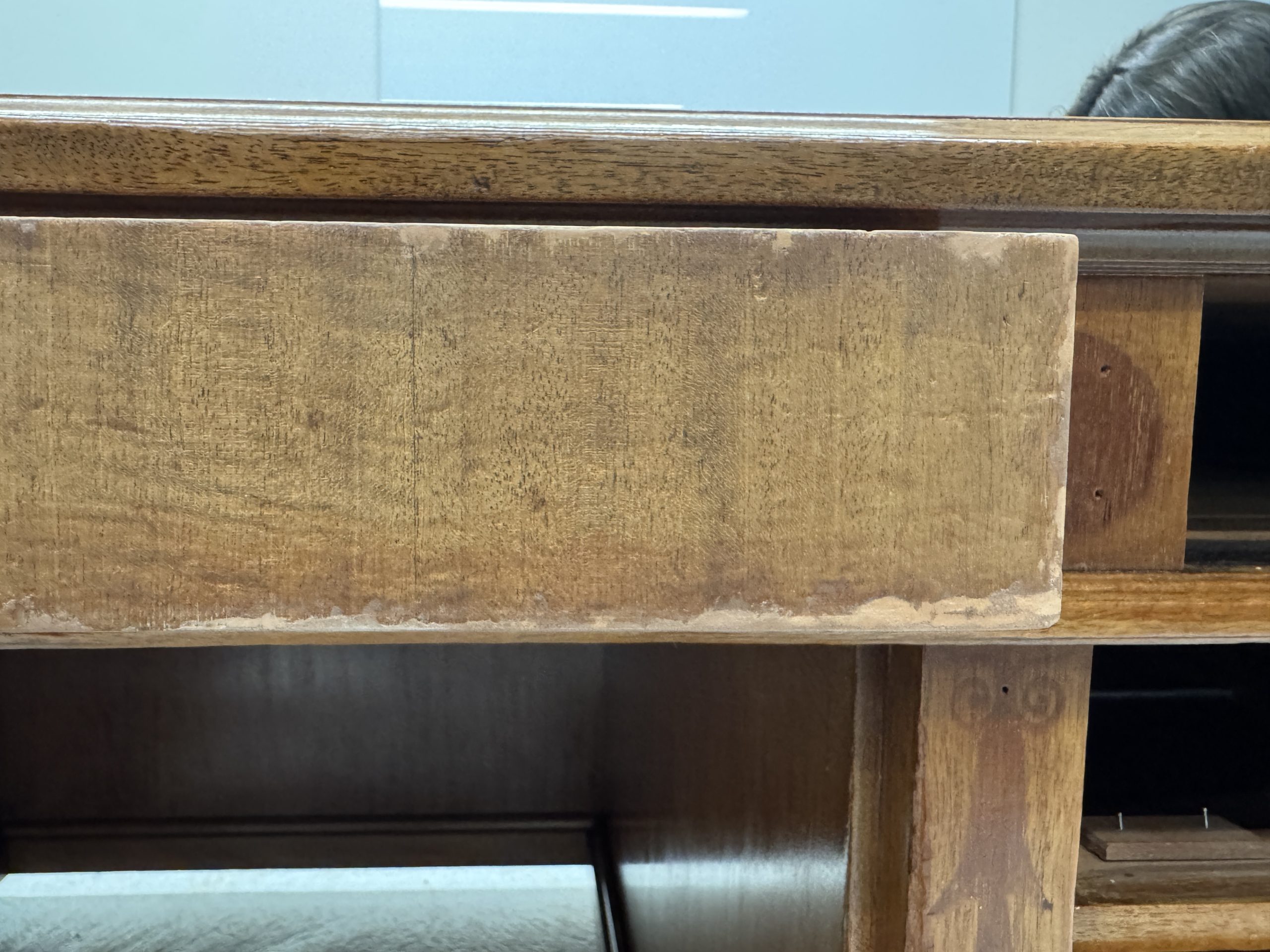
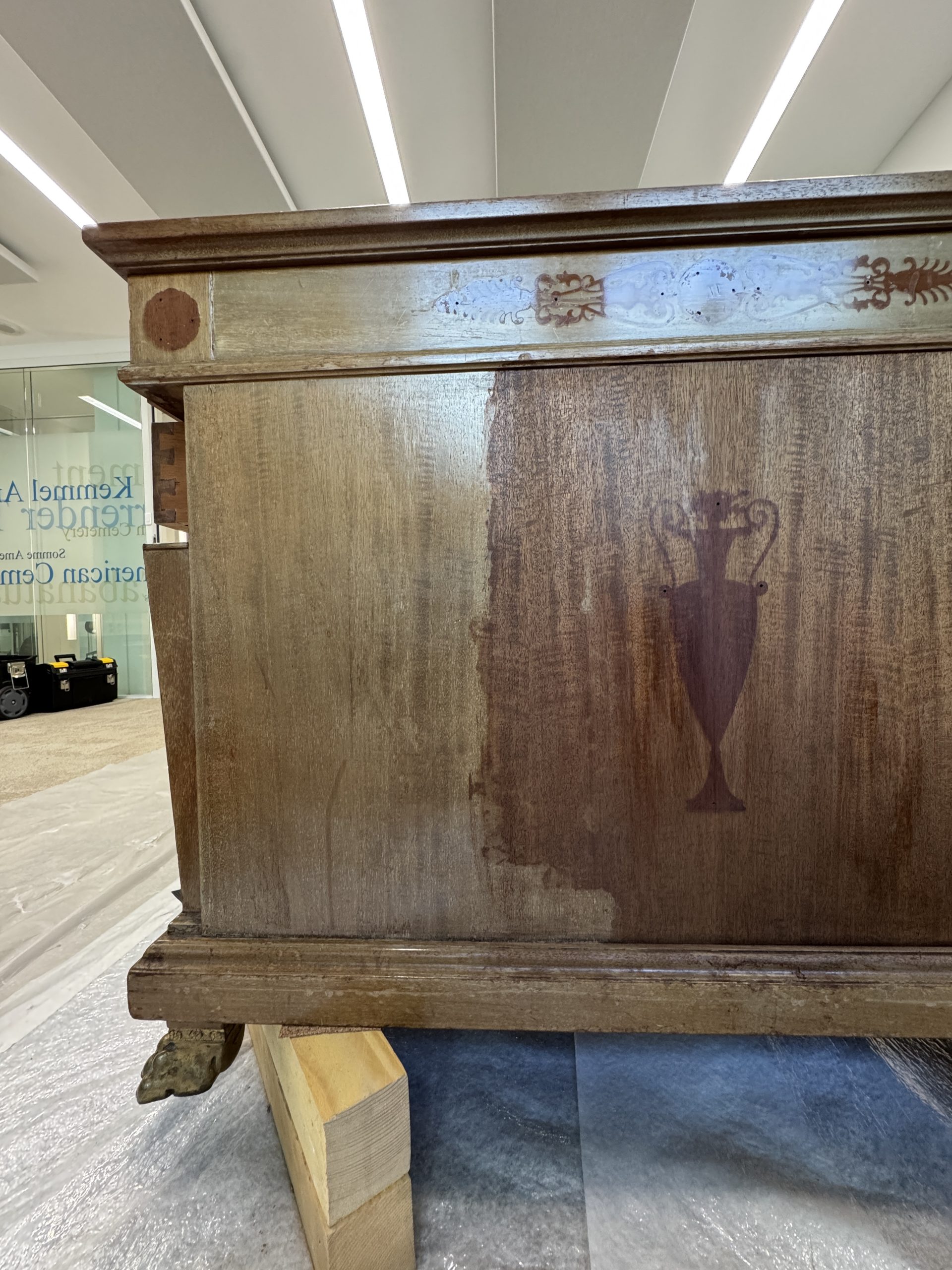
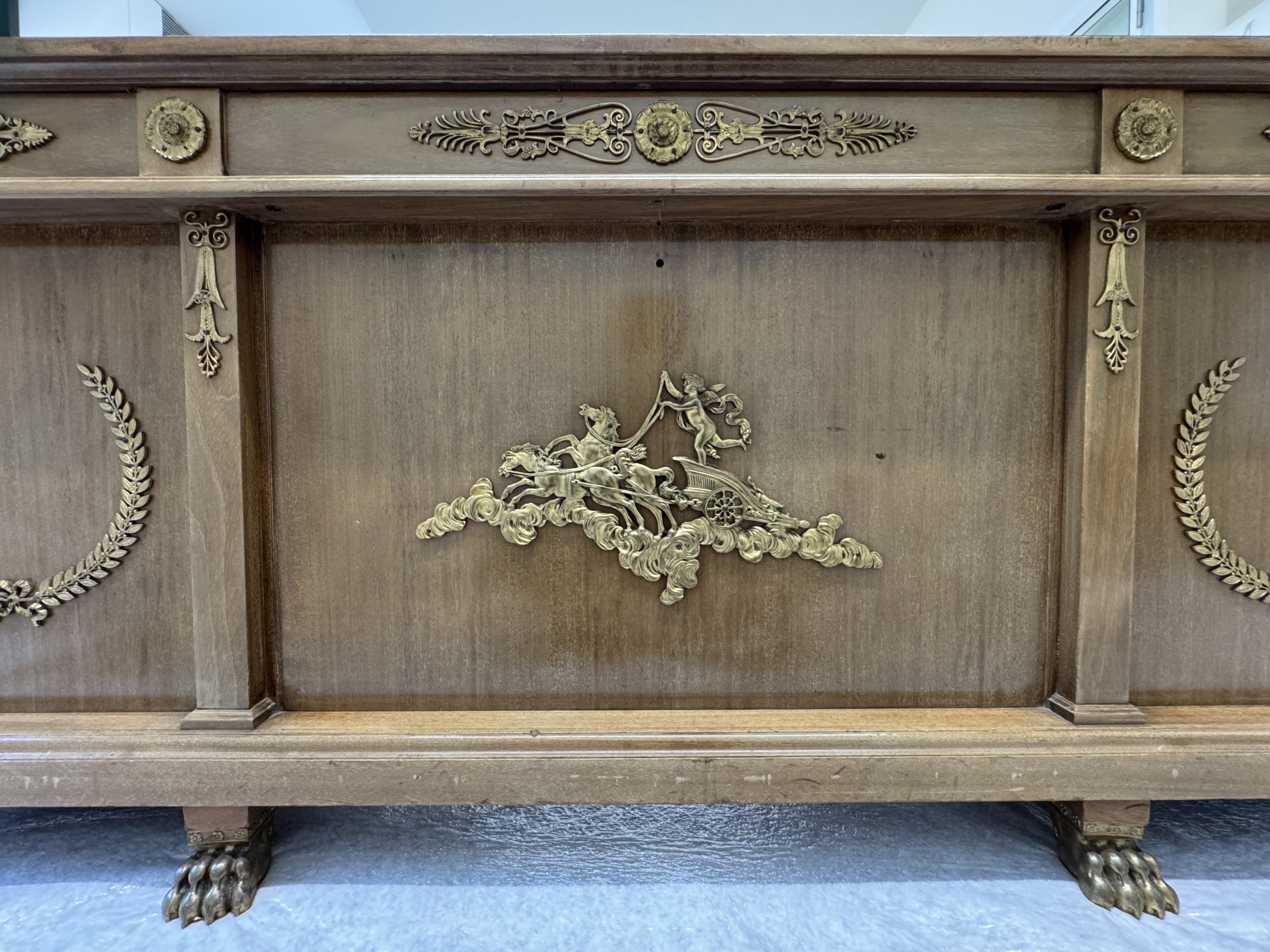
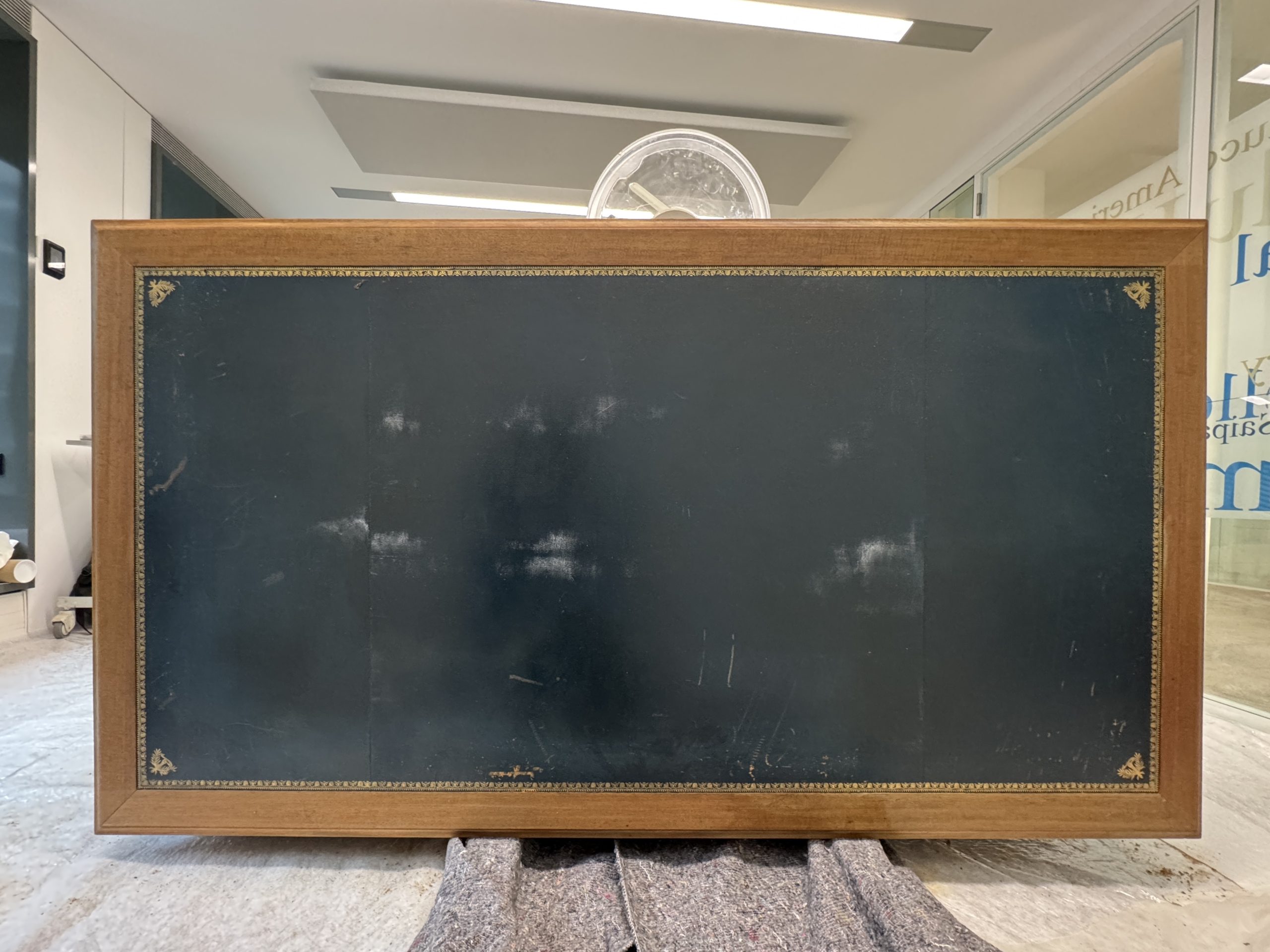
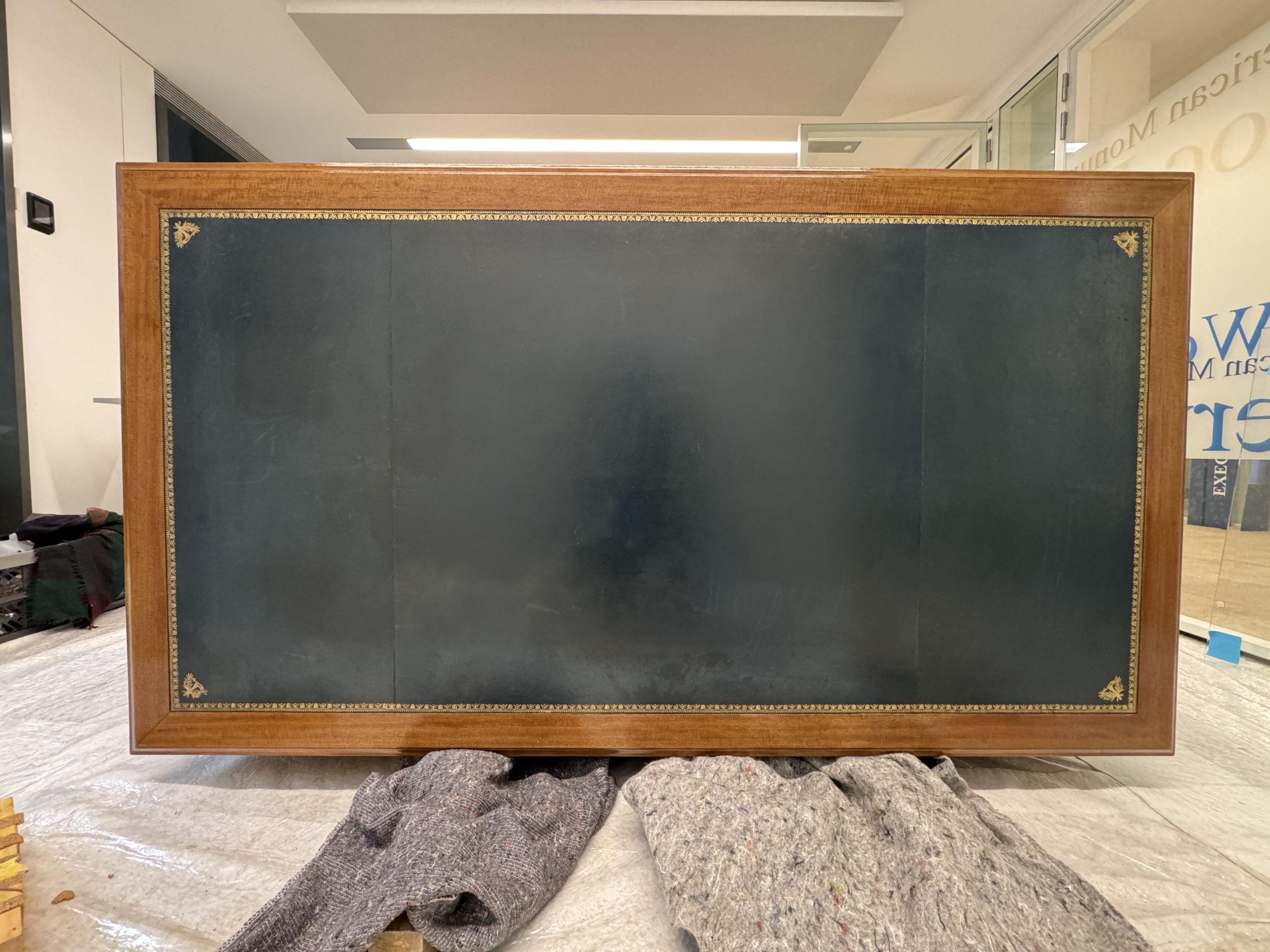
The Curator’s Collection presents, General John J. Pershing’s desk which embodies both craftsmanship and legacy. With its leather-trimmed surface, gilt-bronze clawed feet, and ornate detailing, including Egyptian-inspired motifs and classical laurels, the desk reflects the grandeur fitting the United States’ General of the Armies. Believed to have been crafted in 1920s Paris, it is part of a distinguished suite of furnishings associated with Pershing’s office at the American Embassy.
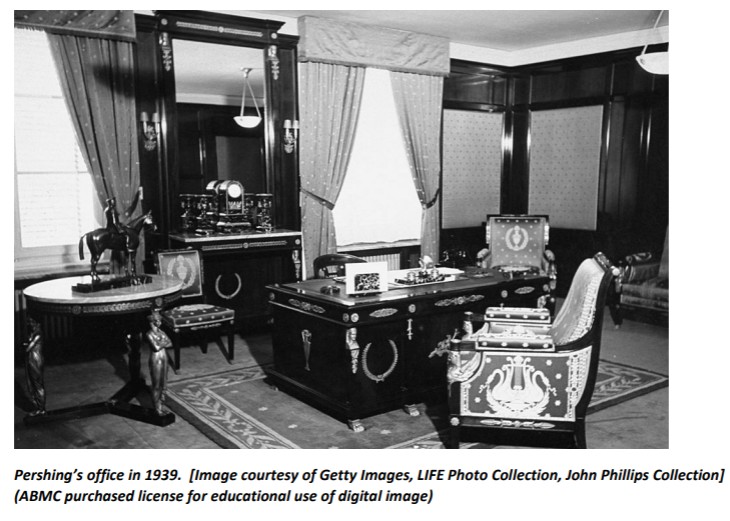
For years, the desk’s provenance remained a matter of intrigue. However, archival records and photographs from the LIFE Picture Collection, captured in 1939 by photographer John Phillips, provide compelling visual evidence linking the piece directly to Pershing’s workspace. Matching details, from the inkstand to accompanying furnishings, confirm its place within that historic setting.
Having endured wartime relocations and decades of service across Europe, the desk stands today as a tangible link to ABMC’s origins and mission. More than a piece of furniture, it is a witness to history, symbolizing the enduring commitment to honor the fallen and preserve their memory for generations to come.
Photographs include the Pershing desk and Pershing’s office in 1939 at Pershing Hall.