


Ardennes American Cemetery

Neupré, Belgium
Official websites use .gov
A .gov website belongs to an official government organization in the United States.
Secure .gov websites use HTTPS
A lock
or https:// means you've safely connected to the .gov website. Share sensitive information only on official, secure websites.

The Allied main effort in autumn 1944 advanced through Belgium and pushed toward Germany.
However, their progress was slowed by intense German resistance, culminating in the Battle of the Bulge, a desperate counteroffensive launched by Germany in December 1944. After fierce winter combat, the Allies regrouped and pursued three major objectives:
The successful crossing of the Rhine in March 1945 marked the beginning of the final Allied push into Germany. This advance ultimately led to the German surrender and the end of the war in Europe on May 8, 1945.
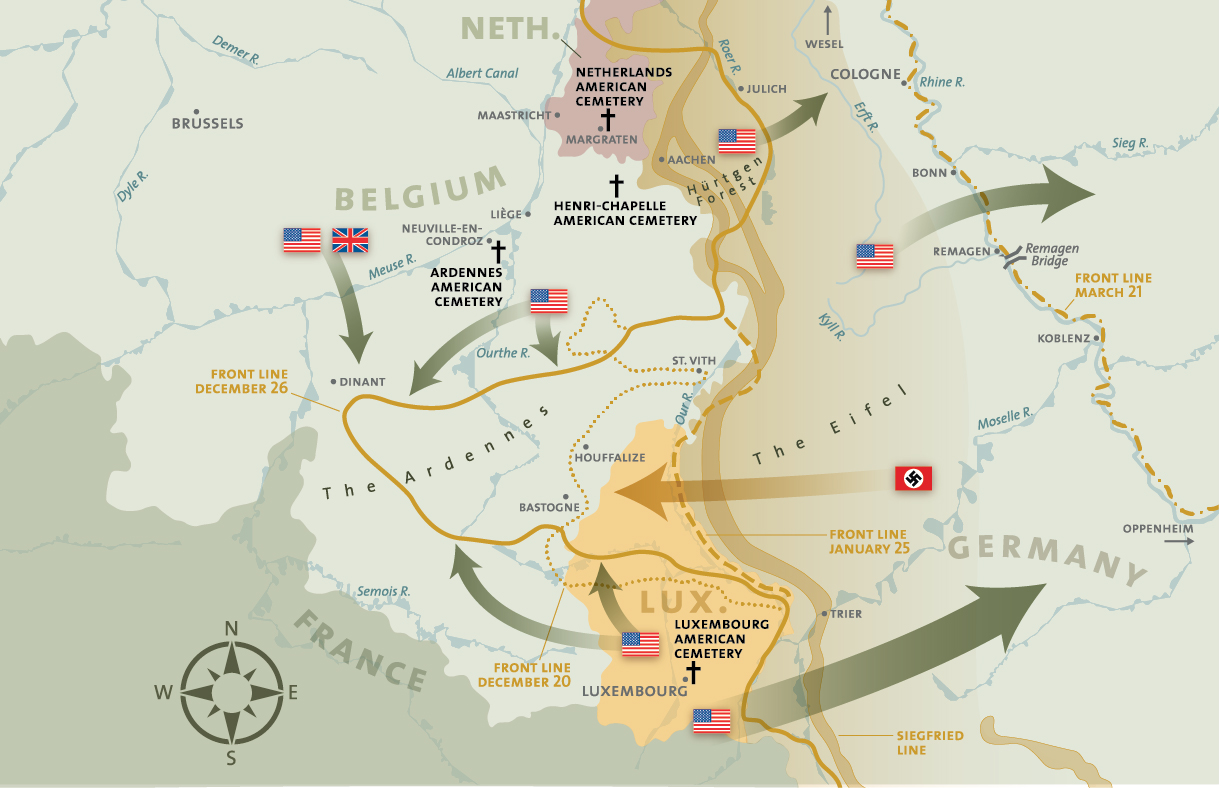
From Ardennes-Alsace to the Rhine and beyond historical map
The approach drive at Ardennes American Cemetery and Memorial in Belgium leads to the memorial, a stone structure bearing on its façade a massive American eagle and other sculptures.
Within the memorial is the chapel, three large wall maps composed of inlaid marbles, marble panels depicting combat and supply activities and other ornamental features.
The Ardennes American Cemetery is the final resting place for 5,162 Americans, with 65 percent of those being fallen airmen of the U.S. Army Air Forces. Their headstones are aligned in straight rows that compose the form of a Greek cross. Along the outside of the memorial, inscribed on granite slabs, are the names of 463 of the missing, whose remains were never recovered. The façade on the far (north) end that overlooks the burial area bears the insignia, in mosaic, of the major U.S. units that operated in northwest Europe in World War II.
This cemetery is unique among all ABMC cemeteries as it served as the central identification point for the entire European Theater of Operations from the last days of the war until 1960.
Ardennes American Cemetery is located near the southeast edge of Neupré (Neuville-en-Condroz), 12 miles southwest of Liège, Belgium.
Vintage posters convey the beauty, tranquility, and solemnity of the place as a sign of respect for those who fought so that we can live free today.
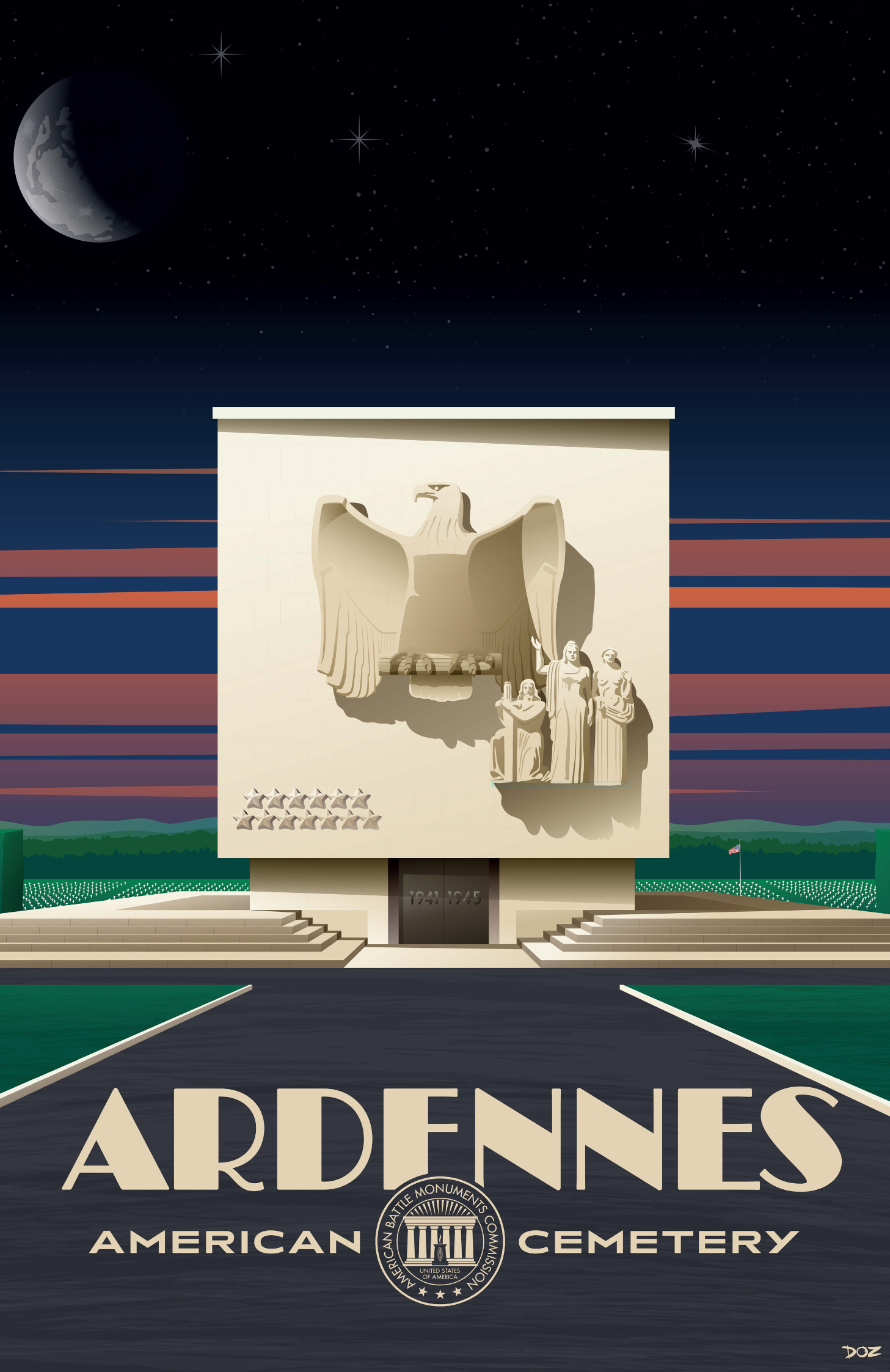
Neupré, Belgium
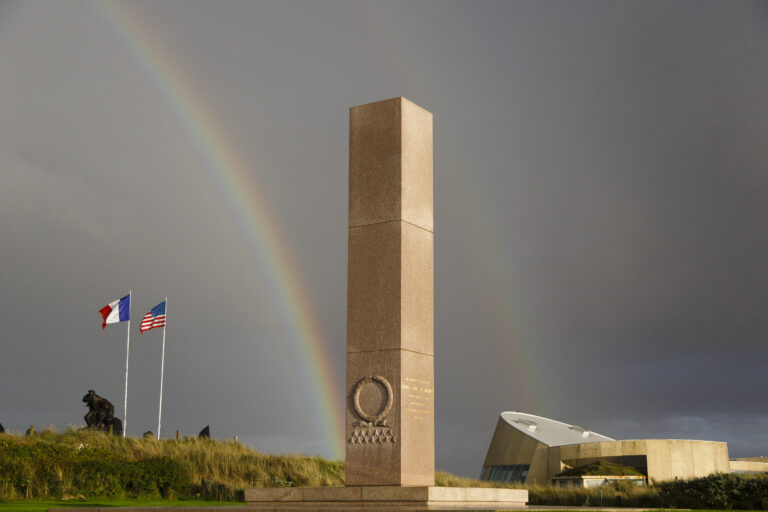
Utah Beach, France

St Avold, France

ABMC.gov
official website of the American Battle Monuments Commission and a proud partner of The American Battle Monuments Foundation
Looking for U.S. government information and services? Visit USA.gov
