An official website of the United States government. Here's how you know.


 Countdown to




In honor of America250, the celebration of the signing of the Declaration of Independence and America’s birth as a nation, the American Battle Monuments Commission is highlighting America’s long arc of military service and sacrifice beginning with the American Revolution and continuing with ABMC’s mission today.
Since the Revolutionary War, America has had an ally in France, and since its creation in 1923, ABMC has had strong ties with the country. In fact, the agency’s first consulting architect was native Frenchman Dr. Paul Philippe Cret.
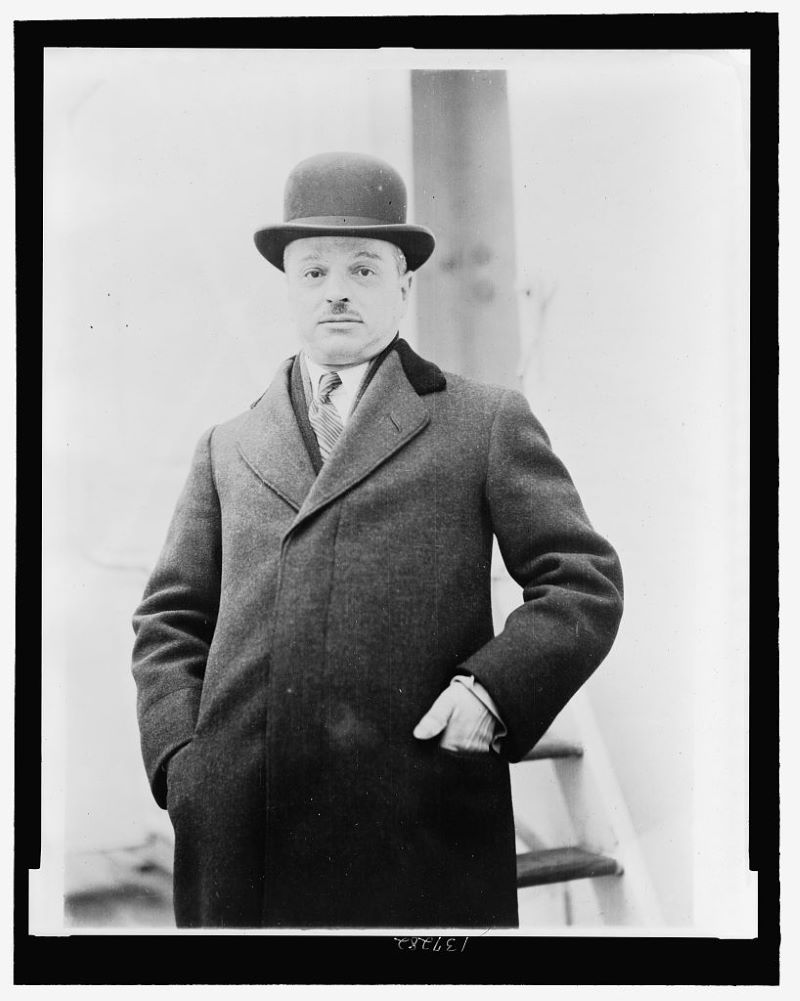
Cret, who was born in Lyons, France, came to the U.S. in 1903 to teach at the University of Pennsylvania. His legacy includes many government buildings, hospitals, monuments, bridges, dams, and military installations.
Cret designed the National Memorial Arch at Valley Forge Historical Park, a notable U.S. monument to the Revolution, which was built between 1914 and 1917. Located on the road where soldiers marched into Valley Forge Dec. 19, 1977, the arch commemorates the arrival and sacrifices of Gen. George Washington and the Continental Army at Valley Forge during that winter of the Revolutionary War.
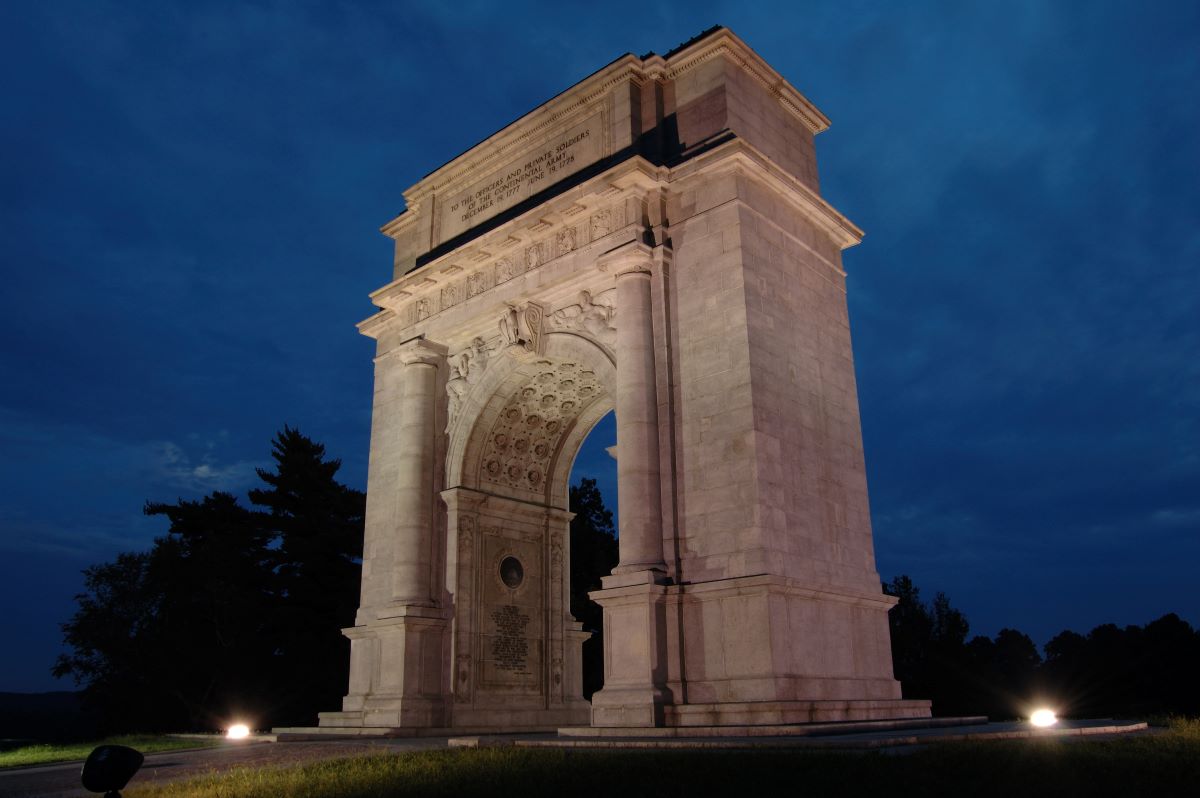
According to the National Park Service’s website, “In the classical tradition, a triumphal arch of one or three openings was erected to honor generals or emperors. This memorial arch with its single opening is classically proper as a national tribute to General Washington and the army he led.”
Cret was caught up in World War I. He was in France for the summer when war broke out and reported for mobilization, serving in the Chasseurs Alpins, an elite mountain infantry unit of the French Army, and later as an interpreter attached to the American Expeditionary Forces.
While still in uniform Cret was asked by Edith Roosevelt to design a memorial to her son Quentin at Chambéry, France, in 1919. Back in the U.S., Cret worked on behalf of the Pennsylvania Battle Monuments Commission when he first interacted with ABMC in 1924 regarding the state’s small monument program in France. In 1925, the internationally known, award-winning architect was appointed as ABMC’s consulting architect.
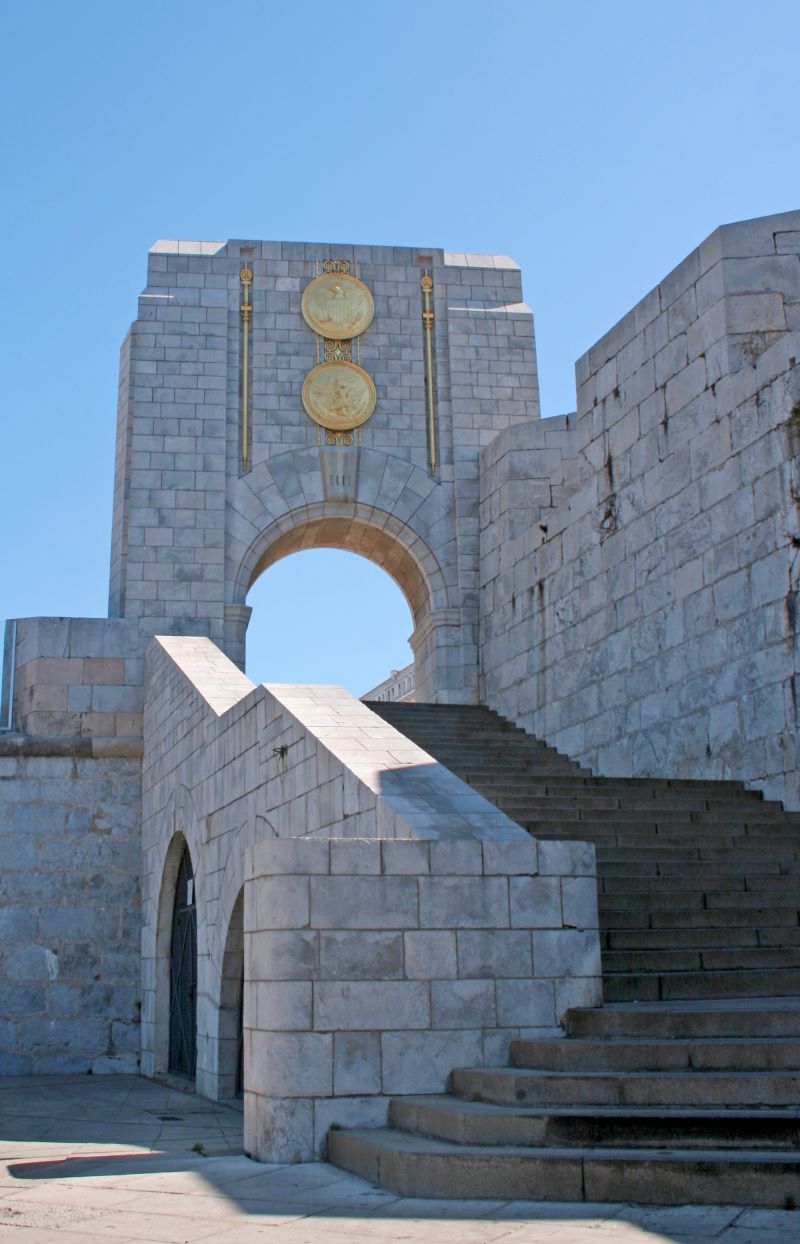
As a consultant for ABMC, Cret made his mark in his home country with monuments designed to honor the American fallen from WWI. Besides overseeing the architectural aspects of all of the sites, he designed Chateau-Thierry Monument, Bellicourt Monument, Naval Monument at Gibraltar, and the chapel at Flanders Field American Cemetery, which are considered some of his best works.
In a 1938 ABMC report, Secretary Xenophon H. Price described Cret’s appointment as consulting architect as one of the agency’s “earliest and most fortunate acts.”
Each year ABMC’s more than three million visitors witness the beauty of Cret’s legacy at its cemeteries and memorials not only in the grand monuments he designed but also in the simplicity of the white marble crosses and Stars of David, both designs of Cret’s approved by the commission in 1925.
Cret taught at the University of Pennsylvania for 34 years and served as ABMC’s consulting architect until his death in 1945.
This article is one in a series of articles highlighting ABMC’s ties to America250. Look for more at: Commemorating America’s 250th Anniversary at ABMC