


Discover Meuse-Argonne American Cemetery and the Meuse region
In the quiet countryside of northeastern France, Meuse-Argonne American Cemetery offers visitors the opportunity to explore one of the most significant American memorial sites in Europe while discovering a region rich in history, culture, and natural beauty. At the cemetery, located near Romagne-sous-Montfaucon, and operated by the American Battle Monuments Commission, rests the largest number of military dead at an American military cemetery in Europe. The site commemorates the service and sacrifice of more than 14,000 Americans who died during World War I, and serves as an ideal starting point for exploring the battlefields, monuments, and landscapes that helped shape modern history.
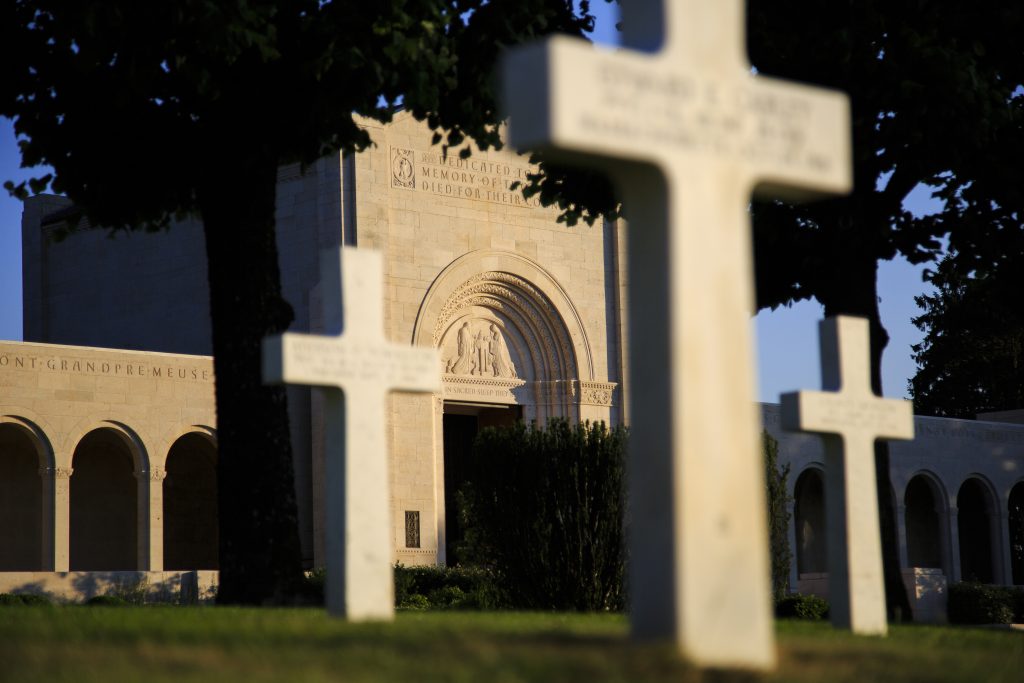
Discover the story of America’s largest World War I cemetery
Meuse-Argonne American Cemetery is the final resting place of American service members who lost their lives during World War I, mostly during the Meuse-Argonne Offensive. The cemetery’s sweeping rows of white headstones lead visitors toward a chapel overlooking the grounds, while the Tablets of the Missing commemorate approximately 1,000 Americans whose remains were never recovered.
Beyond its impressive scale, the cemetery preserves remarkable personal stories. Visitors can pay their respects at the grave of Cpl. Freddie Stowers, the first African American to receive the Medal of Honor for actions during World War I, and learn about the unknown soldiers connected to the creation of the Tomb of the Unknown Soldier at Arlington National Cemetery.

Explore the battlefields of World War I in Europe
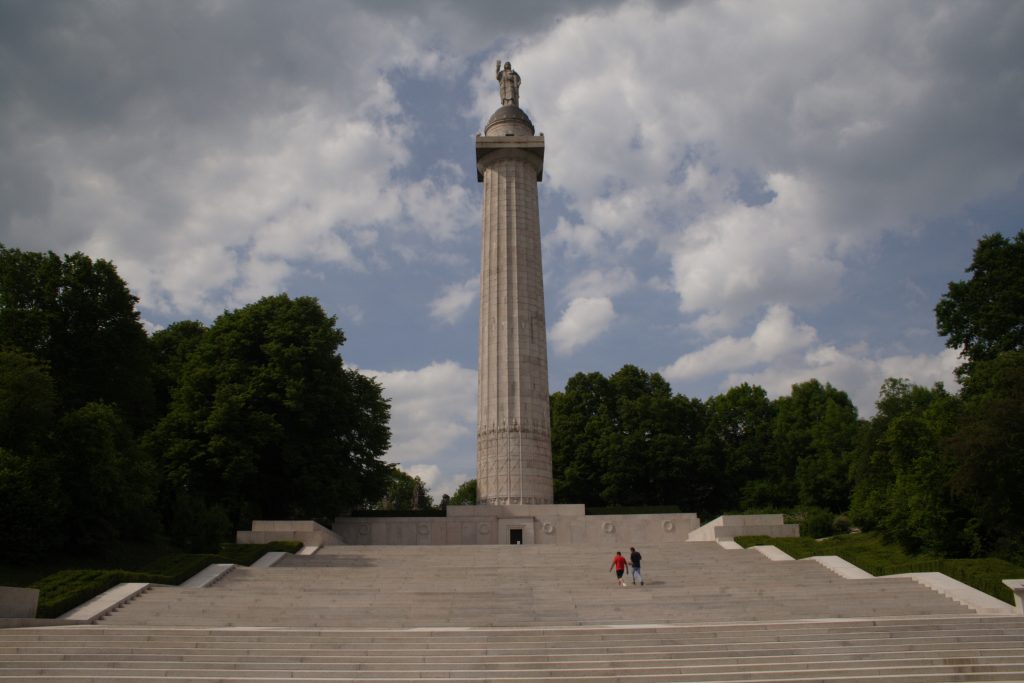
The countryside surrounding the cemetery was the scene of some of the most important fighting involving American forces during World War I. A short drive away, Montfaucon Monument rises above the former battlefield and offers panoramic views across the region where the Meuse-Argonne Offensive unfolded. Visitors can better appreciate the scale of the operations that helped bring the war to an end.
The nearby Argonne Forest also preserves traces of the conflict. Trails and rural roads wind through terrain where soldiers fought more than a century ago, providing opportunities to combine historical exploration with outdoor outings.
Follow the memory trail of the Great War
The Meuse region is one of the most important destinations for First World War remembrance tourism. South of the cemetery lies Verdun, where visitors can explore sites associated with the Battle of Verdun, including the Verdun Memorial, Fort Douaumont, Fort Vaux and the Douaumont Ossuary. Together, these sites tell the story of one of the war’s longest and most devastating battles and place the Meuse-Argonne Offensive within the broader context of the conflict.
Several additional battlefield landmarks are located within easy driving distance of Meuse-Argonne American Cemetery. Approximately 30 to 35 minutes away, Cote 304 was a key position on the left bank of the Meuse and one of the most fiercely contested sectors of the Battle of Verdun. French and German forces fought repeatedly for control of its strategic high ground in 1916 and 1917 before French troops recaptured the position in August 1917.
Nearby, Le Mort-Homme (Dead Man’s Hill) stands as another emblematic site of the Verdun battlefield. Together with Cote 304, it formed one of the most important defensive positions on Verdun’s left bank. Its commanding heights provided valuable observation and artillery positions, and the prolonged fighting there became a powerful symbol of the battle devastating human cost.
Approximately 35 to 40 minutes from the cemetery, visitors can discover the André Maginot Memorial Monument at Souville. The monument honors André Maginot, a First World War veteran and later French Minister of War whose name became associated with France’s interwar defensive system. Located near the area where he served and was wounded during the war, the memorial connects his wartime experience with his later efforts to strengthen France’s eastern defenses.
Visitors can also explore the Citadelle Souterraine de Verdun, located approximately 40 minutes from the cemetery. This underground fortress offers an immersive multimedia experience that helps visitors better understand the Battle of Verdun and the daily lives of the soldiers who fought there.
Whether visiting museums, memorials or preserved battlefield landscapes, travelers can gain a deeper understanding of the events that shaped Europe and the United States during the Great War.
Walk in the footsteps of Sergeant York
For visitors interested in following the path of American soldiers on the battlefield, the Sergeant York Historic Trail near Châtel-Chéhéry offers a unique experience in the heart of the Meuse-Argonne battlefield. Located 30 minutes away from Meuse-Argonne American Cemetery, this marked forest trail follows terrain associated with the actions of Alvin C. York Oct. 8, 1918, during the Meuse-Argonne Offensive.
At the time a corporal with the U.S. Army’s 328th Infantry Regiment, 82nd Division, York helped silence German machine-gun positions during a critical engagement. His patrol returned with 132 German prisoners, and his actions later earned him the Medal of Honor.
The trail forms an easy 3-kilometer (approximately 2-mile) loop through the forest and can be completed in about 90 minutes. Visitors wishing to stop and read the interpretive panels, available in French, English and German, should allow 2 to 2.5 hours. The route provides an opportunity to experience the battlefield landscape while learning about one of the most well-known American actions of the First World War.
Visit other American memorial sites
Visitors with additional time can discover several other American Battle Monuments Commission sites within driving distance. St. Mihiel American Cemetery, featuring a monumental sundial, commemorates the first major American-led offensive of World War I and the nearby Montsec Monument remembers the reduction of the St. Mihiel Salient. Meanwhile, a little further away, Sommepy Monument honors American divisions that fought in the Champagne region and offers sweeping views from its observation tower.
Together, these sites provide a broader perspective on the role American forces played on the Western Front and complement a visit to Meuse-Argonne American Cemetery.

Experience the charm of the Meuse countryside
Beyond its military history, the Meuse region offers visitors picturesque villages, rolling farmland and opportunities to discover local French culture. Communities such as Romagne-sous-Montfaucon, Montfaucon-d’Argonne, and Varennes-en-Argonne provide a glimpse into rural life in northeastern France.
Visitors can enjoy local cuisine, explore historic town centers, and experience landscapes that have largely retained their traditional character.
The combination of history, nature and authentic village life makes the Meuse region an ideal destination for travelers seeking to go beyond the major tourist routes while discovering an important chapter of American and French history.
The American Battle Monuments Commission’s mission is to honor the service of the U.S. armed forces by creating and maintaining memorial sites, offering commemorative services, and facilitating the education of their legacy to future generations. It was founded in 1923 following World War I, and its 26 cemeteries and 31 monuments honor the service men and women who fought and perished during World War I, World War II, the Korean War and the Vietnam War, as well as some who fought during the Mexican American War.
The American Battle Monuments Commission sites are a constant reminder of Gen. John J. Pershing’s promise that, “time will not dim the glory of their deeds.”
