


Exploring the Cambridge Area: Visiting Cambridge American Cemetery
Located in Cambridgeshire, England, the city of Cambridge is widely known for its historic colleges, museums, and public green spaces. Just outside the city center, visitors will also find Cambridge American Cemetery, the only American World War II cemetery in the U.K., administered by the American Battle Monuments Commission. Together, the cemetery and the surrounding area offer opportunities for remembrance, walking, and cultural discovery. Another American Battle Monuments Commission site is also nearby, as well as London.
When in Cambridge visit Cambridge American Cemetery
Cambridge American Cemetery is located in Coton, England, approximately three miles west of the city of Cambridge. The site was established as a temporary American military cemetery during World War II and later selected for permanent use. It was dedicated in 1956.
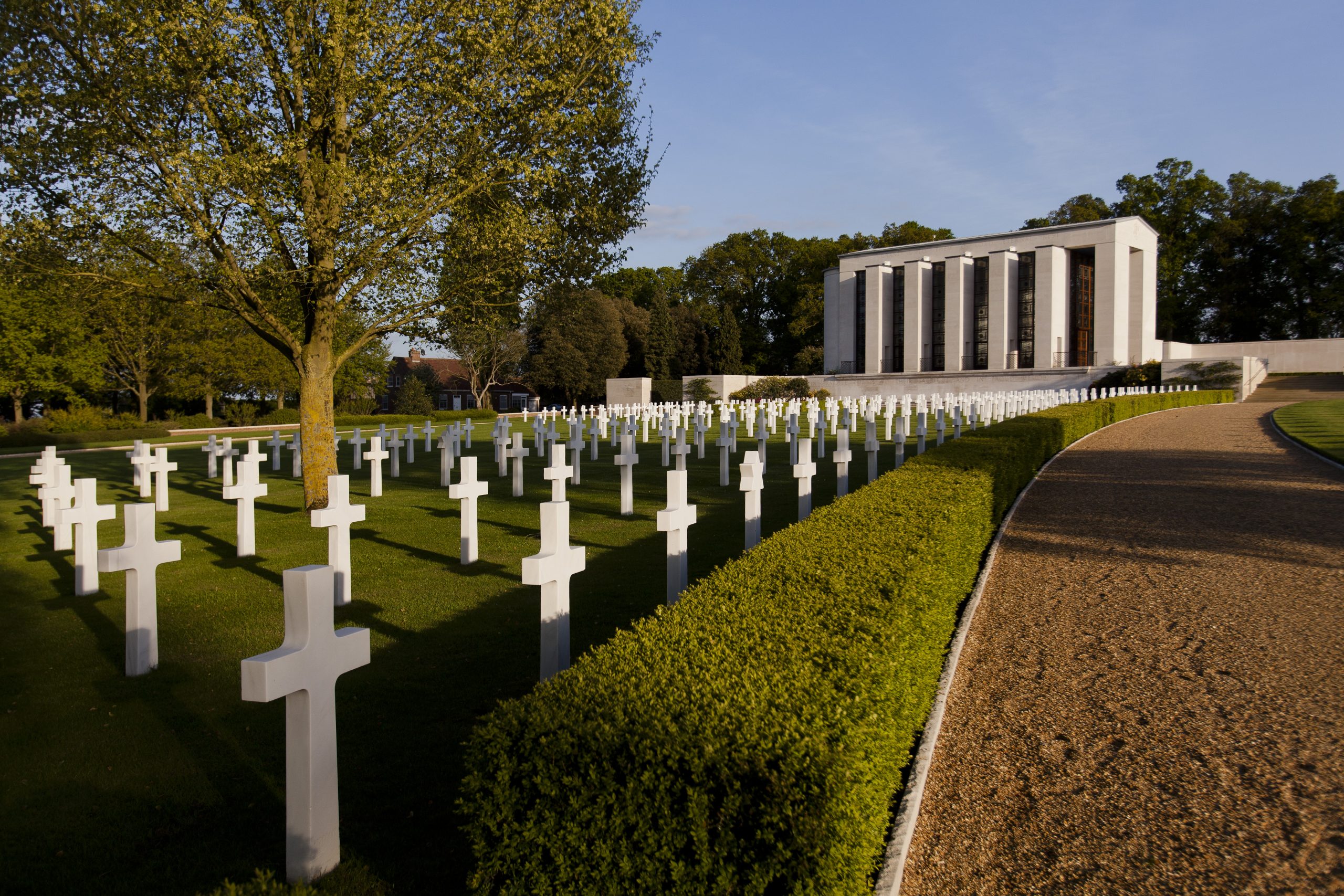
During the war, the region around Cambridge contained numerous airfields used by the U.S. Army Air Forces, and the cemetery is often referred to as the “aviator’s cemetery” or the “Eighth Air Force cemetery.” Many of those buried at the site died during the strategic air war over Europe or in the Battle of the Atlantic.
The land for the cemetery was donated by the University of Cambridge, as the British government did not permit the U.S. to purchase it. The decision to use the site permanently followed a recommendation by Maj. Gen. John C. H. Lee, who commanded the Communications Zone of the European Theater of Operations in World War II, considered the location appropriate for long‑term commemoration.
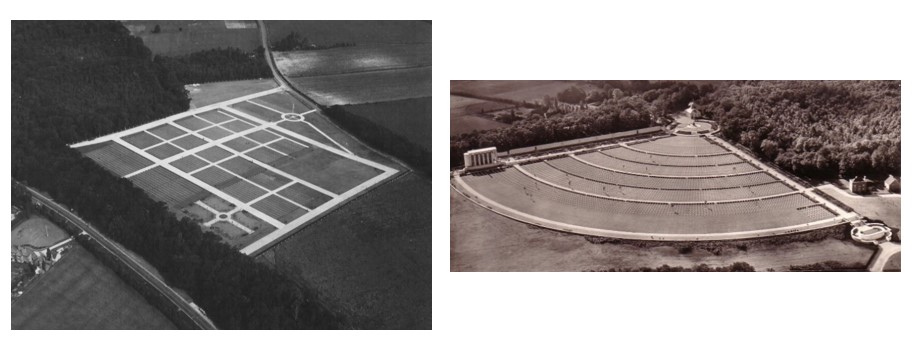
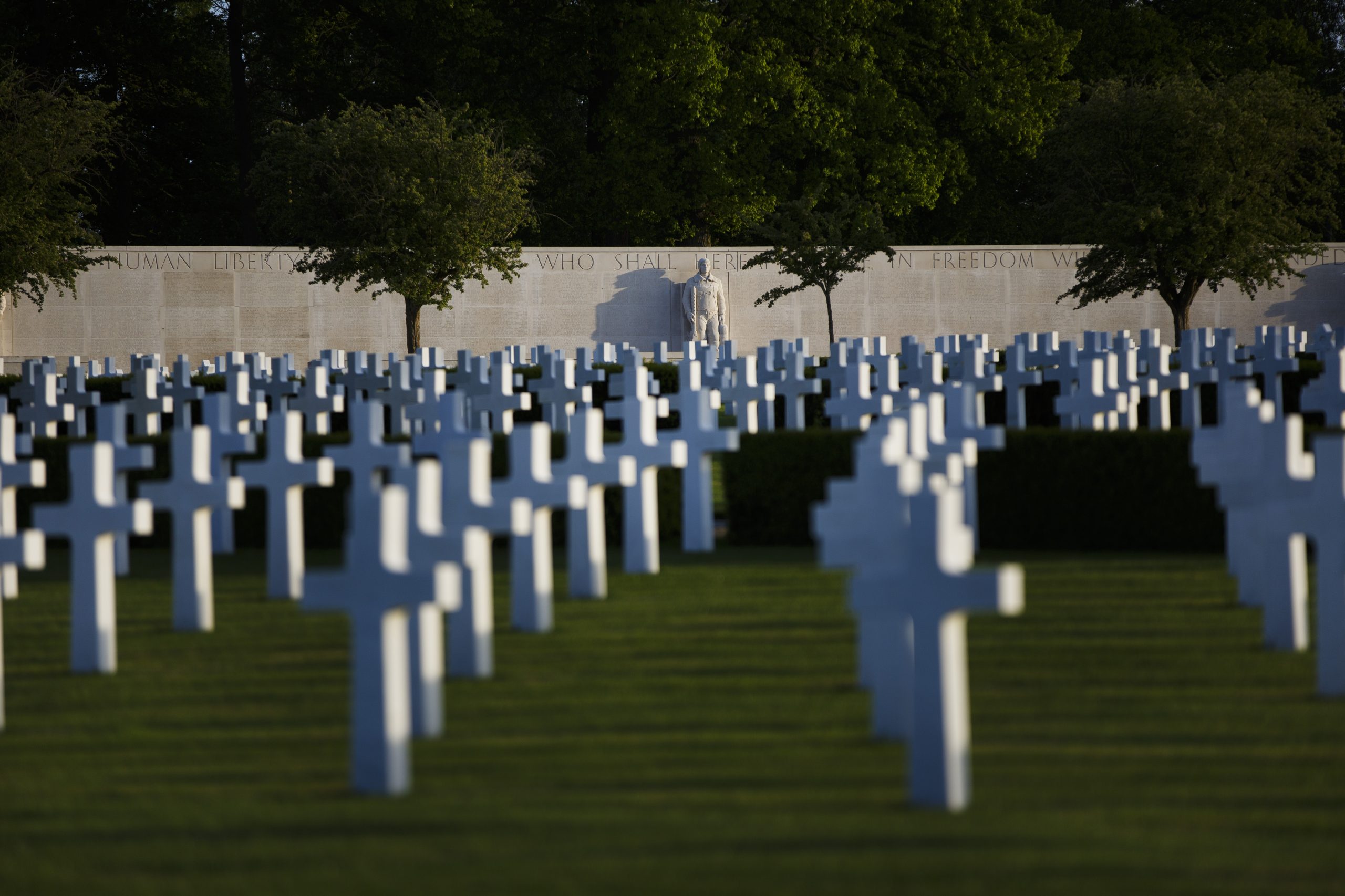
The cemetery contains more than 3,800 burials. In addition, more than 5,100 names are inscribed on the Wall of the Missing, making it the longest Wall of the Missing of any World War II American cemetery in Europe, measuring nearly 500 feet in length. More individuals are commemorated on the wall than are buried at the site. The wall represents losses associated with the Battle of the Atlantic, the strategic air war, and Exercise Tiger at Slapton Sands in 1944.
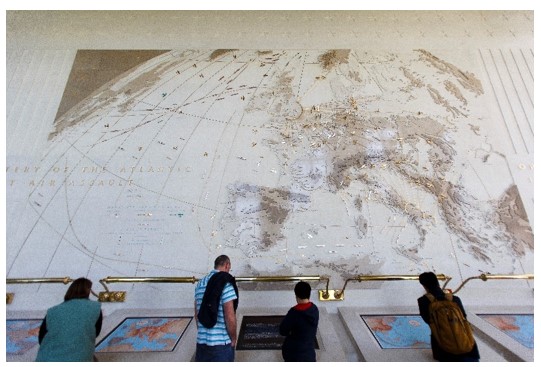
Inside the memorial is a large bas‑relief battle map titled “The Mastery of the Atlantic – The Great Air Assault.” The map depicts U.S. military operations in North Africa, Italy, and Normandy. It was designed by American artist Herbert Gute and executed by the David Kindersley stone workshops in Cambridge, using marbles of different colors to represent terrain.
Among those commemorated on the Wall of the Missing is Maj. Alton G. Miller, widely known as Glenn Miller, the U.S. Army Air Forces bandleader. Miller disappeared in December 1944 while flying over the English Channel.
On the Wall of the Missing at Cambridge American Cemetery are also inscribed the names of Lt. Joseph P. Kennedy Jr., the older brother of future U.S. President John F. Kennedy, and Lt. Wilford J. Willy. Kennedy Jr. was a U.S. Navy aviator who was killed in August 1944 while taking part in Operation Aphrodite, a classified mission involving explosive‑laden aircraft. His remains were never recovered, and his name is inscribed on the Wall of the Missing at Cambridge American Cemetery. Willy, also a U.S. Navy aviator, was serving as co‑pilot on the same aircraft. He was killed in the same explosion, and his remains were likewise never recovered.
Cambridge American Cemetery’s location just outside the city center allows visitors to combine time at the cemetery with exploration of Cambridge on the same day. The cemetery is open all year long except on Dec. 25 and Jan. 1. A visitor center provides information to the public and guided tours are available upon request. All visitor services at the cemetery are provided free of charge, and the nearby city offers numerous public, walkable, and freely accessible sites.
Exploring Cambridge
The city of Cambridge offers a range of publicly accessible sites and activities that can complement a visit to the cemetery. Much of the city can be explored on foot, including streets and open spaces associated with the University of Cambridge. Visitors commonly walk along the River Cam and through areas known as the Backs, where several college buildings face the river. Public green spaces such as Parker’s Piece are open to visitors and used for walking and leisure.
Cambridge is also home to several free museums, including the Fitzwilliam Museum, which houses collections of art and antiquities. Many university buildings and college courtyards can be viewed from public streets, and self‑guided walking routes and free walking tours are available in the city, focusing on the university, architecture, and historic streets.
Willing to travel further away
Visitors who have additional time and are able to travel farther may also consider visiting Brookwood American Cemetery, located in Surrey, southwest of London. Also maintained by American Battle Monuments Commission, this site is the only American World War I cemetery in the U.K. and contains approximately 500 burials as well as the names of approximately 600 missing inscribed inside the memorial chapel. The site is accessible from London by train and is open to the public free of charge.
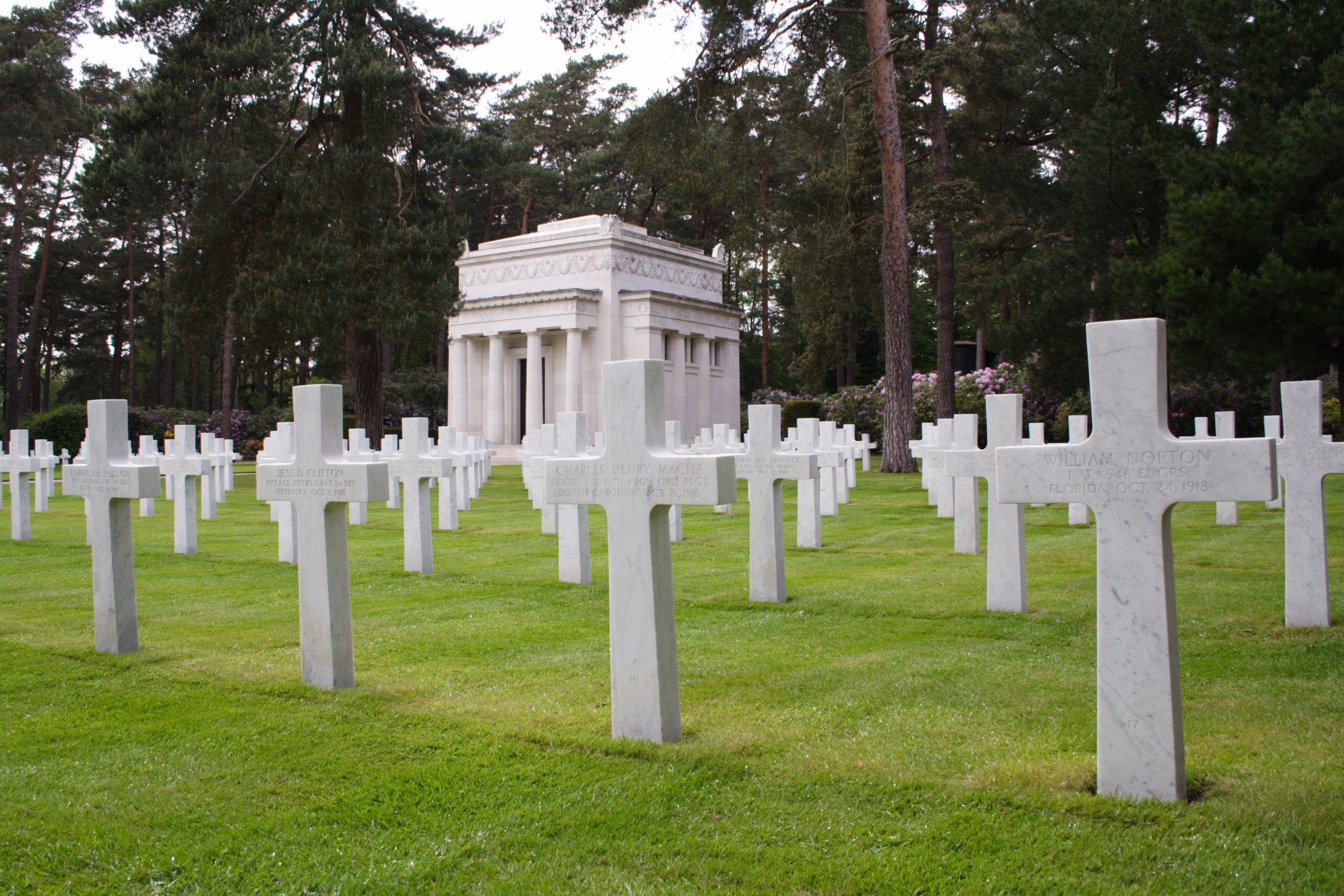
Traveling farther, London can also be an option. Located less than an hour away by train from Cambridge, London offers numerous publicly accessible sites related to World War II, including national museums, memorials, and historic locations associated with wartime periods. Several of these institutions and memorials are open to the public and provide additional context on Britain’s role during the conflict.
If you like being outside, London is home to a network of large public parks, many of which are part of the Royal Parks, including Hyde Park, Green Park, St. James’s Park, Kensington Gardens, and Regent’s Park. These parks are free to access and form a continuous chain of green spaces through central London.
The American Battle Monuments Commission sites are a constant reminder of Gen. John J. Pershing’s promise that, “time will not dim the glory of their deeds.”
