


3 things you may not know about Cantigny Monument
A monument designed by a leading American architect
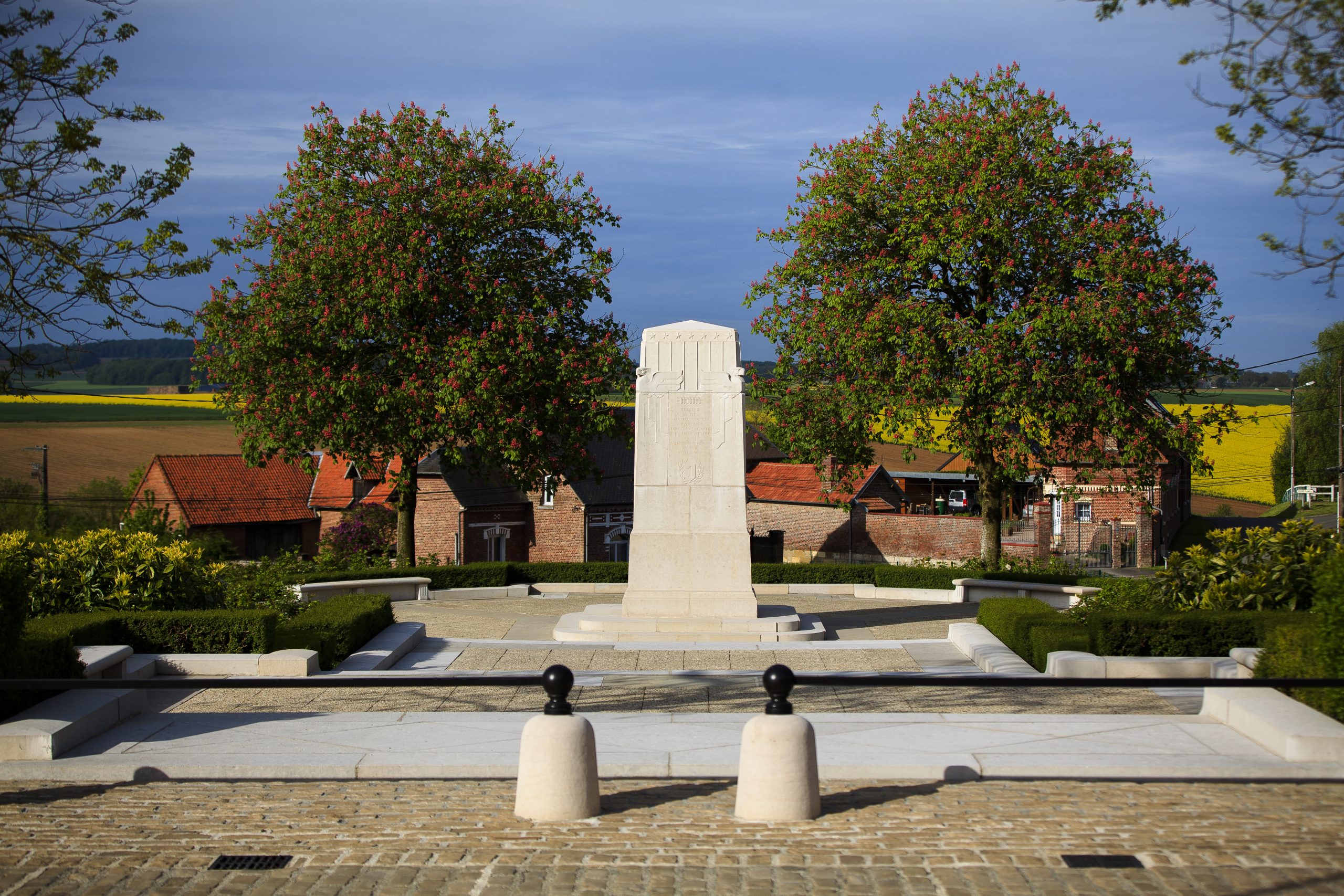
The Cantigny Monument was designed in the late 1920s by Arthur Loomis Harmon, a prominent American architect best known as a partner at the firm Shreve, Lamb & Harmon, designers of the Empire State Building. Arthur L. Harmon also designed other American battlefield monuments in France, including the Sommepy Monument, and clear stylistic parallels can be seen between these works in their restrained classicism and monumental clarity.
Harmon’s connection to American military history was also became deeply personal. His oldest son, Lt. Colonel David Harmon, served with the headquarters of the U.S. Third Army during World War II and was killed in action in Germany on April 7, 1945. He is buried at Netherlands American Cemetery, Plot A, Row 14, Grave 10—linking the architect’s professional contribution to ABMC sites with a family sacrifice commemorated at another American cemetery overseas.
A village destroyed in 1918 with a lasting transatlantic legacy
Cantigny Monument stands on the site of the former village of Cantigny, which was destroyed during the fighting of May 1918. It is hypothesized that rubble from the destroyed village was used as fill beneath the monument platform. The disturbed ground beneath the site contributes today to horticultural challenges at the monument.
The name Cantigny also has a direct connection to the U.S. Col. Robert R. McCormick, who served with the 1st Infantry Division’s 1st Battalion, 5th Artillery Regiment during World War I, later named his family estate in Wheaton, Illinois, after the village of Cantigny. McCormick was part of a prominent Chicago family that owned the Chicago Tribune. When he died without heirs, McCormick willed the estate to the McCormick Foundation. Today, the site is known as Cantigny Park and includes the 1st Division Museum, which interprets the history of the U.S. Army’s 1st Infantry Division.
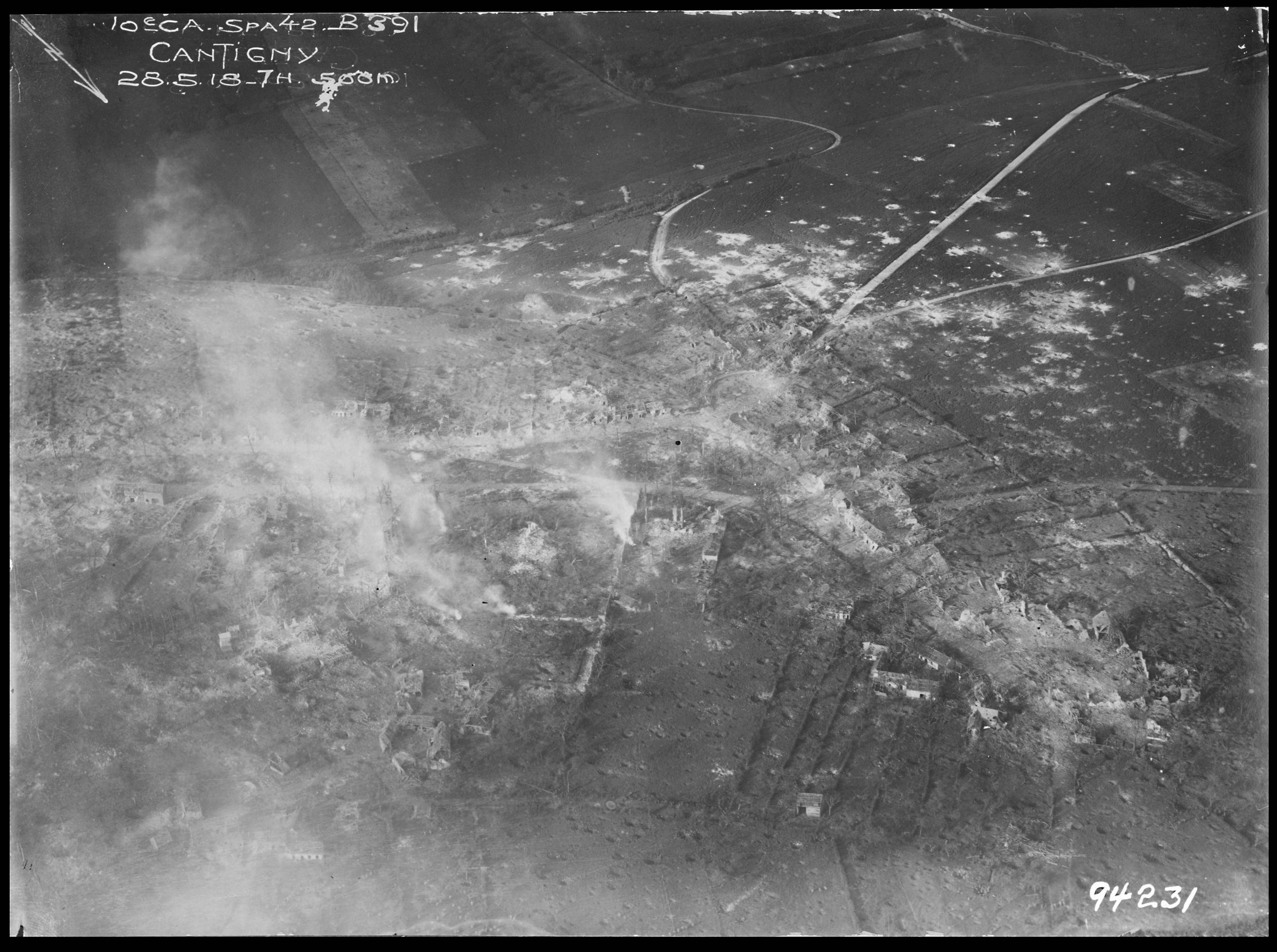
Physical traces of the 1918 battle remain visible
In and around Cantigny Monument, including in the basements of former village structures, there are examples of graffiti left by American soldiers – also known as Doughboys – during the Battle of Cantigny in May 1918. In addition, American artifacts from the battle have been recovered over time and remain today in private hands among local residents of Cantigny.
Learn more: Take a virtual tour of the WWI Battlefield at Cantigny.
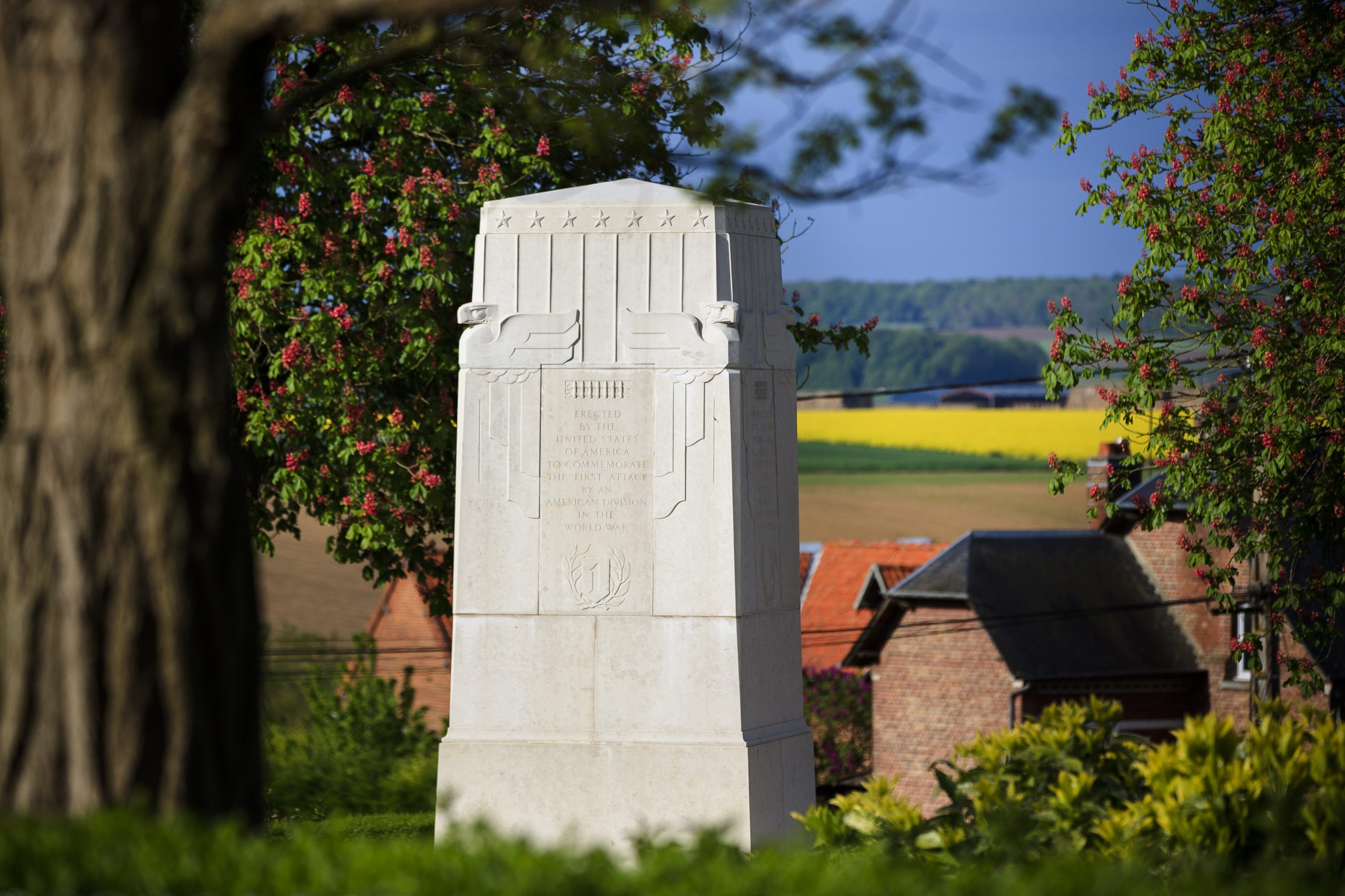
The American Battle Monuments Commission sites are a constant reminder of Gen. John J. Pershing’s promise that, “time will not dim the glory of their deeds.”
Sources:
https://www.nytimes.com/2025/04/02/arts/cantigny-french-village-united-states-world-war-i.html
