


Belleau Wood: 3 things to know about an iconic World War I battlefield
Located in northern France, Belleau Wood is one of the most significant American World War I sites. Closely associated with the U.S. Marine Corps, it marks a decisive moment in the Allied effort to halt the German advance in 1918. Today, Belleau Wood remains both a preserved battlefield and a place of remembrance, carefully maintained for future generations by the American Battle Monuments Commission. Here are three elements that help explain its enduring significance.
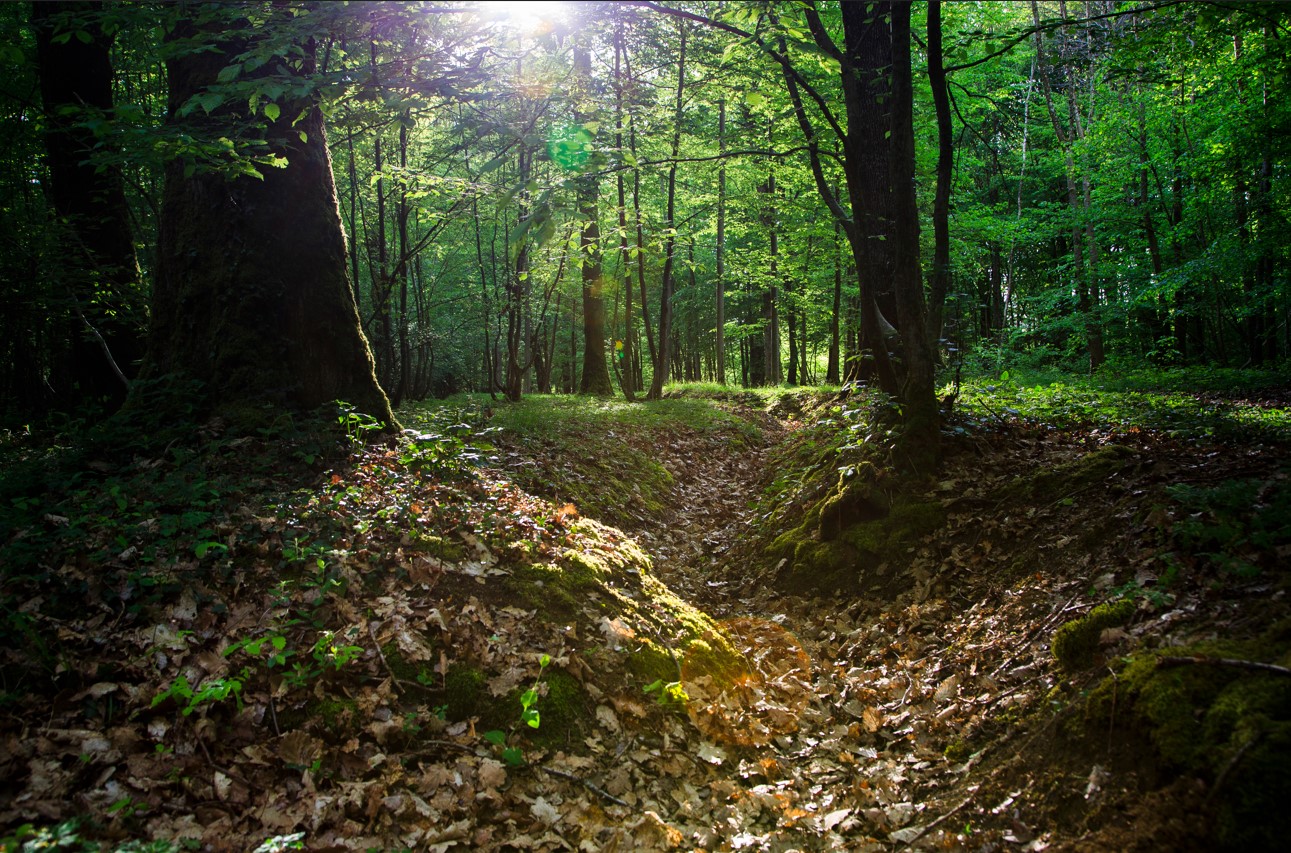
June 6, 1918
June 6 is widely known for D‑Day, the beginning of the Allied liberation of Europe in 1944. Yet for the U.S. Marines, this date already held deep meaning from a generation earlier. On June 6, 1918, Marines launched their first major offensive of the First World War at Belleau Wood.
That morning, they advanced across open ground toward the forest under intense German machine‑gun and artillery fire. In just a few hours, 1,087 Marines became casualties while attempting to cross a wheat field swept by enemy fire. Although the attack did not succeed that day, June 6, 1918, became a defining moment—symbolizing the brutal cost of modern warfare and the determination of the Marines in battle.
The fighting at Belleau Wood became central to Marine Corps identity and is closely associated with the enduring nickname “Devil Dogs.” Linked to the Marines’ tenacity during the battle, the name has since become firmly rooted in Marine Corps tradition and continues to be associated with the legacy forged at Belleau Wood.
The legacy of this date would echo again on June 6, 1944, when American forces landed under fire on the beaches of Normandy.
From private woodland to an ABMC‑maintained place of memory
Before the First World War, Belleau Wood was a privately owned rural forest, integrated into the agricultural landscape surrounding the village. It belonged to local families, including the Count of Belleau and the Payet family, and was managed as a traditional woodland valued for its natural resources.
The fighting of 1918 dramatically transformed both its physical condition and its meaning.
In 1923, Elizabeth Van Rensselaer Frazer helped the Belleau Wood Memorial Association acquire the property in order to preserve the battlefield where so many U.S. Marines had fought and died. A nationwide fundraising campaign in the U.S. supported both its acquisition and long‑term care, and a museum was built in the 1930s to share the meaning of the site.
In 1944, ownership of Belleau Wood was transferred to the American Battle Monuments Commission, ensuring its permanent preservation as an American commemorative site overseas.
Today, caretakers and guides work to preserve both the land and the forest itself. Trees still bear visible scars from the fighting, and the landscape is treated as a historical feature in its own right. Through ongoing stewardship, ABMC ensures that history and nature coexist, allowing visitors to experience the battlefield while preserving its integrity for future generations.
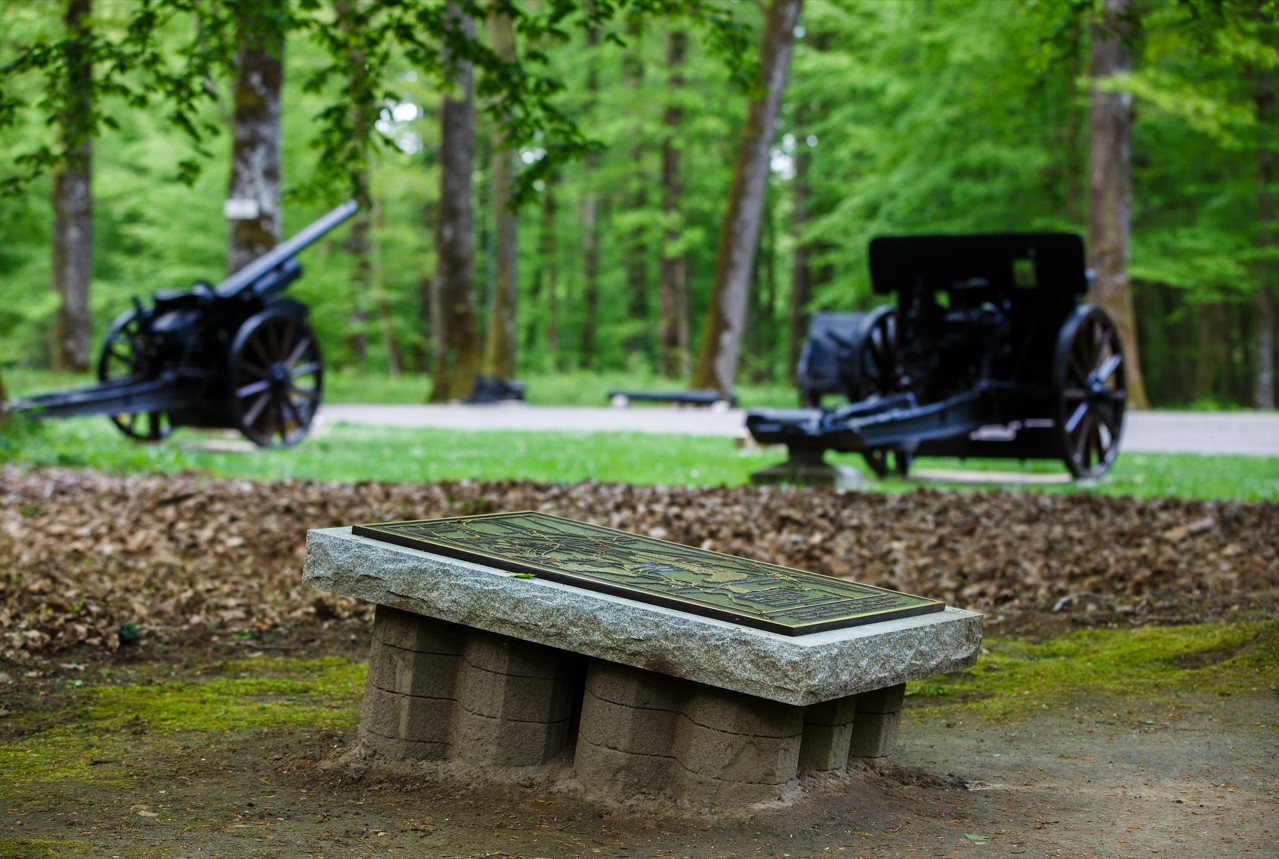
A monument to the U.S. Marines
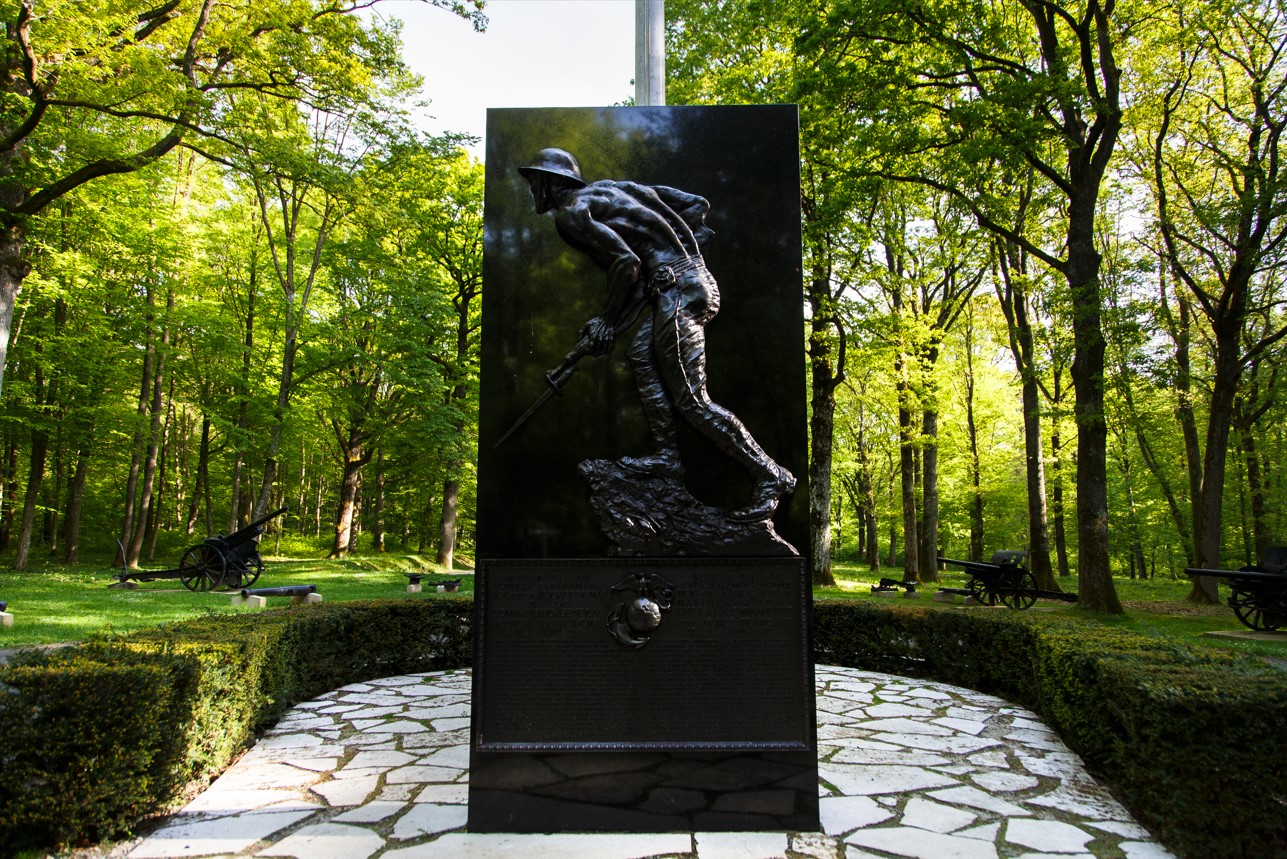
The Marine Monument at Belleau Wood is unique in Europe, as it is the only memorial on the continent dedicated exclusively to the U.S. Marines. The sculpture was created by Felix de Weldon, the Austrian‑born American artist who also designed the Marine Corps War Memorial in Arlington, Virginia.
The Belleau Wood monument was inaugurated in 1955 by the commandant of the Marine Corps, Gen. Lemuel C. Shepherd Jr., making the ceremony especially meaningful. Thirty‑seven years earlier, Shepherd had fought and been twice wounded at Belleau Wood as a second lieutenant. He was joined at the dedication by fellow Marine generals who had also fought in the battle, including officers who were wounded or decorated for bravery during the fighting of June 1918.
The monument stands as a powerful tribute to the Marines who fought at Belleau Wood and reflects the lasting bond between the site and the history of the U.S. Marine Corps.
Belleau Wood is more than a former battlefield. It is a place where landscape, memory, and history converge. Through careful preservation, thoughtful interpretation, and its connection to other ABMC World War I sites in the region, including Aisne‑Marne American Cemetery and the Château‑Thierry Monument, Belleau Wood continues to honor the Marines who fought there and helps visitors understand the human cost and lasting legacy of the First World War.
Whether visited on its own or as part of a broader journey through World War I history in France, Belleau Wood remains a powerful place of remembrance and reflection.
The American Battle Monuments Commission’s mission is to honor the service of the U.S. armed forces by creating and maintaining memorial sites, offering commemorative services, and facilitating the education of their legacy to future generations. It was founded in 1923 following World War I, and its 26 cemeteries and 31 monuments honor the service men and women who fought and perished during World War I, World War II, the Korean War and the Vietnam War, as well as some who fought during the Mexican American War.
The American Battle Monuments Commission sites are a constant reminder of Gen. John J. Pershing’s promise that, “time will not dim the glory of their deeds.”
