An official website of the United States government. Here's how you know.


 Countdown to




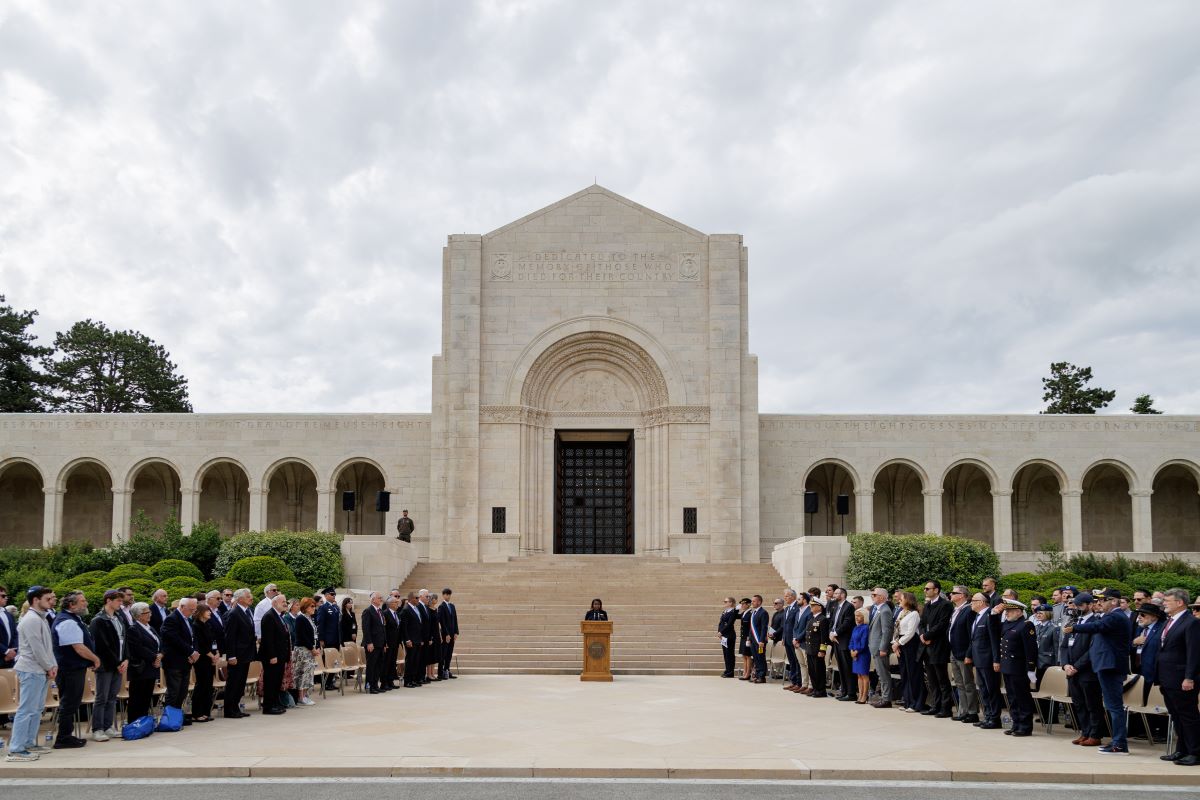
The American Battle Monuments Commission in coordination with Operation Benjamin exchanged five Latin cross headstones for Stars of David June 2 at Meuse-Argonne American Cemetery.
Headstones were exchanged at the request of the service members’ families who, along with Operation Benjamin, presented the required research to ABMC to warrant the change. Operation Benjamin is a non-profit dedicated to identifying and correcting burial errors of Jewish-American service members buried under Latin crosses. U.S. military and government officials were on hand for the ceremony, as well as family members of the service members, and representatives of the local and international Jewish community.
“Today we gather to witness a solemn and meaningful act: the replacement of headstones so that the faith and identity of these fallen American soldiers are properly honored,” said ABMC Chairman Michael X. Garrett during his remarks. “For more than a century, these men have rested beneath markers that do not fully reflect who they were. This ceremony does not alter their sacrifice. It affirms it more completely. It tells the truth more faithfully. And it ensures that the memory we pass to future generations is as accurate as it is reverent.”
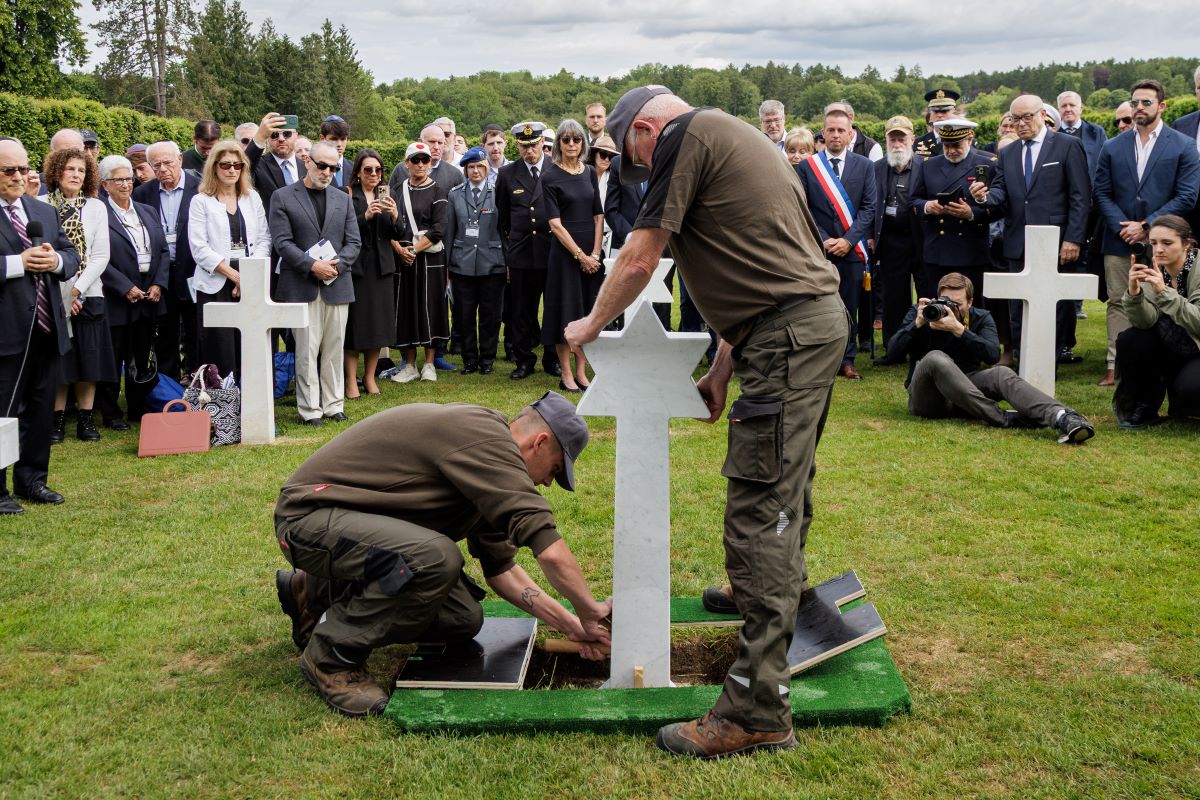
Pvt. Samuel Tamkin, 147th Infantry Regiment, 37th Division
After an opening ceremony in front of the Meuse-Argonne American Cemetery chapel, approximately 125 guests walked to Plot H, Row 42, Grave 24 and gathered around as ABMC staff removed the Latin cross and replaced it with a Star of David engraved with the name of Pvt. Samuel Tamkin.
Tamkin was born Oct. 5, 1895, in Worcester, Massachusetts, to Russian Jewish immigrants. Although born in the United States, Tamkin spent most of his childhood in Brest, France, but returned to the U.S. in 1912 with his brothers.
By 1917, Tamkin was living in the Bronx and working as a salesman in Manhattan. He registered for the draft in June 1917 and was inducted into the U.S. Army April 2, 1918. After training at Camp Upton and Camp Dix, he was assigned to Company E, 147th Infantry Regiment, 37th Infantry Division.
Tamkin sailed for France aboard the SS Leviathan June 15, 1918. After training, his regiment entered the Argonne region and took part in the opening phase of the Meuse-Argonne Offensive Sept. 26, 1918. The 147th endured intense combat and heavy casualties, particularly north of Ivoiry Sept. 28 and 29. Tamkin was mortally wounded during the fighting and died Oct. 1, 1918. He was initially buried at Blercourt and later reinterred at the Meuse-Argonne American Cemetery. With his father unreachable, his sister Mamie authorized permanent burial overseas. Tamkin was laid to rest there July 22, 1922, his grave marked with a cross, with no indication that his Jewish identity was known.
Pfc. Barney Bardman, 307th Infantry Regiment, 77th Division
At Plot G, Row 15, Grave 4, guests gathered at the grave of Pfc. Barney Bardman. At each gravesite after the headstone exchange, Operation Benjamin shared a recognition and welcome, Hebrew and English prayers, and a recitation of Kaddish.
Bardman was born Boruch Burd April 15, 1896, in the town of Dzhurin, located in Podolia province of the Russian Empire, now Dzhuryn, Ukraine. He arrived in New York Aug. 27, 1913, at age 17, and was drafted into the U.S. Army in December 1917.
Serving with Company B, 307th Infantry, Bardman saw intense combat in France, where his regiment was among the first American units to land. In June 1918, he was severely wounded by phosgene and mustard gas during an enemy bombardment in Lorraine and was hospitalized along with dozens of men from his regiment. After recovering, he was wounded again in September during operations along the Aisne.
In early October, the 307th Infantry—particularly Company B—played a decisive role in breaking through German defenses to rescue the surrounded “Lost Battalion” in the Argonne Forest, an action in which Bardman directly participated and that saved nearly 200 survivors.
On Oct. 16, 1918, while scouting ahead for his platoon during the advance toward Grandpré, Bardman was mortally wounded by machine-gun fire but warned his comrades to withdraw, saving their lives. He died of his wounds and was initially buried near Grandpré, later receiving a posthumous Distinguished Service Cross for extraordinary heroism.
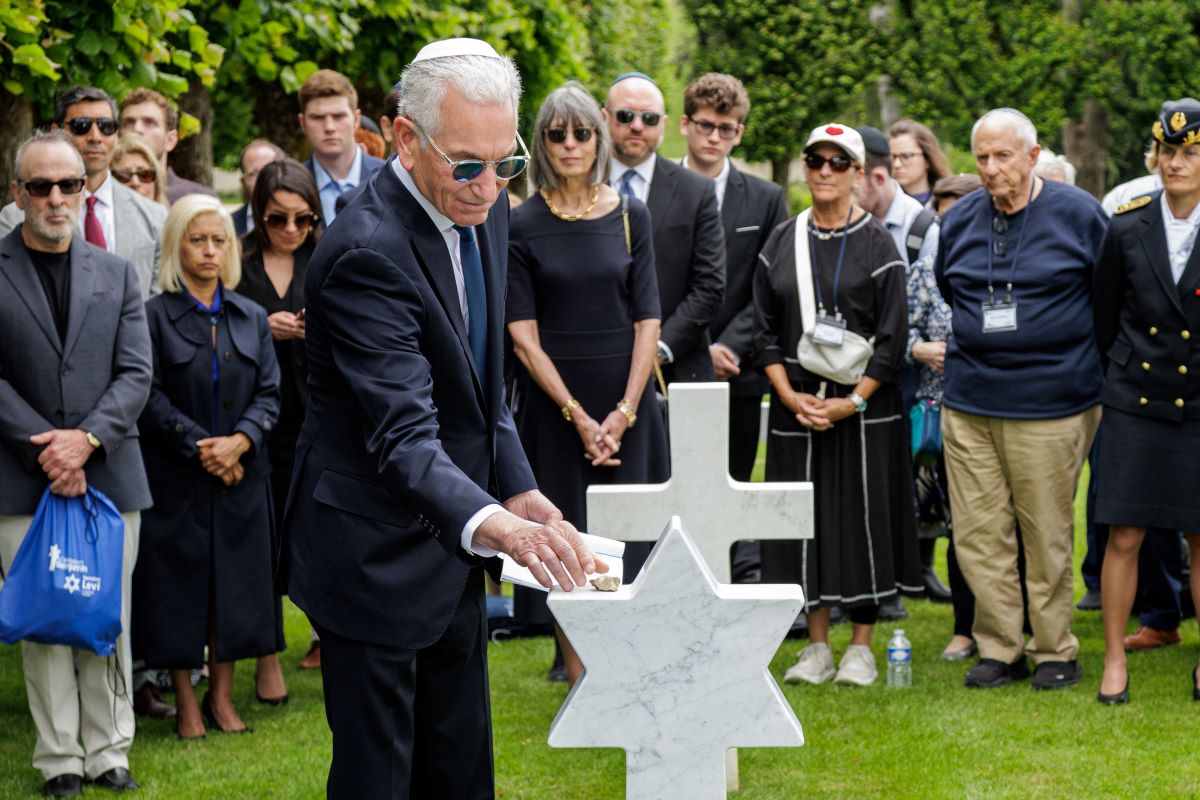
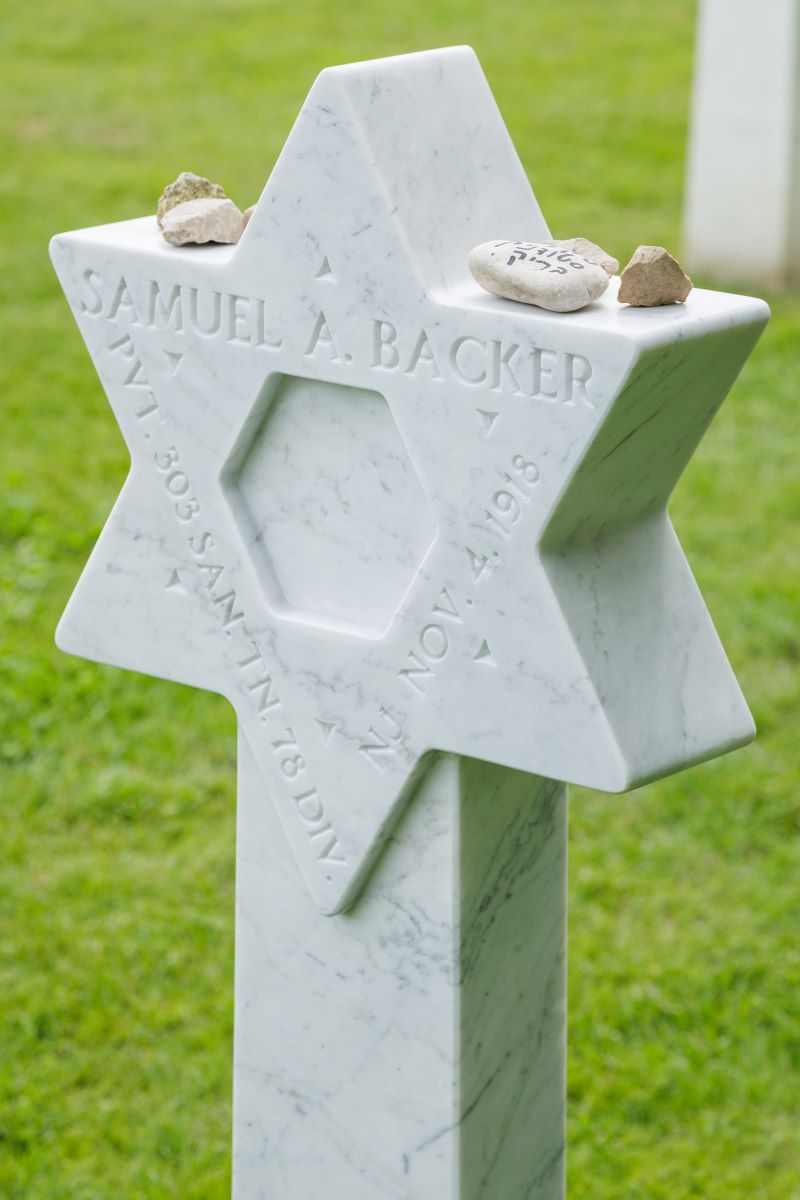
Pvt. Samuel A. Backer, 303rd Sanitary Train, 78th Division
At Plot B, Row 20, Grave 39, the group remembered Pvt. Samuel A. Backer.
“Perhaps that is our role here today,” said Shalom E. Lamm, Operation Benjamin co-founder and historian, “to stand at a distance of more than 100 years, and to weep for what was lost, for the lives interrupted, for the futures denied, for the generations that never came to be, but also to say this, you were not forgotten. Not by your people, not by your nation and not by history.”
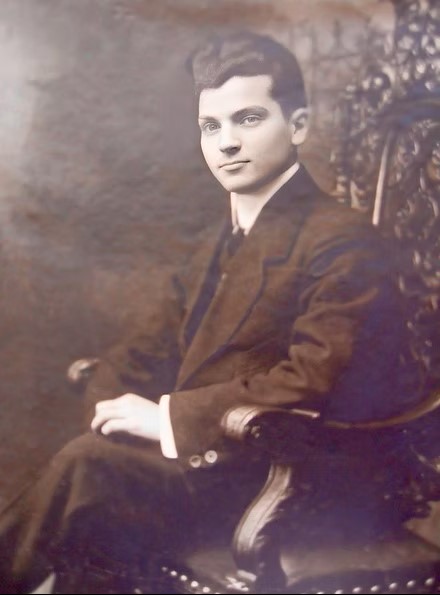
Samuel Abraham Backer was born Shmuel Abram Piekar July 27, 1891, in Sokolka, Grodno, Russia, which is now eastern Poland, near the Belarusian border. Backer immigrated to the U.S. in 1905 at age 14 to live with his uncle in New York. He became a naturalized citizen in 1915 and completed an enlistment in the Pennsylvania National Guard in April 1916.
Backer reenlisted for almost a year during the Mexican Border Emergency in June 1916, and joined the regular U.S. Army in August 1917. Reportedly inspired by wartime accounts from Russia, he trained at Camp Dix with Ambulance Company 310, part of the 303rd Sanitary Train, 78th Division. Backer sailed for France in June 1918 and served throughout the St. Mihiel and Meuse-Argonne campaigns operating under constant danger, evacuating wounded and gassed soldiers from the front lines to triage points and field hospitals. He was killed Nov. 4, 1918, at Grandpré and buried in an isolated grave before being reinterred at Meuse-Argonne American Cemetery in 1919.
Pvt. Hyman Aronoff, 129th Infantry Regiment, 33rd Division
At Plot B, Row 40, Grave 14, guests laid small stones on the newly placed Star of David headstone for Pvt. Hyman Aronoff. At each gravesite, stones were placed on the headstones in the Jewish tradition as a token by the visitors after the recitation of Kaddish.
Aronoff was born Chaim Aronow (or Aronov) July 15, 1894, in Tolochin, Russia, now Talachyn, Belarus. He immigrated to Philadelphia Aug. 9, 1911. Aronoff registered for the draft in Chicago, Illinois, where he worked in the clothing industry and boarded with a Russian-Jewish family. Aronoff was inducted into the U.S. Army Sept. 20, 1917. After initial training with the 343rd Infantry at Camp Grant, Illinois, he transferred to Company F, 129th Infantry Regiment, training at Camp Logan, Texas.
He deployed overseas in May 1918, and saw heavy combat during the Meuse-Argonne Offensive. On Oct. 17, 1918, near Consenvoye, France, Aronoff was killed by shrapnel during intense combat. He was first buried near the battlefield and later reinterred at Romagne May 9, 1919. Postwar efforts by the U.S. Government and Jewish organizations to locate his mother in Russia were unsuccessful due to disrupted communications. Without guidance from next of kin and lacking confirmation of his Jewish identity, his remains were reburied Nov. 19, 1921, at the Meuse-Argonne American Cemetery, where his grave was marked with a cross.
“May these new headstones stand for generations as symbols of fidelity—fidelity to memory, fidelity to history, and fidelity to the men who gave their lives in service to the United States,” Garrett said. “May all who visit this sacred place understand that here, honor and truth endure together.”
Pfc. Maurice W. Akabas, 143rd Infantry Regiment, 36th Division
In the final headstone exchange, guests gathered around the grave of Pfc. Maurice W. Akabas at Plot A, Row 18, Grave 4.
Akabas was born Moshe Ionel Akabas around Feb. 15, 1893, in Schimaki, Russian Empire, now Šimkaičiai, Lithuania. Between 1900 and 1907, his family immigrated to the United States and settled in Boston, where Akabas graduated from high school in 1914. He later moved to Laredo, Texas, where he worked as a clerk in his brother-in-law’s dry goods store and helped support his parents.
Akabas registered for the draft in June 1917, identifying his race as Jewish and initially seeking exemption due to physical disqualifications. On Oct. 8, 1917, he was drafted into the U.S. Army and, after training at Camp Bowie, Texas, was assigned to Headquarters Company, 143rd Infantry Regiment, 36th Division. Promoted to private first class in March 1918, he deployed to France that summer.
The 36th Division trained behind the lines before being attached to the French XXI Army Corps and later the French Fourth Army during the Meuse-Argonne campaign. On Oct. 18, 1918, while at regimental headquarters in Vaux-Champagne, Akabas was killed instantly when an enemy shell exploded near him. He was initially buried nearby and later reinterred at a temporary American cemetery in Romagne in May 1919. With no burial preference communicated by his family, his remains ultimately stayed in France, and Nov. 5, 1921, Akabas was permanently laid to rest at the Meuse-Argonne American Cemetery.
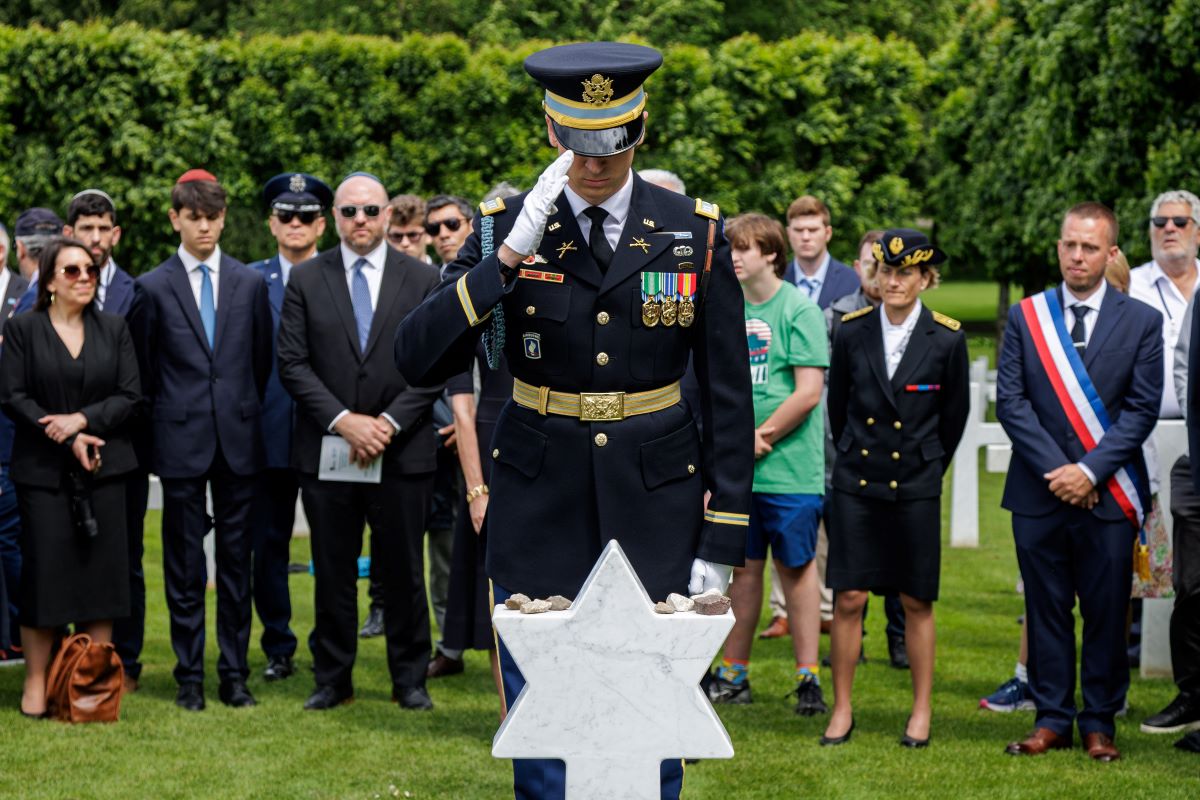
Reflections of faith
“Meuse-Argonne is the largest American cemetery in Europe, and most of those buried here gave their lives in the Meuse-Argonne Offensive, one of the defining and most costly campaigns in our nation’s military history,” Garrett said. “In a place shaped by such immense loss, every name matters. Every marker matters. Every detail matters. Because remembrance worthy of sacrifice must be careful, humble, and exact.”
It is estimated hundreds of Jewish service members may have been buried under Latin crosses. When service members were buried after World War I and World War II, records of their religion may have been missing, or in many cases Jewish service members identified themselves as Protestant for fear of persecution if they were captured in Europe. Operation Benjamin has been working with ABMC since 2018 to replace headstones for Jewish service members. Pvt. Benjamin Garadetsky was the first service member whose headstone was changed at Normandy American Cemetery and the non-profit’s namesake.